
 CATEGORIES
- ORGANIC COMPOUNDS(1134)
- Thiols(1)
- Metal-organic compounds(1)
- Sulfonic acids(6)
- Alcohols(74)
- Aldehydes(47)
- Alkyl nitrites(6)
- Amines(56)
- Aminoacids(59)
- Amides(33)
- Anhydrides(11)
- Acyl Halides(5)
- Carboxylic Acids(170)
- Dyes and Indicators(99)
- Esters(52)
- Ethers(17)
- Organic Halogens (Organohalides)(30)
- Flavonoids(5)
- Heterocycles(25)
- Hydrocarbons(38)
- Imides(2)
- Ketones(29)
- Mixed solvents(16)
- Nitro Compounds(5)
- Nitriles(9)
- Organic salts(74)
- Phenols(30)
- Polymers ( HMW compounds )(68)
- Sugars (Saccharides)(24)
- Silicoorgano and Phosphoorganocompounds(1)
- Peptides(2)
- Terpenes(16)
- Others(125)
- INORGANIC COMPOUNDS(1055)
- LAB EQUIPMENT(5176)
- *(1)
- Organic Synthesis(421)
- Industry(775)
Language
US version allows shipping to all available destinations


 MANUFACTURER
Fluorescein Free Acid


Regular price:
Regular price:
product unavailable
add to wish list
0

Description
Fluorescein Acid
Other Names: Fluorescein Acid, Fluorescein Free Acid, 2-(6-Hydroxy-3-oxo-3H-xanthen-9-yl)benzoic acid, 2-(3-Hydroxy-6-oxoxanthen-9-yl)benzoic acid
Chemical Formula: C20H12O5
Molar Mass: 332.31 g/mol
CAS Number: 518-45-6
SMILES: O=C(O)c1ccccc1-c1c2ccc(=O)cc-2oc2cc(O)ccc12
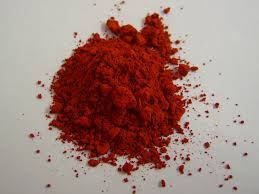
Appearance: Yellow to orange-red crystalline solid
Odor: No characteristic odor reported
Fluorescein acid form is an organic xanthene dye characterized structurally as 2-(6-hydroxy-3-oxo-3H-xanthen-9-yl)benzoic acid. It contains a conjugated xanthene chromophore together with phenolic and carboxylic-acid functionalities. Fluorescein is one of the most extensively investigated fluorescent molecular scaffolds because of its strong visible-light absorption, high fluorescence efficiency in its anionic forms and versatile synthetic chemistry. The free acid participates in complex protonation and structural equilibria in solution, and its optical behavior therefore depends strongly on pH, solvent composition and molecular environment. The acid form is structurally related to the closed lactone form of fluorescein and both forms may participate in equilibrium processes depending on experimental conditions.
Chemical and physical properties
Fluorescein exhibits multiple prototropic forms in aqueous solution, including cationic, neutral, monoanionic and dianionic species. Spectroscopic studies have reported macroscopic acid dissociation constants of approximately pK1 = 2.08, pK2 = 4.31 and pK3 = 6.43. These equilibria strongly affect both absorption and fluorescence, making solution pH an important parameter when fluorescein is used in quantitative optical measurements.
The dianionic form is responsible for the particularly intense visible absorption and fluorescence characteristic of fluorescein under neutral-to-alkaline conditions. Experimental measurements have reported an absorption maximum near 490 nm for the dianion, with a molar absorption coefficient of approximately 76,900 M−1 cm−1 and a fluorescence quantum yield of approximately 0.93. The monoanion is also fluorescent but has a substantially lower reported quantum yield of approximately 0.37.
Fluorescein solubility in aqueous systems is strongly dependent on pH because ionization increases the concentration of water-soluble ionic species. Experimental measurements at an ionic strength of 0.10 have shown a solubility minimum near pH 3.28. The reported intrinsic solubility of undissociated fluorescein was approximately 3.80 × 10⁻⁴ M for the yellow solid form and 1.45 × 10⁻⁴ M for the red form. Solubility increases significantly when the molecule becomes progressively ionized.
The strong pH dependence of fluorescein originates from changes in protonation and electronic structure within its conjugated xanthene system. Consequently, the absorption wavelength, fluorescence intensity and quantum yield vary according to the dominant molecular species present in solution. This behavior has made fluorescein an important model compound for investigations of excited-state processes, proton-transfer reactions and structure–property relationships in organic fluorophores.
Applications
Fluorescein acid form is widely used as a fluorescent tracer in scientific research. Its intense fluorescence enables highly sensitive optical detection, making fluorescein and its derivatives useful in fluorescence spectroscopy, microscopy, molecular imaging and studies involving transport, diffusion and distribution of fluorescent molecules.
In analytical chemistry, fluorescein provides a versatile structural platform for the development of fluorescent probes. Chemical modification of the xanthene or benzoic-acid portions of the molecule can generate sensors whose fluorescence changes in response to specific analytes. Fluorescein-based probes have been investigated for the detection of metal ions, anions, reactive small molecules and biological macromolecules.
Fluorescein is also an important precursor for fluorescent labels and functional derivatives used in biochemical and molecular research. Its established synthetic chemistry enables attachment of recognition groups, reactive functionalities and biomolecule-binding moieties. Fluorescein-derived structures have consequently been employed in fluorescence microscopy, flow cytometry, immunochemical methods and molecular imaging studies.
Because its fluorescence response is sensitive to protonation state, fluorescein is frequently used as a model fluorophore in photophysical and physicochemical investigations. Studies of fluorescein provide information about protonation equilibria, solvent effects, fluorescence quantum yields, molecular excited states and environmental effects on organic chromophores. These properties also make the compound useful as a reference system during the development and characterization of new fluorescent dyes and molecular probes.
Scientific references
1. ChEBI – Chemical Entities of Biological Interest. “Fluorescein (acid form), CHEBI:172923.” European Bioinformatics Institute. Molecular formula, structure, systematic name, CAS number and SMILES: https://www.ebi.ac.uk/chebi/CHEBI:172923
2. Sjöback, R.; Nygren, J.; Kubista, M. “Absorption and fluorescence properties of fluorescein.” Spectrochimica Acta Part A: Molecular and Biomolecular Spectroscopy, 1995, 51(6), L7–L21. DOI: 10.1016/0584-8539(95)01421-P.
3. Diehl, H.; Markuszewski, R. “Studies on fluorescein—II: The solubility and acid dissociation constants of fluorescein in water solution.” Talanta, 1985, 32(2), 159–165. DOI: 10.1016/0039-9140(85)80049-7.
4. Sun, W.; Li, M.; Fan, J.; Peng, X. “Fluorescein applications as fluorescent probes for the detection of analytes.” TrAC Trends in Analytical Chemistry, 2017, 97, 15–35. DOI: 10.1016/j.trac.2017.08.013.
5. Lavis, L.D.; Rutkoski, T.J.; Raines, R.T. “Tuning the pKa of Fluorescein to Optimize Binding Assays.” Analytical Chemistry, 2007, 79, 6775–6782. DOI: 10.1021/ac070907g.
6. Alharbi, A.H.; Khan, S. “Antimicrobial, antioxidant, cell imaging and sensing applications of fluorescein derivatives: A review.” Analytical Biochemistry, 2024, 688, 115479. DOI: 10.1016/j.ab.2024.115479.
7. Robertson, T.A.; Bunel, F.; Roberts, M.S. “Fluorescein Derivatives in Intravital Fluorescence Imaging.” Cells, 2013, 2(3), 591–606. DOI: 10.3390/cells2030591.
Storage:
Store the product in a tightly closed container in a dry and well-ventilated place.
Store at room temperature.
Protect from moisture, contamination and direct sunlight.
Keep away from strong oxidising agents.
Handling:
Avoid the formation and inhalation of dust.
Avoid contact with eyes.
During handling, use appropriate personal protective equipment, including protective gloves, eye protection and a dust mask under dusty conditions.
Wash hands thoroughly after handling.