
 CATEGORIES
- ORGANIC COMPOUNDS(1135)
- INORGANIC COMPOUNDS(1055)
- LAB EQUIPMENT(5176)
- *(1)
- Organic Synthesis(421)
- Industry(775)
Language
US version allows shipping to all available destinations


 MANUFACTURER
Catalysts in organic synthesis are substances that accelerate or enable chemical reactions by lowering the activation energy, the energetic barrier required for a transformation to occur. They participate in a catalytic cycle and are regenerated, which means they are not consumed in stoichiometric amounts, although in practice they may undergo deactivation or losses during work-up. Catalysts are used in C-C, C-N, C-O and C-S bond formation, oxidation, reduction, coupling, addition, polymerization, enantioselective reactions and transformations conducted in single-phase or multiphase systems.
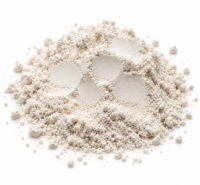
Copper (I) Chloride ; Cuprous Chloride (white copper chloride) - SYNTHESIZED PER ORDER - SENSITIVE PRODUCT
Availability: Large quantity
Dispatched within: 5 days
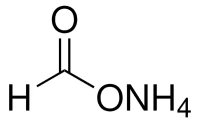
Ammonium Formate
✈︎ Shipping Limitations: We do not ship this product to: US | Unless government approved ⓘ
Availability: na wyczerpaniu
Dispatched within: 5 days

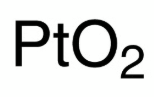
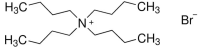
Tetrabutylammonium Bromide ; N,N,N-tributyl-1-butanaminium bromide, TBAB, TBABr, tetra-n-butylammonium bromide
Availability: Large quantity
Dispatched within: 5 days
What role do catalysts play in synthesis design?
Catalysts allow reactions to be carried out in a more controlled way than many stoichiometric variants. They may lower the energy barrier of a transformation, stabilize a transition state, activate a substrate, generate a reactive intermediate or change the availability of one reaction pathway. As a result, they affect not only reaction rate, but also selectivity, regioselectivity, stereoselectivity and compatibility with other functional groups present in the molecule.
Homogeneous and heterogeneous catalysis
In homogeneous catalysis, the catalyst and substrates are usually in the same phase, most often in solution. This arrangement can provide good reagent contact and high control over the structure of the active catalytic center. In heterogeneous catalysis, the catalyst is in a different phase than the reagents, often as a solid, and the reaction takes place on the surface or inside the pores of the material. Easier catalyst separation can be an advantage of heterogeneous systems, while their performance depends on active-site accessibility, surface area, diffusion and material stability.
Which types of catalysts are used in organic synthesis?
Organic synthesis uses many classes of catalysts, including transition-metal complexes, Brønsted acids and bases, Lewis acids and bases, organocatalysts, phase-transfer catalysts, photocatalysts, electrocatalysts and biocatalysts. Each group operates through a different set of mechanisms, so there is no universal catalyst suitable for all reactions. Selection depends on the bond being formed or broken, substrate structure and the desired product.
Metal catalysts in bond formation
Metal-based catalysts are especially important in bond-forming reactions and activation of less reactive molecular fragments. Complexes of palladium, nickel, copper, iron, ruthenium, rhodium, iridium and other metals may participate in coupling, hydrogenation, oxidation, isomerization, metathesis, C-H activation and many other transformations. Their behavior depends on the metal, ligands, oxidation state, complex geometry and compatibility with the reaction conditions.
What are organocatalysts?
Organocatalysts are small organic molecules that accelerate reactions without a metal as the active center. They may operate through temporary covalent bonding to the substrate, hydrogen-bond activation, ionic interactions, basicity, acidity or stabilization of a specific transition state. This group includes amines, proline derivatives, thioureas, phosphoric acids, N-heterocyclic carbenes and organic ion-based phase-transfer catalysts.
Acid and base catalysts
Acid and base catalysts are among the oldest and most universal tools in organic chemistry. Acid catalysts can activate carbonyl groups, multiple bonds, alcohols, epoxides and other fragments through protonation or coordination to an electron-rich center. Base catalysts can facilitate deprotonation, enolate formation, condensations, transesterifications, eliminations and addition reactions. Their selection requires consideration not only of acid or base strength, but also nucleophilicity, solubility and substrate compatibility.
Photocatalysts and light-initiated reactions
Photocatalysts enable the use of light to generate excited states that can participate in electron or energy transfer. In organic synthesis, photocatalysis is used for radical generation, bond activation, C-H functionalization, redox reactions and selected coupling reactions. Important factors include light absorption by the catalyst, redox potentials of its excited states and compatibility with the reagents present in the reaction mixture.
Biocatalysts in organic synthesis
Biocatalysts, most often enzymes, enable selected transformations with high chemo-, regio- or stereoselectivity. They may be used in reductions, oxidations, hydrolyses, aminations, acylations and bond-forming reactions under milder conditions than many classical synthetic methods. Their limitations arise from sensitivity to temperature, pH, organic solvents, substrate availability and the stability of the specific enzyme.
Why does catalyst loading matter?
A catalyst is usually used in less than stoichiometric amounts, but its loading still affects reaction rate, selectivity, product purity and process economy. Too little catalyst may lead to incomplete conversion or long reaction times, whereas excess catalyst may complicate purification or increase catalytic residues in the product. In reactions involving metal catalysts, control of residual metals after synthesis can be particularly important.
How should a catalyst be selected for a reaction?
Catalyst selection depends on reaction type, substrate class, desired selectivity, solvent, temperature, presence of air or water, functional-group tolerance and product purification strategy. Catalyst stability, potential recovery, susceptibility to poisoning by impurities and compatibility with the planned reaction scale are also important. The same catalyst may be highly effective in one transformation and unsuitable in a system operating through a different mechanism.
Limitations of catalysts in laboratory practice
A catalyst does not automatically guarantee high yield or selectivity. It may deactivate, react with impurities, form inactive aggregates or require a specific ligand, protective atmosphere, base, acid or co-catalyst. In heterogeneous systems, access to the active surface may be limiting, while in homogeneous systems catalyst separation from the product may be more difficult. Therefore, catalyst evaluation should include not only activity, but also stability, reproducibility and compatibility with the whole reaction system.
Safety and product use
Catalysts do not represent a single hazard class because their properties depend on the specific substance. Some may be toxic, flammable, corrosive, air- or moisture-sensitive, redox-active, irritating or harmful to the environment. The product is intended exclusively for laboratory, analytical, technical and research use, especially in organic synthesis and studies involving catalytic transformations. It is not intended for consumption, contact with the body, pharmaceutical use, food applications, cosmetic use or any similar consumer use.