
 CATEGORIES
- ORGANIC COMPOUNDS(1140)
- INORGANIC COMPOUNDS(1055)
- LAB EQUIPMENT(5176)
- *(1)
- Organic Synthesis(421)
- Alkylating agents(11)
- Bases(47)
- Building blocks(43)
- Catalysts(5)
- Classic Acids(79)
- Drying Agents(54)
- Enantioselective synthesis(2)
- Halogenating reagents(8)
- Oxidizing agents(23)
- Peptide synthesis(4)
- Reducing Agents(19)
- Solvents(150)
- Industry(775)
Language
US version allows shipping to all available destinations


 MANUFACTURER
Halogenating agents are reagents used to introduce fluorine, chlorine, bromine or iodine into organic molecules. In organic synthesis, they are used to prepare halogenated arenes, heteroarenes, alkenes, aliphatic compounds and derivatives containing C–F, C–Cl, C–Br or C–I bonds. This group includes molecular halogens, N-haloimides, N-halosuccinimides, N–F reagents, systems generating electrophilic halogen species and reagents used in radical or oxidative halogenation.

Elemental Crystalline Iodine Pure - 1000g

✈︎ Shipping Limitations: We do not ship this product to: US | Unless government approved ⓘ
Availability: Large quantity
Dispatched within: 7 days
Elemental Crystalline Iodine Pure - 100g

✈︎ Shipping Limitations: We do not ship this product to: US | Unless government approved ⓘ
Availability: Large quantity
Dispatched within: 7 days
Elemental Crystalline Iodine Pure - 10g

✈︎ Shipping Limitations: We do not ship this product to: US | Unless government approved ⓘ
Availability: Large quantity
Dispatched within: 7 days
Elemental Crystalline Iodine Pure - 500g

✈︎ Shipping Limitations: We do not ship this product to: US | Unless government approved ⓘ
Availability: Large quantity
Dispatched within: 7 days
N-Bromosuccinimide ( NBS ) 1-Bromopyrrolidine-2,5-dione | For Synthesis

Availability: na wyczerpaniu
Dispatched within: 7 days
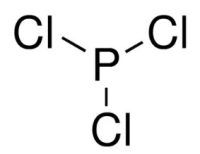
Phosphorus Trichloride
⚠️ This product can only be purchased by registered business or government entities.
Availability: na wyczerpaniu
Dispatched within: 5 days

Halogenating agents as sources of halogen atoms
In organic synthesis, halogenating agents act as sources of reactive halogen species capable of reacting with different types of organic substrates. Depending on the reagent structure and reaction environment, halogenation may proceed through electrophilic, radical, nucleophilic or oxidative pathways. For this reason, the same product category includes both classical reagents, such as chlorine, bromine and iodine, and milder or more selective organic reagents.
Aromatic and heteroaromatic halogenation
One important use of halogenating agents is the preparation of halogenated aromatic and heteroaromatic compounds. Halogenated arenes are valuable intermediates in organic synthesis because they can be further used in substitution reactions, transformations involving organometallic compounds and transition-metal-catalyzed coupling reactions. In synthetic practice, reagents that allow control over substitution selectivity in the aromatic ring are particularly important.
N-halosuccinimides as convenient halogenating reagents
N-halosuccinimides, such as N-chlorosuccinimide, N-bromosuccinimide and N-iodosuccinimide, are frequently used organic halogenating agents. They serve as sources of chlorine, bromine or iodine in reactions with arenes, heteroarenes, alkenes and selected aliphatic derivatives. Their importance comes from combining useful reactivity with easier handling and dosing compared with many classical molecular halogens.
Fluorination requires a separate approach
Fluorinating agents are often treated as a distinct subgroup because the introduction of fluorine into organic molecules differs from chlorination, bromination and iodination. Modern electrophilic reagents containing an N–F bond, such as Selectfluor, NFSI and N-fluoropyridinium salts, allow controlled fluorine transfer to selected organic systems. Their usefulness depends not only on the presence of fluorine in the reagent, but also on reactivity, stability, electrophilic character and compatibility with the substrate type.
Halogenation of alkenes and unsaturated systems
Halogenating agents can react with multiple bonds, leading to addition products or halogenated derivatives. In such systems, the reaction outcome depends on the halogen type, substrate structure, presence of nucleophiles and method of generating the active halogen species. For unsaturated compounds, halohydroxylation and halocyclization reactions are also important, because they provide products containing both a halogen atom and an additional functional group.
Differences between chlorinating, brominating, iodinating and fluorinating agents
Chlorinating, brominating, iodinating and fluorinating agents differ in reactivity, selectivity and typical synthetic scope. Chlorination can be more reactive and less selective in selected systems, bromination often offers better control in many radical and aromatic reactions, and iodination may require activation or conditions that favor the formation of reactive iodine species. Fluorination is the most specialized in terms of reagent selection, because direct use of highly reactive fluorine sources is usually replaced by more controlled N–F reagents or other dedicated fluorinating systems.
Importance of halogenating agents in synthesis design
The choice of halogenating agent affects the substitution site, the number of halogen atoms introduced, functional-group compatibility and the potential for further product functionalization. In organic synthesis, halogenation is often not the final step, but a way to prepare a compound for later transformations. Aryl and vinyl halides are especially important because the C–X bond can enable further formation of C–C, C–N, C–O or C–S bonds.
Safety and limitations of use
Halogenating agents should be treated as reactive chemical substances whose properties depend on the specific compound. Some may be corrosive, toxic, strongly oxidizing, volatile, moisture-sensitive or capable of generating irritating or hazardous by-products. In a chemical product description, this group should be presented only as material for controlled laboratory, analytical or synthetic use.