
 CATEGORIES
- ORGANIC COMPOUNDS(1135)
- Thiols(1)
- Metal-organic compounds(1)
- Sulfonic acids(6)
- Alcohols(74)
- Aldehydes(47)
- Alkyl nitrites(6)
- Amines(56)
- Aminoacids(59)
- Amides(33)
- Anhydrides(11)
- Acyl Halides(5)
- Carboxylic Acids(170)
- Dyes and Indicators(99)
- Esters(52)
- Ethers(17)
- Organic Halogens (Organohalides)(30)
- Flavonoids(5)
- Heterocycles(25)
- Hydrocarbons(38)
- Imides(2)
- Ketones(29)
- Mixed solvents(16)
- Nitro Compounds(5)
- Nitriles(9)
- Organic salts(74)
- Phenols(30)
- Polymers ( HMW compounds )(68)
- Sugars (Saccharides)(24)
- Silicoorgano and Phosphoorganocompounds(1)
- Peptides(2)
- Terpenes(16)
- Others(126)
- INORGANIC COMPOUNDS(1055)
- LAB EQUIPMENT(5176)
- *(1)
- Organic Synthesis(421)
- Industry(775)
Language
US version allows shipping to all available destinations


 MANUFACTURER
Nitriles are organic compounds containing the cyano group (–C≡N). The carbon is strongly electrophilic, and nitriles are versatile precursors to carboxylic acids, amides, and amines.
2-Chlorobenzonitrile , o-Chlorobenzonitrile [ CAS: 873-32-5 ] Pure >98% - 10g
![2-Chlorobenzonitrile , o-Chlorobenzonitrile [ CAS: 873-32-5 ] Pure >98% - 10g](/environment/cache/images/productGfx_4105_200_200/6fc67a26cc39a18e9f9a8bc55406e184.jpg?overlay=1)
Availability: Large quantity
Dispatched within: 7 days
2-Chlorobenzonitrile , o-Chlorobenzonitrile [ CAS: 873-32-5 ] Pure >98% - 100g
![2-Chlorobenzonitrile , o-Chlorobenzonitrile [ CAS: 873-32-5 ] Pure >98% - 100g](/environment/cache/images/productGfx_4102_200_200/dd0ba443d037bc80ebb95d89e76d7cd8.jpg?overlay=1)
Availability: Large quantity
Dispatched within: 7 days
2-Chlorobenzonitrile , o-Chlorobenzonitrile [ CAS: 873-32-5 ] Pure >98% - 1g
![2-Chlorobenzonitrile , o-Chlorobenzonitrile [ CAS: 873-32-5 ] Pure >98% - 1g](/environment/cache/images/productGfx_4107_200_200/75a47bc5723440eb27d9320ad0a029bf.jpg?overlay=1)
Availability: Large quantity
Dispatched within: 7 days
2-Chlorobenzonitrile , o-Chlorobenzonitrile [ CAS: 873-32-5 ] Pure >98% - 250g
![2-Chlorobenzonitrile , o-Chlorobenzonitrile [ CAS: 873-32-5 ] Pure >98% - 250g](/environment/cache/images/productGfx_4101_200_200/dff455dcf54c9924f11fa5a8ce946eb4.jpg?overlay=1)
Availability: Large quantity
Dispatched within: 7 days
2-Chlorobenzonitrile , o-Chlorobenzonitrile [ CAS: 873-32-5 ] Pure >98% - 25g
![2-Chlorobenzonitrile , o-Chlorobenzonitrile [ CAS: 873-32-5 ] Pure >98% - 25g](/environment/cache/images/productGfx_4104_200_200/fb4d4e48e755f22c8315b81af54bb9bb.jpg?overlay=1)
Availability: Large quantity
Dispatched within: 7 days
2-Chlorobenzonitrile , o-Chlorobenzonitrile [ CAS: 873-32-5 ] Pure >98% - 50g
![2-Chlorobenzonitrile , o-Chlorobenzonitrile [ CAS: 873-32-5 ] Pure >98% - 50g](/environment/cache/images/productGfx_4103_200_200/d75fa658f665160abb48ad4fe8a6627f.jpg?overlay=1)
Availability: Large quantity
Dispatched within: 7 days
2-Chlorobenzonitrile , o-Chlorobenzonitrile [ CAS: 873-32-5 ] Pure >98% - 5g
![2-Chlorobenzonitrile , o-Chlorobenzonitrile [ CAS: 873-32-5 ] Pure >98% - 5g](/environment/cache/images/productGfx_4106_200_200/259822bad8a1a6887cb2bce5517e56c4.jpg?overlay=1)
Availability: Large quantity
Dispatched within: 7 days
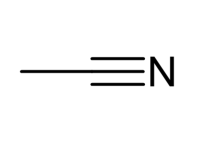
The cyano group features an sp-hybridized carbon triple-bonded to nitrogen, producing a linear geometry and a large bond dipole (Cδ+≡Nδ−). This polarization makes the nitrile carbon susceptible to nucleophilic addition, though resonance stabilization and the strong C≡N bond confer substantial kinetic stability. Nitriles are commonly prepared by S_N2 substitution of alkyl halides with cyanide salts, dehydration of primary amides, or addition of HCN to carbonyls (cyanohydrin formation) followed by functional transformations. Hydrolysis yields amides or carboxylic acids depending on conditions; acid hydrolysis proceeds via protonation and water addition, while base hydrolysis involves hydroxide addition and subsequent tautomerization and cleavage. Reduction provides primary amines (e.g., with LiAlH₄ or catalytic hydrogenation), and partial reduction can yield aldehydes under carefully controlled methods. α-Hydrogens adjacent to nitriles are relatively acidic (pK_a ~25) because the resulting carbanion is stabilized by the electron-withdrawing cyano group, enabling C–C bond formation via nitrile-stabilized anions. Spectroscopically, nitriles show a sharp IR band near 2210–2260 cm⁻¹ and a characteristic ¹³C NMR signal around 110–130 ppm.