
 CATEGORIES
- ORGANIC COMPOUNDS(1135)
- Thiols(1)
- Metal-organic compounds(1)
- Sulfonic acids(6)
- Alcohols(74)
- Aldehydes(47)
- Alkyl nitrites(6)
- Amines(56)
- Aminoacids(59)
- Amides(33)
- Anhydrides(11)
- Acyl Halides(5)
- Carboxylic Acids(170)
- Dyes and Indicators(99)
- Esters(52)
- Ethers(17)
- Organic Halogens (Organohalides)(30)
- Flavonoids(5)
- Heterocycles(25)
- Hydrocarbons(38)
- Imides(2)
- Ketones(29)
- Mixed solvents(16)
- Nitro Compounds(5)
- Nitriles(9)
- Organic salts(74)
- Phenols(30)
- Polymers ( HMW compounds )(68)
- Sugars (Saccharides)(24)
- Silicoorgano and Phosphoorganocompounds(1)
- Peptides(2)
- Terpenes(16)
- Others(126)
- INORGANIC COMPOUNDS(1055)
- LAB EQUIPMENT(5176)
- *(1)
- Organic Synthesis(421)
- Industry(775)
Language
US version allows shipping to all available destinations


 MANUFACTURER
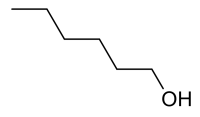
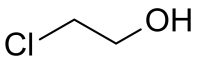
Alcohols are organic compounds containing a hydroxyl group (–OH) bonded to an sp³-hybridized carbon (R–OH). They are polar, hydrogen-bonding molecules that serve as key solvents, fuels, and synthetic intermediates.
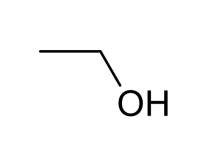
Anhydrous Ethyl Alcohol (Denatured Ethanol) >99%
Availability: Large quantity
Dispatched within: 7 days
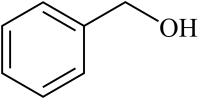

D-Panthenol ( Provitamine B5 ) - 1000ml = 1200g

Availability: Large quantity
Dispatched within: 7 days
D-Panthenol ( Provitamine B5 ) - 100ml = 120g

Availability: Large quantity
Dispatched within: 7 days


Geraniol Rose Fragrance Pure compound >98% - 1000ml

Availability: Large quantity
Dispatched within: 7 days
Geraniol Rose Fragrance Pure compound >98% - 100ml

Availability: Large quantity
Dispatched within: 7 days
Geraniol Rose Fragrance Pure compound >98% - 10ml

Availability: Large quantity
Dispatched within: 7 days
Geraniol Rose Fragrance Pure compound >98% - 500ml

Availability: Large quantity
Dispatched within: 7 days
Glycerin + Propylene Glycol Pure Odorless Glass Bottles >99,5% VG + PG - 100mL + 100mL

Availability: Large quantity
Dispatched within: 7 days
Glycerin + Propylene Glycol Pure Odorless Glass Bottles >99,5% VG + PG - 10L + 10L

Availability: Large quantity
Dispatched within: 7 days
Glycerin + Propylene Glycol Pure Odorless Glass Bottles >99,5% VG + PG - 1L + 1L

Availability: Large quantity
Dispatched within: 7 days
Glycerin + Propylene Glycol Pure Odorless Glass Bottles >99,5% VG + PG - 500mL + 500mL

Availability: Large quantity
Dispatched within: 7 days
Alcohols feature a polarized C–O bond and an O–H bond capable of both donating and accepting hydrogen bonds. This dual hydrogen-bonding ability explains their relatively high boiling points and viscosities compared with isomeric ethers or hydrocarbons, and their significant water solubility at low molecular weights. Solubility decreases as the hydrophobic alkyl portion grows; branching generally increases solubility by reducing hydrophobic surface area. In acidic–basic terms, alcohols are weak Brønsted acids (typical pK_a ~16–18), forming alkoxide ions (RO⁻) upon deprotonation with strong bases; alkoxides are strong nucleophiles and bases and are central to reactions such as Williamson ether synthesis.
Classification and structure–reactivity. Alcohols are classified as primary (1°), secondary (2°), or tertiary (3°) depending on the degree of substitution at the carbon bearing –OH. This substitution strongly affects reactivity, especially in substitution and oxidation: tertiary alcohols resist oxidation under mild conditions, while primary alcohols oxidize readily to aldehydes and then carboxylic acids, and secondary alcohols to ketones. Benzylic and allylic alcohols are particularly reactive in substitutions due to resonance stabilization of adjacent carbocations or transition states.
Synthesis. Common preparations include nucleophilic substitution of alkyl halides by hydroxide or alkoxide, reduction of carbonyl compounds (aldehydes → 1° alcohols; ketones → 2° alcohols) with hydride donors or catalytic hydrogenation, and addition of organometallic reagents (Grignard/organolithium) to carbonyls followed by protonation. Industrially important routes include hydration of alkenes (acid-catalyzed, oxymercuration–demercuration, or hydroboration–oxidation) and fermentation (ethanol).
Characteristic reactions.
-
Substitution: Protonation of –OH converts it into a good leaving group (H₂O), enabling S_N1/S_N2 reactions to give alkyl halides or other substituted products; tosylates/mesylates provide non-rearranging leaving groups.
-
Elimination (dehydration): Under acid and heat, alcohols form alkenes via E1 (2°, 3°) or E2 (1°) pathways; Zaitsev products are typical unless constrained.
-
Oxidation: Controlled by reagent strength and conditions—PCC, DMP, or Swern oxidation stop at aldehydes, whereas chromate/permanganate oxidize further to acids.
-
Esterification: Reaction with carboxylic acids (Fischer esterification) or activated acyl derivatives yields esters.
Spectroscopic notes. Alcohols show broad IR O–H stretches (~3200–3600 cm⁻¹) due to hydrogen bonding and C–O stretches around 1000–1260 cm⁻¹. In ¹H NMR, the hydroxyl proton is exchangeable and often variable in chemical shift, while α-protons are shifted downfield by the electronegative oxygen.
Overall, alcohols are foundational functional groups whose physical properties and rich, predictable reactivity make them indispensable across synthesis, materials, and biochemistry.