


Acyl halides (acid halides) are reactive carboxylic acid derivatives with the general formula R–CO–X, where X is a halogen. They contain an electrophilic carbonyl carbon and readily undergo nucleophilic acyl substitution, making them key intermediates for synthesizing esters, amides, and anhydrides. A common example is acetyl chloride.
 CATEGORIES
- ORGANIC COMPOUNDS(1135)
- Thiols(1)
- Metal-organic compounds(1)
- Sulfonic acids(6)
- Alcohols(74)
- Aldehydes(47)
- Alkyl nitrites(6)
- Amines(56)
- Aminoacids(59)
- Amides(33)
- Anhydrides(11)
- Acyl Halides(5)
- Carboxylic Acids(170)
- Dyes and Indicators(99)
- Esters(52)
- Ethers(17)
- Organic Halogens (Organohalides)(30)
- Flavonoids(5)
- Heterocycles(25)
- Hydrocarbons(38)
- Imides(2)
- Ketones(29)
- Mixed solvents(16)
- Nitro Compounds(5)
- Nitriles(9)
- Organic salts(74)
- Phenols(30)
- Polymers ( HMW compounds )(68)
- Sugars (Saccharides)(24)
- Silicoorgano and Phosphoorganocompounds(1)
- Peptides(2)
- Terpenes(16)
- Others(126)
- INORGANIC COMPOUNDS(1055)
- LAB EQUIPMENT(5176)
- *(1)
- Organic Synthesis(421)
- Industry(775)
All prices are displayed with vat rate 23%, depending on destination country final price might differ, for most EU countries price will be decreased. If you are active tax payer in the EU after providing correct company data you will be charged only netto prices (0% VAT)
Language
US version allows shipping to all available destinations
MANUFACTURER
Benzoyl Chloride Pure >99% [98-88-4] - 1000ml
![Benzoyl Chloride Pure >99% [98-88-4] - 1000ml](/environment/cache/images/productGfx_4752_200_200/76dfe8da6bd417fd40f662a6cfc3392c.jpg?overlay=1)
Benzoyl Chloride Pure >99% [98-88-4] - 1000ml
Availability: Large quantity
Dispatched within: 7 days
![Benzoyl Chloride Pure >99% [98-88-4] - 100ml](/environment/cache/images/productGfx_4754_200_200/43be1b3fc2971fd8bb2dbd29642384b3.jpg?overlay=1)
![Benzoyl Chloride Pure >99% [98-88-4] - 10ml](/environment/cache/images/productGfx_4755_200_200/f0f334ffaf01e6a07959a6eb5968aebb.jpg?overlay=1)
![Benzoyl Chloride Pure >99% [98-88-4] - 500ml](/environment/cache/images/productGfx_4753_200_200/0485466c802b7deba67a9871a50db080.jpg?overlay=1)
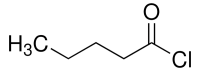
Acyl halides (R–C(=O)–X) are carboxylic acid derivatives in which the hydroxyl group is replaced by a halogen, most commonly chlorine or bromine. Their exceptional reactivity arises from the strong −I (inductive electron-withdrawing) effect of X and the poor π-donation from halogen lone pairs into the carbonyl, which together increase the partial positive charge at the acyl carbon. Consequently, the carbonyl is highly polarized and the C–X bond is readily cleaved during substitution.
Reactivity hierarchy and electronic rationale. Within the acyl-derivative series, acyl halides are at the top of the reactivity scale (acyl halides > anhydrides > esters ≈ acids > amides). This correlates with leaving-group basicity: halide anions (especially Cl⁻, Br⁻) are weak bases and thus excellent leaving groups. Fluorides are an instructive exception: despite strong −I effects, acyl fluorides are less reactive than chlorides because F⁻ is a poorer leaving group and the C–F bond is stronger, giving acyl fluorides greater kinetic stability.
Mechanistic framework. Their dominant transformations proceed by an addition–elimination (A_E) pathway of nucleophilic acyl substitution. Nucleophilic attack at the carbonyl carbon forms a tetrahedral oxyanion intermediate; subsequent collapse expels X⁻ and restores the C=O. Rate enhancement relative to esters or amides reflects both faster nucleophilic addition (more electrophilic carbonyl) and faster elimination (better leaving group). Under basic conditions, reactions are often effectively irreversible because HX is neutralized, shifting equilibrium toward products.
Preparative methods. Acyl chlorides are commonly generated from carboxylic acids using SOCl₂, (COCl)₂, PCl₃, or PCl₅. These reagents convert the poor leaving group –OH into a leaving group such as chlorosulfite or phosphoryl esters, enabling chloride substitution. Thermodynamic driving forces include formation of strong P=O bonds (phosphorus reagents) or gaseous byproducts SO₂/CO/CO₂ and HCl (thionyl/oxalyl chloride), which remove products from the reaction medium. Acyl bromides are less frequently prepared and are often obtained via PBr₃ or halide exchange from acyl chlorides.
Characteristic reactions.
-
Hydrolysis: rapid, often exothermic conversion to carboxylic acids (R–CO₂H) with liberation of HX.
-
Alcoholysis: formation of esters (R–COOR′), typically with a base (e.g., pyridine, triethylamine) to trap HX.
-
Aminolysis: formation of amides (R–CONR′₂); the reaction is strongly favored because amide products are resonance-stabilized.
-
Anhydride formation: reaction with carboxylates yields symmetric or mixed anhydrides.
-
Lewis-acid activation: in Friedel–Crafts acylation, coordination to AlCl₃ facilitates heterolysis of C–Cl to generate acylium-ion character (R–C≡O⁺), the effective electrophile.
-
Organometallic additions: two equivalents of Grignard or organolithium reagents typically add to give tertiary alcohols after workup; controlled single addition to aldehydes requires less reactive organocuprates or catalytic protocols.
Spectroscopic/structural notes. Acyl halides show a strong IR ν(C=O) band typically near 1800 cm⁻¹, shifted to higher frequency relative to esters/amides due to reduced resonance donation into the carbonyl. In ¹³C NMR, the acyl carbon resonates downfield (often ~165–180 ppm), reflecting substantial electrophilic character.
Handling and safety. Owing to high moisture sensitivity, they are stored and manipulated under anhydrous conditions; exposure to water produces corrosive HCl/HBr vapors. Many are lachrymators and strong acylating agents, requiring inert atmosphere techniques and appropriate PPE.