
 CATEGORIES
- ORGANIC COMPOUNDS(1135)
- Thiols(1)
- Metal-organic compounds(1)
- Sulfonic acids(6)
- Alcohols(74)
- Aldehydes(47)
- Alkyl nitrites(6)
- Amines(56)
- Aminoacids(59)
- Amides(33)
- Anhydrides(11)
- Acyl Halides(5)
- Carboxylic Acids(170)
- Dyes and Indicators(99)
- Esters(52)
- Ethers(17)
- Organic Halogens (Organohalides)(30)
- Flavonoids(5)
- Heterocycles(25)
- Hydrocarbons(38)
- Imides(2)
- Ketones(29)
- Mixed solvents(16)
- Nitro Compounds(5)
- Nitriles(9)
- Organic salts(74)
- Phenols(30)
- Polymers ( HMW compounds )(68)
- Sugars (Saccharides)(24)
- Silicoorgano and Phosphoorganocompounds(1)
- Peptides(2)
- Terpenes(16)
- Others(126)
- INORGANIC COMPOUNDS(1055)
- LAB EQUIPMENT(5176)
- *(1)
- Organic Synthesis(421)
- Industry(775)
Language
US version allows shipping to all available destinations


 MANUFACTURER
Ethers are organic compounds with the general structure R–O–R′, where an oxygen atom links two carbon groups. They are relatively inert, weakly polar molecules that act as hydrogen-bond acceptors and are widely used as solvents and intermediates in organic synthesis.
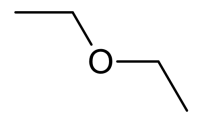
Diethyl Ether Pure
✈︎ Shipping Limitations: We do not ship this product to: Germany, USA | Unless government approved ⓘ
Availability: Large quantity
Dispatched within: 7 days


Methyl tert-Butyl Ether ( MTBE ) Solvent - 1000ml

Availability: Large quantity
Dispatched within: 7 days
Methyl tert-Butyl Ether ( MTBE ) Solvent - 100ml

Availability: Large quantity
Dispatched within: 7 days
Methyl tert-Butyl Ether ( MTBE ) Solvent - 10ml

Availability: Large quantity
Dispatched within: 7 days
Methyl tert-Butyl Ether ( MTBE ) Solvent - 5000ml

Availability: Large quantity
Dispatched within: 7 days
Methyl tert-Butyl Ether ( MTBE ) Solvent - 500ml

Availability: Large quantity
Dispatched within: 7 days


Ethers contain an sp³-hybridized oxygen bearing two σ bonds and two lone pairs, giving a bent geometry (C–O–C angle ~110°). The C–O bonds are polarized (Cδ+–Oδ−), so ethers possess a moderate dipole moment, but they cannot hydrogen-bond to themselves because they lack an O–H bond. As a result, their boiling points are lower than those of isomeric alcohols yet higher than comparable alkanes. They are typically less dense than water and display limited water solubility that decreases with increasing alkyl chain length, though they readily solvate cations via lone-pair coordination.
Classification and nomenclature. Ethers may be symmetrical (R = R′) or unsymmetrical (R ≠ R′). Aryl ethers (Ar–O–R) and vinyl/alkenyl ethers show distinct reactivity compared with dialkyl ethers. In IUPAC nomenclature, ethers are often named as alkoxyalkanes (e.g., ethoxyethane), while common names list the two substituents alphabetically followed by “ether.”
Synthesis. The most common laboratory route is the Williamson ether synthesis: an alkoxide (RO⁻) performs an S_N2 substitution on a primary alkyl halide or sulfonate ester, favoring less-hindered substrates. Acid-catalyzed dehydration of alcohols can produce symmetrical ethers under controlled conditions, though competing elimination becomes significant with secondary/tertiary alcohols. Aryl ethers are often formed via nucleophilic aromatic substitution or metal-catalyzed cross-couplings (e.g., Ullmann or Buchwald–Hartwig type C–O bond formation).
Reactivity. Simple dialkyl ethers are generally resistant to bases, mild nucleophiles, and many oxidants. They can, however, be cleaved by strong acids such as HI or HBr: protonation of oxygen activates the adjacent C–O bond toward substitution, yielding an alcohol and an alkyl halide (or two halides under excess acid). Aryl–O bonds are much less prone to S_N2 cleavage; instead, cleavage typically occurs at the alkyl side. A key practical concern is autoxidation: ethers exposed to air and light can form explosive peroxides, especially diethyl ether and THF, so they require proper storage (inhibitors, dating, and peroxide testing).
Importance and examples. Ethers are ubiquitous as solvents (diethyl ether, THF, dioxane) due to their stability and ability to solvate reagents, and as functional groups in natural products, pharmaceuticals, and polymers. Cyclic ethers (epoxides, THF, crown ethers) display enhanced or specialized reactivity arising from ring strain or selective cation binding.