
 CATEGORIES
- ORGANIC COMPOUNDS(1135)
- INORGANIC COMPOUNDS(1055)
- LAB EQUIPMENT(5176)
- *(1)
- Organic Synthesis(421)
- Alkylating agents(11)
- Bases(47)
- Building blocks(43)
- Catalysts(5)
- Classic Acids(79)
- Drying Agents(54)
- Enantioselective synthesis(2)
- Halogenating reagents(8)
- Oxidizing agents(23)
- Peptide synthesis(4)
- Reducing Agents(19)
- Solvents(150)
- Polar aprotic(32)
- Polar protic(45)
- non-polar(24)
- Industry(775)
Language
US version allows shipping to all available destinations


 MANUFACTURER
Non-polar solvents are media with low polarity, weak ability to stabilize ions and no classical hydrogen-bond donor properties. In organic synthesis, they are mainly used for hydrophobic, neutral, weakly polar or aromatic compounds, as well as in extraction, purification, crystallization and reactions that do not require strong ionic solvation. This group includes hexane, heptane, cyclohexane, isooctane, toluene, xylenes and other aliphatic or aromatic hydrocarbons.


Cyclohexane ( hexahydrobenzene ) Pure - 20 000ml

Availability: Large quantity
Dispatched within: 7 days
Cyclohexane ( Hexahydroxybenzene, Hexamethylene, Hexanaphthen ) >99% - 1000ml

Availability: Large quantity
Dispatched within: 7 days
Cyclohexane ( Hexahydroxybenzene, Hexamethylene, Hexanaphthen ) >99% - 100ml

Availability: Large quantity
Dispatched within: 7 days
Cyclohexane ( Hexahydroxybenzene, Hexamethylene, Hexanaphthen ) >99% - 10ml

Availability: Large quantity
Dispatched within: 7 days
Cyclohexane ( Hexahydroxybenzene, Hexamethylene, Hexanaphthen ) >99% - 5000ml

Availability: Large quantity
Dispatched within: 7 days
Cyclohexane ( Hexahydroxybenzene, Hexamethylene, Hexanaphthen ) >99% - 500ml

Availability: Large quantity
Dispatched within: 7 days
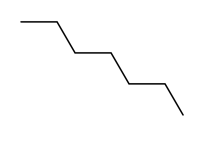
N- Hexane Hexan ( NOT Petroleum Fraction Pure N - Isomer ) - 1000ml

Availability: Large quantity
Dispatched within: 7 days
N- Hexane Hexan ( NOT Petroleum Fraction Pure N - Isomer ) - 100ml

Availability: Large quantity
Dispatched within: 7 days
N- Hexane Hexan ( NOT Petroleum Fraction Pure N - Isomer ) - 5000ml

Availability: Large quantity
Dispatched within: 7 days
N- Hexane Hexan ( NOT Petroleum Fraction Pure N - Isomer ) - 500ml

Availability: Large quantity
Dispatched within: 7 days


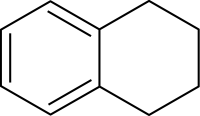
Non-polar solvents as media for hydrophobic compounds
Non-polar solvents are well suited for compounds containing large hydrocarbon fragments, aromatic rings or long alkyl chains. Their low polarity supports dissolution of hydrophobic substances but limits the solubility of many salts and strongly polar reagents. They are therefore especially useful when the reaction or purification step involves neutral and weakly polar molecules.
Aliphatic non-polar solvents
Hexane, heptane, cyclohexane and isooctane are typical aliphatic non-polar solvents. They are often used in extraction, chromatography, product precipitation, washing of solids and crystallization of organic compounds. They differ in volatility, boiling point, viscosity and safety profile, so the choice of a specific hydrocarbon can affect both laboratory handling and solvent removal.
Aromatic non-polar solvents
Toluene and xylenes are aromatic solvents with low to moderately low polarity, often used when a hydrophobic medium with a higher boiling point than light aliphatic hydrocarbons is required. They can dissolve aromatic and hydrophobic compounds efficiently, and their boiling points allow selected reactions to be conducted at higher temperatures. Benzene historically served a similar function, but its use is now strongly restricted because of health hazards.
Why are non-polar solvents unsuitable for many ionic reactions?
Non-polar solvents poorly stabilize separated charges and usually dissolve inorganic salts poorly. For this reason, many reactions requiring free ions, strongly polar reagents or efficient anion solvation proceed more slowly in such media or require additives, phase-transfer catalysts or special reaction design. They are more useful when the main reaction participants are neutral molecules or systems soluble in a hydrocarbon phase.
Use in purification and work-up
Non-polar solvents are very important in post-reaction operations. They may be used for extraction of non-polar products, removal of organic impurities, washing, crystallization, precipitation of products from more polar mixtures and as components of mobile phases in chromatography. In practice, mixtures of non-polar solvents with more polar additives are often used to control solubility and separation more precisely.
How should a non-polar solvent be selected?
The choice of a non-polar solvent depends on substrate and product solubility, process temperature, ease of evaporation, catalyst compatibility and workplace safety. Light hydrocarbons are useful for low-temperature evaporation and extraction, while toluene or xylenes may be beneficial for reactions requiring higher temperatures. Selection should also consider toxicity, flammability and whether a more problematic solvent can be replaced without losing its synthetic function.
Safety and limitations of use
Many non-polar solvents are volatile and flammable, and some may present additional toxicological or environmental hazards. Hexane requires particular control because of known neurotoxic concerns, and benzene should not be treated as a standard laboratory solvent because of its carcinogenicity. Each solvent from this group should be assessed individually using its safety data sheet, volatility, flash point and compatibility with the intended application.