
 CATEGORIES
- ORGANIC COMPOUNDS(1129)
- Thiols(1)
- Metal-organic compounds(1)
- Sulfonic acids(6)
- Alcohols(74)
- Aldehydes(47)
- Alkyl nitrites(6)
- Amines(55)
- Aminoacids(59)
- Amides(33)
- Anhydrides(11)
- Acyl Halides(5)
- Carboxylic Acids(170)
- Dyes and Indicators(99)
- Esters(52)
- Ethers(17)
- Organic Halogens (Organohalides)(30)
- Flavonoids(5)
- Heterocycles(24)
- Hydrocarbons(34)
- Imides(2)
- Ketones(29)
- Mixed solvents(16)
- Nitro Compounds(5)
- Nitriles(9)
- Organic salts(74)
- Phenols(30)
- Polymers ( HMW compounds )(68)
- Sugars (Saccharides)(24)
- Silicoorgano and Phosphoorganocompounds(1)
- Peptides(2)
- Terpenes(16)
- Others(126)
- INORGANIC COMPOUNDS(1055)
- LAB EQUIPMENT(5176)
- *(1)
- Organic Synthesis(417)
- Industry(775)
Language
US version allows shipping to all available destinations


 MANUFACTURER
Oxygen heterocycles are ring compounds containing at least one oxygen atom as part of the ring. They include saturated cyclic ethers such as oxirane, oxetane, tetrahydrofuran and tetrahydropyran, as well as unsaturated or aromatic systems such as furan, benzofuran, pyrans, chromenes, xanthenes, coumarins and lactones. In organic synthesis, they are important solvents, building blocks, ring-opening substrates, precursors to multifunctional compounds and structural cores for further functionalization.


Tetrahydrofurane ( THF ) Oxolane Analytically Pure
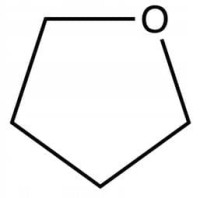
Availability: Large quantity
Dispatched within: 7 days
Which types of oxygen heterocycles are used in synthesis?
Oxygen heterocycles include small strained rings such as epoxides and oxetanes, medium cyclic ethers such as tetrahydrofuran and tetrahydropyran, and aromatic or benzo-fused systems such as furan, benzofuran, chromene, xanthene and coumarin. Lactones, cyclic acetals and cyclic carbonates also belong to this group when oxygen is part of the ring system. Differences between these subgroups arise from ring strain, π-system presence and the type of neighboring functional groups.
Epoxides and oxetanes as strained oxygen heterocycles
Epoxides and oxetanes are small oxygen-containing rings whose reactivity is largely related to ring strain. Epoxides readily undergo ring-opening reactions with nucleophiles, allowing access to alcohols, amino alcohols, diols, thioethers and other derivatives. Oxetanes are less strained than epoxides, but they can still undergo controlled ring-opening or ring-expansion reactions, especially under suitably activated conditions.
Tetrahydrofuran and tetrahydropyran as cyclic ethers
Tetrahydrofuran and tetrahydropyran are saturated cyclic ethers that frequently appear in synthesis as solvents, structural fragments or ring systems present in intermediates. Their oxygen atom can participate in donor and coordination interactions, while the ring can influence molecular geometry and polarity. Compared with small epoxides, they are usually less prone to spontaneous ring opening.
Furan and benzofuran as aromatic systems
Furan and benzofuran are aromatic oxygen heterocycles. The oxygen atom in the aromatic system influences ring electron density and susceptibility to electrophilic substitution and other functionalization reactions. Such systems may be used as preformed aromatic fragments or as substrates for further molecular elaboration through substitution, coupling, cycloaddition or oxidation.
Lactones, acetals and cyclic carbonates
Oxygen heterocycles are not limited to simple cyclic ethers. Lactones are cyclic esters, cyclic acetals contain C-O-C-O units within the ring, and cyclic carbonates contain a carbonate fragment as part of the ring. These compounds are useful as protected forms of carbonyl compounds or diols, polymer-material precursors, ring-opening substrates and intermediates in the synthesis of multifunctional compounds.
Why are oxygen heterocycles useful as building blocks?
An oxygen atom increases molecular polarity, can act as a hydrogen-bond acceptor and modifies the electronic properties of the ring. Oxygen heterocycles enable ether, lactone, acetal or aromatic fragments to be introduced into complex structures. Some can be used as preformed cores, while others act as reactive rings opened by nucleophiles or converted into compounds containing several functional groups.
How are oxygen heterocycles formed?
Oxygen heterocycles can be prepared by cyclization of diols, hydroxycarbonyl substrates, phenols, alkenols, epoxides, aldehydes, esters and carbonyl compounds. C-O bond formation, cycloadditions, acetalization, lactonization, ring opening and ring closure, and functionalization of preformed aromatic systems are also important. Method choice depends on ring size, degree of saturation and desired product reactivity.
Use in laboratory research
Oxygen heterocycles are used in organic synthesis, polymer chemistry, materials chemistry, structural analysis, ring-opening reactions, heteroaromatic synthesis and studies of systems containing oxygen within the ring. They may serve as solvents, substrates, intermediates, building blocks, protecting groups or models for studying ring strain and cyclic ether reactivity.
Safety and limitations of use
Oxygen heterocycles differ in hazard profile depending on structure. Some cyclic ethers may be volatile and flammable, and some may form peroxides during storage. Strained rings such as epoxides may show high reactivity toward nucleophiles and biological substances, while larger or aromatic systems may have different stability and solubility. Each product should be evaluated individually according to its safety data sheet.
Product use
The product is intended exclusively for laboratory, analytical, technical and research use, especially in organic synthesis, heterocyclic chemistry, ring-opening reactions, functionalization of oxygen-containing systems, sample preparation and studies of compounds containing oxygen within the ring. It is not intended for consumption, contact with the body, pharmaceutical use, food applications, cosmetic use or any similar consumer use.