
 CATEGORIES
- ORGANIC COMPOUNDS(1134)
- Thiols(1)
- Metal-organic compounds(1)
- Sulfonic acids(6)
- Alcohols(74)
- Aldehydes(47)
- Alkyl nitrites(6)
- Amines(56)
- Aminoacids(59)
- Amides(33)
- Anhydrides(11)
- Acyl Halides(5)
- Carboxylic Acids(170)
- Dyes and Indicators(99)
- Esters(52)
- Ethers(17)
- Organic Halogens (Organohalides)(30)
- Flavonoids(5)
- Heterocycles(25)
- Hydrocarbons(38)
- Imides(2)
- Ketones(29)
- Mixed solvents(16)
- Nitro Compounds(5)
- Nitriles(9)
- Organic salts(74)
- Phenols(30)
- Polymers ( HMW compounds )(68)
- Sugars (Saccharides)(24)
- Silicoorgano and Phosphoorganocompounds(1)
- Peptides(2)
- Terpenes(16)
- Others(125)
- INORGANIC COMPOUNDS(1055)
- LAB EQUIPMENT(5176)
- *(1)
- Organic Synthesis(421)
- Industry(775)
Language
US version allows shipping to all available destinations


 MANUFACTURER
Furans are oxygen-containing aromatic heterocycles with a five-membered ring containing one oxygen atom and four carbon atoms. The oxygen atom and π-electron system influence their reactivity, polarity and susceptibility to ring functionalization. In organic synthesis, furans are used as building blocks and substrates for substitution, cycloaddition, ring opening, oxidation and preparation of more complex heterocycles and multifunctional systems.
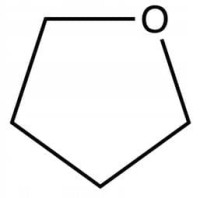
Tetrahydrofurane ( THF ) Oxolane Analytically Pure
Availability: Large quantity
Dispatched within: 7 days
Furan as an electron-rich heteroaromatic system
The furan ring is aromatic, but compared with benzene it is more reactive toward many electrophiles. The oxygen atom affects electron-density distribution, and positions adjacent to oxygen often play a particularly important role in substitution reactions. This reactivity is synthetically useful, but it requires careful control because excessive activation may lead to side reactions or decomposition of sensitive derivatives.
How are furan derivatives prepared?
Furan derivatives can be prepared either by constructing the ring from suitable precursors or by functionalizing a preformed furan system. Classical ring-forming approaches include Paal-Knorr and Feist-Benary reactions, while modern methods also include metal-catalyzed cyclizations, cascade reactions, cycloisomerizations and strategies leading to polysubstituted furans. Method choice depends on the desired substitution pattern and functional-group tolerance.
Furans as substrates for Diels-Alder reactions
Furans can act as dienes in Diels-Alder reactions, enabling a simple heteroaromatic system to be transformed into more complex cyclic structures. These reactions are important in the synthesis of structurally complex compounds and in the design of materials based on reversible covalent bonds. The outcome depends on furan substitution, dienophile type and the balance between product stability and the possibility of retro-Diels-Alder reaction.
Furans as building blocks from renewable feedstocks
Selected furan derivatives, such as furfural and 5-hydroxymethylfurfural, are important chemical platforms obtained from carbohydrate-based resources. Because they contain both a furan ring and reactive functional groups, they can be converted into various intermediates, monomers, carbonyl compounds and oxygen-containing systems. In organic synthesis, they connect heterocyclic chemistry with the design of more sustainable preparation routes.
How do furans differ from tetrahydrofurans?
Furan and tetrahydrofuran both contain oxygen in the ring, but they belong to different structural types. Furan is an aromatic, unsaturated heterocycle, whereas tetrahydrofuran is a saturated cyclic ether. Therefore, furan can participate in reactions typical of heteroaromatics and diene systems, while tetrahydrofuran is more often treated as a solvent or a less reactive ether fragment.
Use in laboratory research
Furans are used in organic synthesis, heterocyclic chemistry, cycloaddition reactions, platform-chemical studies, materials chemistry and development of methods for preparing polysubstituted heterocycles. They may serve as substrates, intermediates, building blocks, cascade-reaction components or models for studying the reactivity of oxygen-containing heteroaromatics.
Safety and limitations of use
Furans and their derivatives differ in hazard profile depending on structure. Some may be volatile, flammable, toxic, irritating or sensitive to oxidation, acids or light. Simple furan is particularly volatile and flammable, whereas more substituted derivatives may show different stability, reactivity and solubility. Each product should be assessed individually according to its safety data sheet.
Product use
The product is intended exclusively for laboratory, analytical, technical and research use, especially in organic synthesis, heterocyclic chemistry, functionalization of oxygen-containing rings, cycloaddition reactions, platform-chemical studies and preparation of furan derivatives. It is not intended for consumption, contact with the body, pharmaceutical use, food applications, cosmetic use or any similar consumer use.