
 CATEGORIES
- ORGANIC COMPOUNDS(1306)
- Metal-organic compounds(1)
- Sulfonic acids(6)
- Thiols(0)
- Alcohols(82)
- Aldehydes(59)
- Alkyl nitrites(6)
- Amines(82)
- Aminoacids(78)
- Amides(33)
- Anhydrides(11)
- Acyl Halides(5)
- Carboxylic Acids(207)
- Dyes and Indicators(107)
- Esters(56)
- Ethers(17)
- Organic Halogens (Organohalides)(35)
- Flavonoids(5)
- Heterocycles(43)
- Hydrocarbons(42)
- Imides(2)
- Ketones(32)
- Mixed solvents(16)
- Nitro Compounds(14)
- Nitriles(9)
- Organic salts(74)
- Phenols(37)
- Polymers ( HMW compounds )(66)
- Sugars (Saccharides)(24)
- Silicoorgano and Phosphoorganocompounds(1)
- Peptides(2)
- Terpenes(19)
- Others(137)
- INORGANIC COMPOUNDS(1136)
- LAB EQUIPMENT(5179)
- *(1)
- Organic Synthesis(498)
- Industry(804)
Language
US version allows shipping to all available destinations


 MANUFACTURER
Vitamin D3 ( Vitamine D3 ) cholecalciferol 100 000IU
Regular price:
Regular price:
product unavailable
add to wish list
0
 cholecalciferol 100 000IU "Pin It")
Description
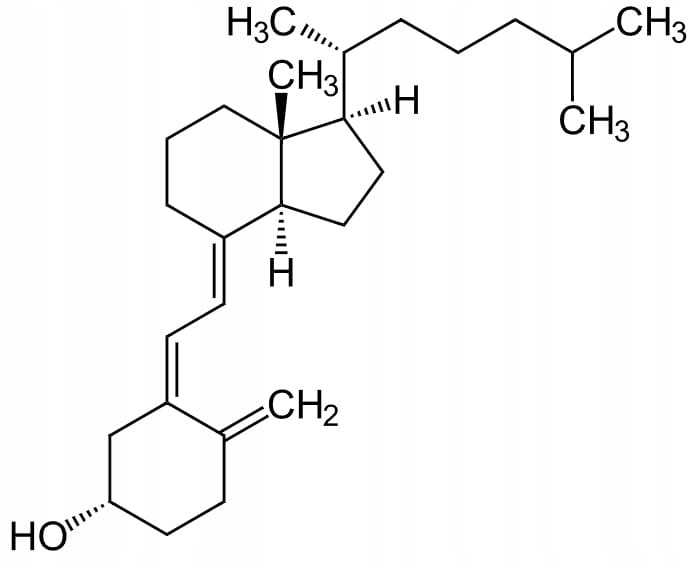
Vitamin D₃ (Cholecalciferol) 100,000 IU/g
Other Names: Cholecalciferol
CAS Number: 67-97-0
Sum Formula: C₂₇H₄₄O
Molar Mass: 384.64 g/mol
Appearance: White to off-white crystalline powder or fine solid
Vitamin D₃, also known as cholecalciferol, is the biologically active form of vitamin D produced naturally in human skin through exposure to sunlight (UVB radiation) and plays a crucial role in calcium and phosphate metabolism. It has a complex steroid-like structure and is widely used in nutritional, chemical, and research applications.
Chemical and Physical Properties
Density: ~0.94 g/cm³ (estimated)
Melting Point: 83–86°C
Boiling Point: Decomposes before boiling
Solubility in Water: Practically insoluble
Solubility in Other Solvents: Soluble in ethanol, chloroform, and vegetable oils
Odor: Odorless
Applications
Chemical Research: Studied for its role in regulating calcium homeostasis and bone metabolism.
Material Science: Investigated for incorporation into encapsulation systems for controlled release.
Organic Synthesis: Applied as a starting material for synthetic analogs of vitamin D for various studies.
Surface Chemistry: Studied for modification of surfaces in specialized biochemical applications.
Safety


Signal Word: Warning
H300 (14.3%): Fatal if swallowed [Danger Acute toxicity, oral]
H301 (85.8%): Toxic if swallowed [Danger Acute toxicity, oral]
H310 (12.7%): Fatal in contact with skin [Danger Acute toxicity, dermal]
H311 (87.3%): Toxic in contact with skin [Danger Acute toxicity, dermal]
H330 (100%): Fatal if inhaled [Danger Acute toxicity, inhalation]
H372 (> 99.9%): Causes damage to organs through prolonged or repeated exposure [Danger Specific target organ toxicity, repeated exposure]
P260, P262, P264, P270, P271, P280, P284, P301+P316, P302+P352, P304+P340, P316, P319, P320, P321, P330, P361+P364, P403+P233, P405, and P501
Handling and Storage
Storage Conditions: Store in a tightly sealed container in a cool, dry, and dark place. Protect from light, air, and moisture to prevent degradation. Refrigeration is recommended for extended storage.
Handling Precautions: Handle under inert atmosphere if possible for long-term stability. Avoid exposure to light and heat.