
 CATEGORIES
- ORGANIC COMPOUNDS(1129)
- Thiols(1)
- Metal-organic compounds(1)
- Sulfonic acids(6)
- Alcohols(74)
- Aldehydes(47)
- Alkyl nitrites(6)
- Amines(55)
- Aminoacids(59)
- Amides(33)
- Anhydrides(11)
- Acyl Halides(5)
- Carboxylic Acids(170)
- Dyes and Indicators(99)
- Esters(52)
- Ethers(17)
- Organic Halogens (Organohalides)(30)
- Flavonoids(5)
- Heterocycles(24)
- Hydrocarbons(34)
- Imides(2)
- Ketones(29)
- Mixed solvents(16)
- Nitro Compounds(5)
- Nitriles(9)
- Organic salts(74)
- Phenols(30)
- Polymers ( HMW compounds )(68)
- Sugars (Saccharides)(24)
- Silicoorgano and Phosphoorganocompounds(1)
- Peptides(2)
- Terpenes(16)
- Others(126)
- INORGANIC COMPOUNDS(1055)
- LAB EQUIPMENT(5176)
- *(1)
- Organic Synthesis(417)
- Industry(775)
Language
US version allows shipping to all available destinations


 MANUFACTURER
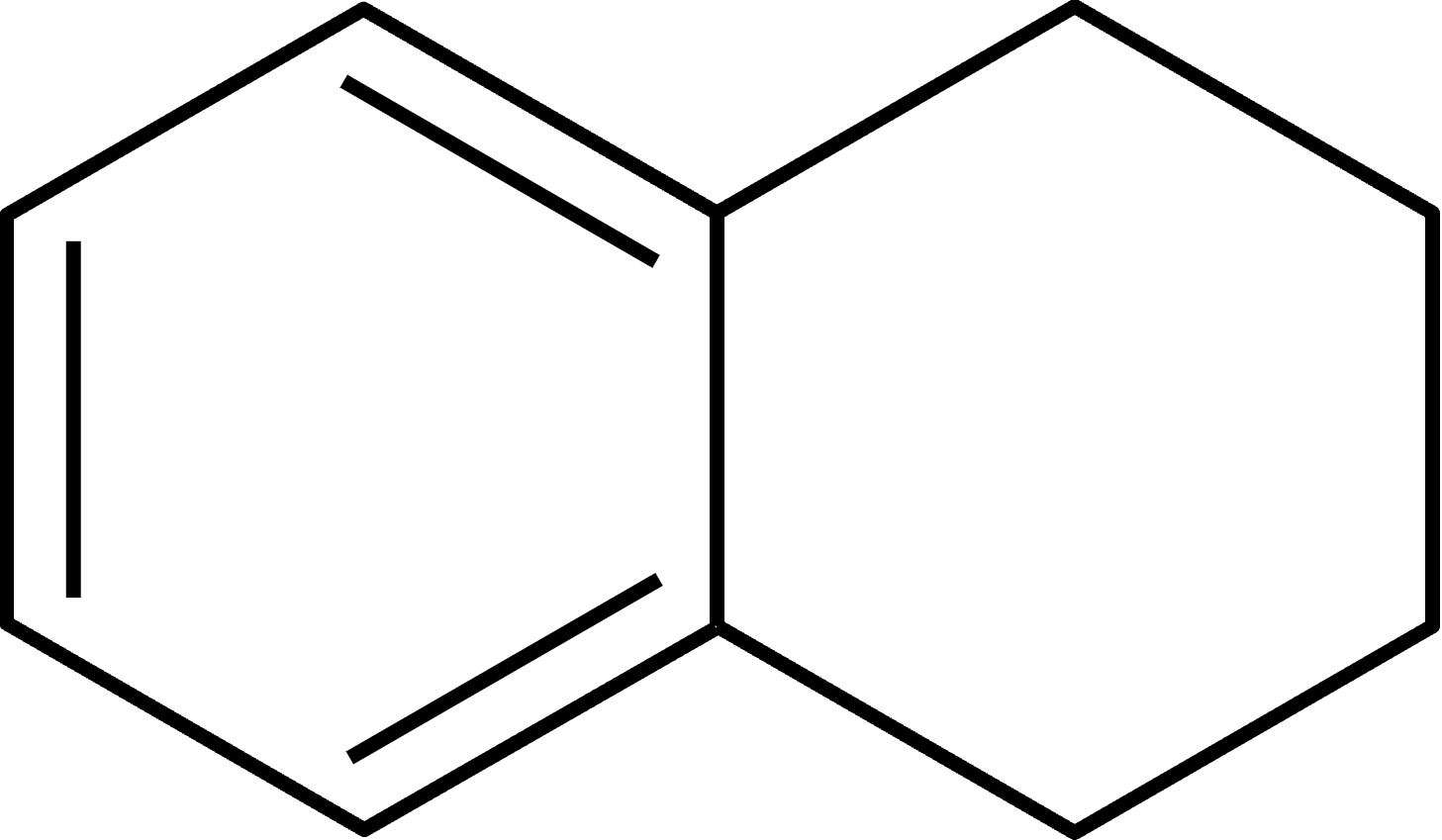
Tetralin (1,2,3,4-Tetrahydronaphthalene)
Regular price:
Regular price:
product unavailable
add to wish list
0
 "Pin It")
Description
Tetralin (1,2,3,4-Tetrahydronaphthalene)
Other Names: 1,2,3,4-Tetrahydronaphthalene, Tetraline
CAS Number: 119-64-2
Sum Formula: C₁₀H₁₂
Molar Mass: 132.20 g/mol
Appearance: Colorless to pale yellow liquid with a mild aromatic odor
Tetralin is a partially hydrogenated aromatic hydrocarbon, consisting of a naphthalene ring with four additional hydrogen atoms. It is used primarily as a high-boiling solvent, hydrogen donor, and intermediate in the chemical industry. Tetralin is stable under normal conditions but can oxidize upon prolonged air exposure.
Chemical and Physical Properties
Density: 0.967 g/cm³ (20°C)
Melting Point: -35°C
Boiling Point: 206°C
Flash Point: 82°C (closed cup)
Vapor Pressure: ~0.3 mmHg (20°C)
Solubility in Water: Practically insoluble
Solubility in Organic Solvents: Miscible with most organic solvents
Odor Threshold: ~0.17 ppm
Stability: Stable under inert conditions; avoid prolonged air contact
Applications
Used as a high-boiling solvent in coatings, resins, and polymers
Hydrogen donor in coal liquefaction and hydrogenation processes
Intermediate in the synthesis of specialty chemicals and dyes
Employed in lubricants and as a heat transfer fluid component
Applied in laboratory organic synthesis
Safety


Signal Word: Warning
H315: Causes skin irritation [Warning Skin corrosion/irritation]
H319: Causes serious eye irritation [Warning Serious eye damage/eye irritation]
H411: Toxic to aquatic life with long lasting effects [Hazardous to the aquatic environment, long-term hazard]
P264, P264+P265, P273, P280, P302+P352, P305+P351+P338, P321, P332+P317, P337+P317, P362+P364, P391, and P501
First Aid Measures
Eye Contact: Rinse cautiously with water for several minutes. Seek medical attention if irritation persists
Skin Contact: Wash thoroughly with soap and water. Remove contaminated clothing
Inhalation: Move to fresh air. Seek medical attention if symptoms occur
Ingestion: Do not induce vomiting. Seek immediate medical help
Handling and Storage
Store in a tightly closed container in a cool, dry, and well-ventilated place
Protect from ignition sources and direct sunlight
Keep under inert atmosphere for long-term storage
Avoid contact with oxidizing agents and strong acids