
 CATEGORIES
- ORGANIC COMPOUNDS(1063)
- Sulfonic acids(6)
- Thiols(1)
- Metal-organic compounds(1)
- Alcohols(73)
- Aldehydes(41)
- Alkyl nitrites(6)
- Amines(50)
- Aminoacids(58)
- Amides(29)
- Anhydrides(11)
- Acyl Halides(5)
- Carboxylic Acids(161)
- Dyes and Indicators(96)
- Esters(41)
- Ethers(18)
- Organic Halogens (Organohalides)(25)
- Flavonoids(5)
- Heterocycles(21)
- Hydrocarbons(31)
- Imides(2)
- Ketones(26)
- Mixed solvents(17)
- Nitro Compounds(5)
- Nitriles(9)
- Organic salts(74)
- Phenols(30)
- Polymers ( HMW compounds )(61)
- Sugars (Saccharides)(24)
- Silicoorgano and Phosphoorganocompounds(1)
- Peptides(2)
- Terpenes(12)
- Others(123)
- INORGANIC COMPOUNDS(1012)
- LAB EQUIPMENT(5176)
- *(1)
- Organic Synthesis(398)
- Industry(756)
Language
US version allows shipping to all available destinations


 MANUFACTURER
Sandalore (Sandal Pentanol)
Regular price:
Regular price:
product unavailable
add to wish list
0

 "Pin It")
Description
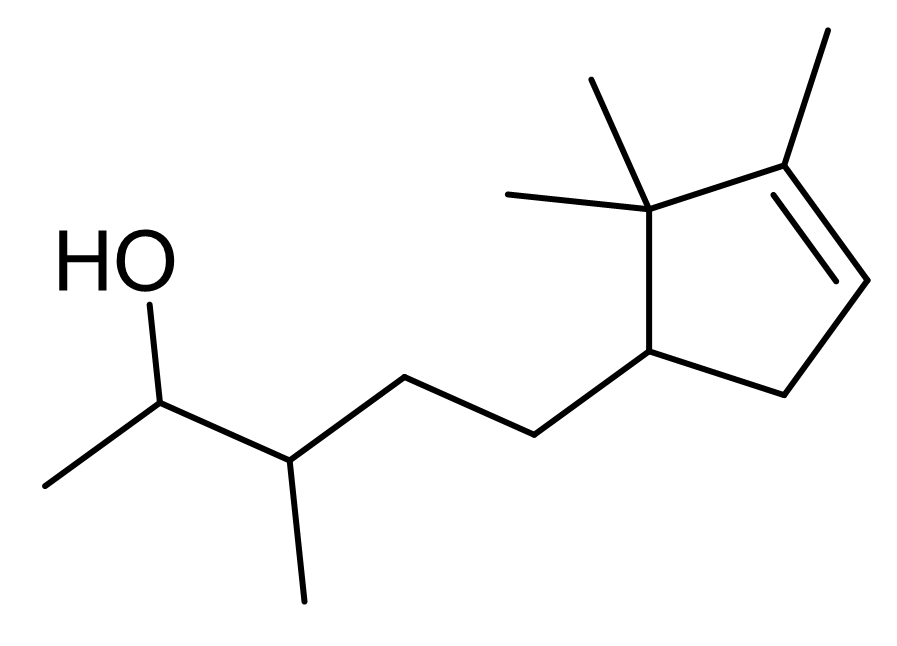
Sandal Pentanol (Sandalore)
Other Names: Sandalore, Sandasweet, 3-Methyl-5-(2,2,3-trimethylcyclopent-3-en-1-yl)pentan-2-ol, 3-Campholenyl-2-butanol, 3-Cyclopentene-1-butanol, alpha,beta,2,2,3-pentamethyl-, Bacdanol, Sandalrom, Sanjinol
Chemical Formula: C14H26O
Molar Mass: 210.36 g/mol
CAS Number: 1471313-03-7
Additional CAS Number: 65113-99-7
EC Numbers: 939-525-3, 265-453-0
Appearance: Clear, colorless to pale yellow viscous liquid
Odor: Characteristic mild, warm, woody, sandalwood-like odor
SMILES: CC1=CCC(C1(C)C)CCC(C)C(C)O
Sandal Pentanol, commonly known as Sandalore, is a synthetic organic compound belonging to the class of substituted cycloaliphatic alcohols. Its molecular structure consists of a trimethyl-substituted cyclopentene ring connected to a branched aliphatic chain containing a secondary hydroxyl group. This structural arrangement is responsible for its characteristic warm, woody and sandalwood-like olfactory properties. Sandalore is an important synthetic sandalwood odorant used in fragrance chemistry and extensively investigated in studies of molecular stereochemistry, biocatalysis and olfactory receptor interactions. Commercial Sandal Pentanol is generally supplied as a mixture of stereoisomers that share the same molecular connectivity but differ in their spatial arrangement. The relative proportions of these isomers influence the overall odor profile and performance of the material. Scientific investigations have demonstrated that certain stereoisomers exhibit substantially stronger sandalwood characteristics than others, making Sandalore an important model compound for understanding structure–odor relationships. In addition to its application in fragrance formulations, Sandalore has attracted considerable research interest because of its ability to activate the human olfactory receptor OR2AT4, which is also expressed in non-olfactory tissues. Its molecular properties and biological receptor interactions have been investigated in organic chemistry, materials science, cellular signaling and fragrance delivery research.
Chemical and physical properties
Sandal Pentanol is a clear, viscous liquid under normal ambient conditions. The supplied technical specification reports a density of 0.896–0.904 g/cm3 at 20 °C and a refractive index (nD20) of 1.4700–1.4750. These properties are characteristic of its predominantly hydrocarbon molecular structure containing a single secondary alcohol functional group.
The specified boiling range is approximately 103–106 °C under reduced pressure of 130 Pa. This value represents distillation under vacuum and should not be interpreted as the boiling point at normal atmospheric pressure. The reported flash point is approximately 110 °C.
Sandal Pentanol has very low solubility in water but is soluble in ethanol and compatible with various organic solvent systems. Its hydrophobic behavior arises primarily from the substituted cyclopentene ring and branched hydrocarbon chain, while the hydroxyl group provides a localized polar region capable of participating in hydrogen-bonding interactions.
The supplied technical specification reports a vapor pressure of approximately 0.257 Pa at 25 °C. Sandalore is classified as a relatively low-volatility fragrance compound, and its slow evaporation contributes to the persistence of its characteristic woody odor. Published research has also investigated its retention and gradual release from encapsulated materials.
The commercial material is characterized by a gas chromatographic assay exceeding 88%, expressed as the combined content of its isomers. This is particularly relevant because Sandalore contains multiple stereogenic centers and may occur as several stereoisomeric forms. The SMILES notation provided above describes the molecular connectivity without specifying an individual stereoisomer.
Scientific research has established that molecular stereochemistry strongly affects the olfactory properties of Sandalore. In a 2024 investigation of synthetic sandalwood fragrances, the stereoisomer possessing an (S) configuration at the hydroxyl-bearing C2 position and an (R) configuration at the adjacent C3 position exhibited a particularly strong, persistent and pleasant sandalwood character. Other stereoisomers displayed differing woody, amber-like or less desirable olfactory properties.
From a chemical perspective, Sandalore contains a secondary alcohol group capable of undergoing oxidation and esterification reactions. The carbon–carbon double bond within the cyclopentene ring can also participate in addition and reduction reactions. These functional groups make the compound and its synthetic precursors suitable for investigations of chemoselective transformations, stereoselective synthesis and catalytic reaction mechanisms.
Applications
Sandal Pentanol is primarily used in fragrance chemistry as a synthetic sandalwood odorant. Its warm, mild and persistent woody aroma makes it a valuable component in perfume compositions, cosmetic fragrances, soaps, detergents and technical fragrancing systems. Its relatively low volatility supports prolonged fragrance retention and makes it particularly interesting for formulations requiring a persistent woody character.
In organic synthesis, Sandalore is investigated as a model chiral alcohol for studying stereoselective and chemoselective transformations. Research has focused on the preparation of individual stereoisomers and the relationship between their molecular configuration and olfactory performance. A study published in Green Chemistry in 2024 demonstrated the application of ene-reductases and alcohol dehydrogenases in the synthesis of several sandalwood fragrance compounds, including Sandalore. These biocatalytic approaches were investigated as alternatives to conventional chemical reduction methods because they can improve stereochemical control while preserving the cyclopentene double bond.
Sandalore is also widely investigated in olfactory receptor research. It has been identified as an agonist of the human olfactory receptor OR2AT4, a G-protein-coupled receptor expressed in human keratinocytes and certain other cell types. Experimental studies have demonstrated that activation of OR2AT4 by Sandalore can stimulate intracellular calcium signaling and activate pathways involving cyclic AMP, ERK1/2 and p38 MAP kinases. These molecular responses have been associated with changes in keratinocyte proliferation and migration under laboratory conditions.
In experimental dermatological research, Sandalore has been employed to investigate olfactory receptor-mediated signaling in epidermal cells. Studies involving cultured human keratinocytes and laboratory wound models have demonstrated that OR2AT4 activation can influence cellular migration and regeneration processes. Such findings are relevant to understanding the biological functions of olfactory receptors beyond conventional odor perception.
Sandalore has additionally been investigated in human hair follicle research. Experimental studies using isolated, organ-cultured human scalp hair follicles demonstrated that stimulation of OR2AT4 by Sandalore prolonged the anagen growth phase and influenced cellular signaling associated with hair follicle maintenance. These effects were accompanied by reduced apoptosis and increased production of insulin-like growth factor 1 (IGF-1). These observations concern experimental models and do not establish the compound as an approved therapeutic treatment.
In materials science, Sandalore serves as a model compound for the development of controlled-release fragrance systems. Researchers have investigated its incorporation into mesoporous silica nanoparticles modified with polydopamine coatings. Such systems can retain Sandalore within a porous carrier and enable accelerated release upon exposure to light through photothermal heating. Experimental investigations have demonstrated the potential of these materials for improving fragrance retention, controlled diffusion and deposition onto textile surfaces.
Sandalore is also useful in analytical chemistry and physicochemical research involving synthetic fragrance compounds. Gas chromatography and mass spectrometry can be employed to examine its stereoisomeric composition and identify impurities or reaction byproducts. Infrared spectroscopy and other analytical techniques are used to investigate its molecular structure, functional groups and interactions with carrier materials.
As an industrial raw material, Sandal Pentanol is intended for further processing and formulation rather than direct use in its concentrated form. Its combination of distinctive olfactory properties, stereochemical complexity and receptor activity makes it an important subject of research in fragrance chemistry, biocatalysis, molecular recognition and functional materials.
Scientific references
1. Cancellieri, M. C.; Maggioni, D.; Di Maio, L.; Fiorito, D.; Brenna, E.; Parmeggiani, F.; Gatti, F. G. (2024). Biocatalytic approaches for a more sustainable synthesis of sandalwood fragrances. Green Chemistry, 26, 6150–6159. Investigation of enzymatic reduction methods, chemoselectivity and stereochemical influences on the olfactory properties of synthetic sandalwood compounds, including Sandalore.
https://doi.org/10.1039/D4GC00746H
2. Busse, D.; Kudella, P.; Grüning, N.-M.; et al. (2014). A Synthetic Sandalwood Odorant Induces Wound-Healing Processes in Human Keratinocytes via the Olfactory Receptor OR2AT4. Journal of Investigative Dermatology, 134(11), 2823–2832. Experimental investigation of Sandalore-mediated OR2AT4 activation, intracellular signaling and keratinocyte migration.
https://doi.org/10.1038/jid.2014.273
3. Chéret, J.; Bertolini, M.; Ponce, L.; Lehmann, J.; Tsai, T.; Alam, M.; Hatt, H.; Paus, R. (2018). Olfactory receptor OR2AT4 regulates human hair growth. Nature Communications, 9, Article 3624. Research investigating the effects of Sandalore on OR2AT4 signaling, hair follicle growth, apoptosis and IGF-1 expression in human ex vivo models.
https://doi.org/10.1038/s41467-018-05973-0
4. Wang, S.; Jiang, D.; Zhou, Z.; Shen, Y.; Jiang, L. (2020). A novel photothermo-responsive nanocarrier for the controlled release of low-volatile fragrances. RSC Advances, 10, 14867–14876. Experimental research on the encapsulation of Sandalore in polydopamine-modified silica nanoparticles and its controlled release under photothermal stimulation.
https://doi.org/10.1039/C9RA10662F
5. National Center for Biotechnology Information (NCBI). PubChem Compound Summary: Sandalore, CID 103212. Chemical structure, IUPAC nomenclature, molecular formula, molecular mass, canonical SMILES and chemical identifiers.
https://pubchem.ncbi.nlm.nih.gov/compound/103212


Signal Word:
Warning
Hazard Statement(s):
H319: Causes serious eye irritation
H411: Toxic to aquatic life with long-lasting effects
Precautionary Statement(s):
P264 + P265: Wash hands thoroughly after handling and avoid contact with eyes.
P273: Avoid release to the environment.
P280: Wear protective gloves, protective clothing, and eye protection.
P305 + P351 + P338: IF IN EYES: Rinse cautiously with water for several minutes. Remove contact lenses if present and easy to do. Continue rinsing.
P337 + P317: If eye irritation persists: Get medical advice/attention.
P391: Collect spillage.
P501: Dispose of contents/container in accordance with local/regional/national/international regulations.
First Aid Measures
General Advice:
If health effects occur or if in doubt, seek medical advice and provide the safety data sheet to the attending doctor.
In case of eye contact:
Immediately rinse the eyes with plenty of water for at least several minutes. Remove contact lenses if present and easy to do. Continue rinsing. Seek medical attention if irritation persists.
In case of skin contact:
Wash the affected skin with soap and water. Remove contaminated clothing. Seek medical attention if irritation continues.
If inhaled:
Move to fresh air. Seek medical help if symptoms persist.
If swallowed:
Rinse mouth with water. Do not induce vomiting. Seek medical attention if any symptoms occur.