
 CATEGORIES
- ORGANIC COMPOUNDS(1240)
- Thiols(1)
- Metal-organic compounds(1)
- Sulfonic acids(6)
- Alcohols(78)
- Aldehydes(52)
- Alkyl nitrites(6)
- Amines(67)
- Aminoacids(78)
- Amides(33)
- Anhydrides(11)
- Acyl Halides(5)
- Carboxylic Acids(192)
- Dyes and Indicators(107)
- Esters(52)
- Ethers(17)
- Organic Halogens (Organohalides)(35)
- Flavonoids(5)
- Heterocycles(37)
- Hydrocarbons(42)
- Imides(2)
- Ketones(29)
- Mixed solvents(16)
- Nitro Compounds(6)
- Nitriles(9)
- Organic salts(74)
- Phenols(35)
- Polymers ( HMW compounds )(66)
- Sugars (Saccharides)(24)
- Silicoorgano and Phosphoorganocompounds(1)
- Peptides(2)
- Terpenes(16)
- Others(137)
- INORGANIC COMPOUNDS(1103)
- LAB EQUIPMENT(5176)
- *(1)
- Organic Synthesis(438)
- Industry(783)
Language
US version allows shipping to all available destinations


 MANUFACTURER
Pyridine, Pure >99%
Regular price:
Regular price:
product unavailable
add to wish list
0


Description
Pyridine
Other Names: Azabenzene, Azine, Pyridin
Chemical Formula: C5H5N
Molar Mass: 79.10 g/mol
CAS Number: 110-86-1
SMILES: n1ccccc1
Appearance: Colorless to pale yellow liquid
Odor: Characteristic, strong amine-like odor
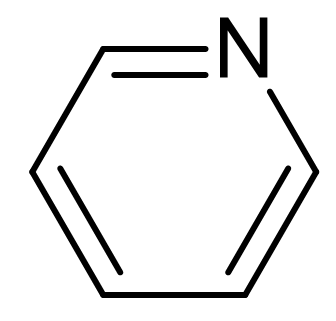
Pyridine is a six-membered aromatic nitrogen heterocycle structurally related to benzene, with one CH group replaced by a nitrogen atom. The nitrogen lone pair does not participate directly in the aromatic π-electron sextet and therefore remains available for protonation, coordination and nucleophilic reactions. This electronic structure gives pyridine a combination of aromatic stability and Lewis/Brønsted basicity that makes it an important solvent, reagent, ligand and synthetic building block. NIST reports a molecular formula of C5H5N, molecular mass of 79.0999 g/mol and CAS Registry Number 110-86-1.
Chemical and physical properties
Pyridine is a liquid under normal laboratory conditions. NIST thermodynamic data give a normal boiling point of approximately 388.5 K, corresponding to about 115.4 °C, and a melting point near 231.4 K, corresponding to approximately −41.7 °C.
Pyridine is a polar, basic solvent and is miscible with water as well as many common organic solvents. The ring nitrogen acts as a hydrogen-bond acceptor and readily forms pyridinium salts upon protonation by acids. The pKa of the conjugate acid, pyridinium, is approximately 5.2 in water, making pyridine a considerably weaker base than typical aliphatic amines but sufficiently basic for numerous synthetic transformations.
The nitrogen atom can also undergo alkylation, acylation, oxidation to pyridine N-oxide and coordination to Lewis acids or transition-metal centers. These reactions make pyridine and substituted pyridines important structural units in coordination chemistry, catalysis and heterocyclic synthesis.
Applications
Pyridine is widely used as a basic reaction solvent and acid-scavenging reagent in organic synthesis. It can neutralize acidic by-products such as hydrogen chloride while simultaneously providing a polar reaction medium. It is particularly well established in acylation, condensation and dehydrohalogenation chemistry.
In esterification and acylation chemistry, pyridine can act both as a base and as a nucleophilic reagent. Acylating agents can form reactive acylpyridinium intermediates, which facilitate transfer of acyl groups to alcohols, phenols and amines. Pyridine is therefore frequently combined with acid chlorides, acid anhydrides or more nucleophilic pyridine derivatives such as 4-dimethylaminopyridine.
Pyridine is also used as a solvent in analytical and preparative chemistry. Published analytical procedures employ pyridine as a solvent for acetylation of hydroxyl-containing compounds, where it provides both solvent capacity and basic conditions for derivatization reactions.
In coordination chemistry, pyridine functions as a monodentate nitrogen-donor ligand. Its nitrogen lone pair coordinates to numerous transition-metal ions, and substituted pyridine units are extensively incorporated into catalysts, coordination complexes and functional molecular materials.
Pyridine is additionally an important starting compound for the synthesis of substituted pyridines and other nitrogen heterocycles. Pyridine-containing structures are widely investigated in medicinal chemistry, catalysis and functional-material research because substitution of the aromatic ring allows systematic modification of electronic, steric and coordination properties.
Handling and safety
Pyridine is a volatile and flammable organic liquid and should be handled with effective ventilation. Occupational exposure can occur by inhalation and skin contact, and toxicological literature identifies systemic effects following significant exposure. Appropriate chemically resistant gloves, eye protection and measures to control vapor exposure are therefore required.
Scientific references
NIST Chemistry WebBook, SRD 69. Pyridine. CAS Registry Number 110-86-1.
Balasubramanian, M.; Keay, J. G. Six-membered Rings with One Heteroatom and Fused Carbocyclic Derivatives. Comprehensive Heterocyclic Chemistry II.
The phosphate–carboxylate mixed-anhydride method: a mild, efficient process for ester and amide bond construction. Tetrahedron, 2012.
Heterogeneous conversion of acyclic compounds to pyridine bases – a review. Applied Catalysis, 1986, 23, 1–14. DOI: 10.1016/S0166-9834(00)81447-5.
Agency for Toxic Substances and Disease Registry. Toxicological Profile for Pyridine.
Safety


Signal Word: Danger
Hazard Statements:
H225: Highly flammable liquid and vapor.
H302+H312+H332: Harmful if swallowed, in contact with skin or if inhaled.
Precautionary Statements:
P101: If medical advice is needed, have product container or label at hand.
P102: Keep out of reach of children.
P210: Keep away from heat, hot surfaces, sparks, open flames and other ignition sources. No smoking.
P271: Use only outdoors or in a well-ventilated area.
P403+P235: Store in a well-ventilated place. Keep cool.
P501: Dispose of contents/container to an authorized waste collection point or return to supplier.
First Aid Measures
Inhalation: Remove victim to fresh air. Protect against hypothermia. Seek medical advice if symptoms persist.
Skin Contact: Remove contaminated clothing. Wash affected area with plenty of lukewarm water. Use soap if skin is not injured. Get medical attention if irritation continues.
Eye Contact: Immediately flush eyes with plenty of water for at least 10 minutes, forcibly open eyelids. Remove contact lenses if present and easy to do.
Ingestion: Rinse mouth and drink 200–500 ml of water. Do not induce vomiting. Seek medical advice.