
 CATEGORIES
- ORGANIC COMPOUNDS(1134)
- Thiols(1)
- Metal-organic compounds(1)
- Sulfonic acids(6)
- Alcohols(74)
- Aldehydes(47)
- Alkyl nitrites(6)
- Amines(56)
- Aminoacids(59)
- Amides(33)
- Anhydrides(11)
- Acyl Halides(5)
- Carboxylic Acids(170)
- Dyes and Indicators(99)
- Esters(52)
- Ethers(17)
- Organic Halogens (Organohalides)(30)
- Flavonoids(5)
- Heterocycles(25)
- Hydrocarbons(38)
- Imides(2)
- Ketones(29)
- Mixed solvents(16)
- Nitro Compounds(5)
- Nitriles(9)
- Organic salts(74)
- Phenols(30)
- Polymers ( HMW compounds )(68)
- Sugars (Saccharides)(24)
- Silicoorgano and Phosphoorganocompounds(1)
- Peptides(2)
- Terpenes(16)
- Others(125)
- INORGANIC COMPOUNDS(1055)
- LAB EQUIPMENT(5176)
- *(1)
- Organic Synthesis(421)
- Industry(775)
Language
US version allows shipping to all available destinations


 MANUFACTURER
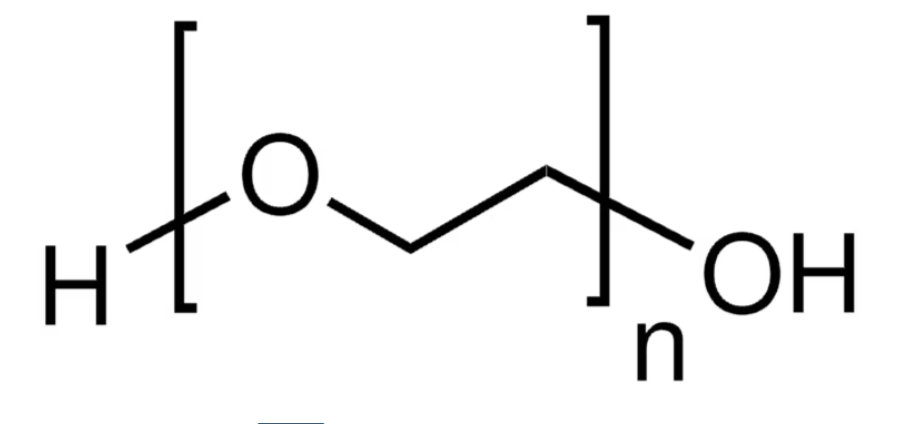
Polyethylene Glycol 600
Regular price:
Regular price:
product unavailable
add to wish list
0


Description
Polyethylene Glycol 600
Other Names: PEG 600, Poly(ethylene oxide), Polyoxyethylene
CAS Number: 25322-68-3
Sum Formula: (C₂H₄O)ₙ (average molar ratio, n ≈ 13–14)
Molar Mass: Approx. 570–630 g/mol (nominal average: 600 g/mol)
Appearance: Clear, colorless to pale yellow viscous liquid or semi-solid (depending on temperature)
Polyethylene glycol 600 is a low-molecular-weight polymer of ethylene oxide. It is part of a homologous series of polyethers known as PEGs. PEG 600 is hydrophilic, non-volatile, and water-soluble, and is used widely in chemical manufacturing, formulation science, and materials processing.
Chemical and Physical Properties
Density: ~1.13 g/cm³ (at 20°C)
Melting Point: ~17–22°C
Boiling Point: >250°C (decomposes)
Solubility in Water: Miscible
Solubility in Other Solvents: Soluble in alcohols, acetone, and chloroform
Odor: Odorless
Applications
Solvent and Carrier: Used as a solvent for organic compounds and as a carrier in chemical formulations.
Humectant and Dispersant: Helps maintain moisture and dispersion in industrial mixtures.
Plasticizer: Applied in resin formulations and coatings to improve flexibility.
Polymer Chemistry: Used in the preparation of block copolymers and as a macromolecular reagent.
Chemical Synthesis: Functions as a phase transfer medium or inert diluent.
Safety

Signal Word: Warning
H302 (> 99.9%): Harmful if swallowed [Warning Acute toxicity, oral]
H373 (24.8%): May causes damage to organs through prolonged or repeated exposure [Warning Specific target organ toxicity, repeated exposure]
P260, P264, P270, P301+P317, P319, P330, and P501
Handling and Storage
Storage Conditions: Store in tightly sealed containers in a cool, dry, well-ventilated place. Protect from moisture and high heat.
Handling Precautions: Avoid prolonged exposure to heat and direct sunlight. Use appropriate PPE when handling in bulk or when heated.