
 CATEGORIES
- ORGANIC COMPOUNDS(1063)
- Thiols(1)
- Metal-organic compounds(1)
- Sulfonic acids(6)
- Alcohols(73)
- Aldehydes(41)
- Alkyl nitrites(6)
- Amines(50)
- Aminoacids(58)
- Amides(29)
- Anhydrides(11)
- Acyl Halides(5)
- Carboxylic Acids(161)
- Dyes and Indicators(96)
- Esters(41)
- Ethers(18)
- Organic Halogens (Organohalides)(25)
- Flavonoids(5)
- Heterocycles(21)
- Hydrocarbons(31)
- Imides(2)
- Ketones(26)
- Mixed solvents(17)
- Nitro Compounds(5)
- Nitriles(9)
- Organic salts(74)
- Phenols(30)
- Polymers ( HMW compounds )(61)
- Sugars (Saccharides)(24)
- Silicoorgano and Phosphoorganocompounds(1)
- Peptides(2)
- Terpenes(12)
- Others(123)
- INORGANIC COMPOUNDS(1012)
- LAB EQUIPMENT(5176)
- *(1)
- Organic Synthesis(398)
- Industry(756)
Language
US version allows shipping to all available destinations


 MANUFACTURER
Piperine
Regular price:
Regular price:
product unavailable
add to wish list
0


Description
Piperine
Other Names: Piperin, 1-Piperoylpiperidine, (E,E)-Piperoylpiperidine, N-[(E,E)-Piperoyl]piperidine
Chemical Formula: C17H19NO3
Molar Mass: 285.34 g/mol
CAS Number: 94-62-2
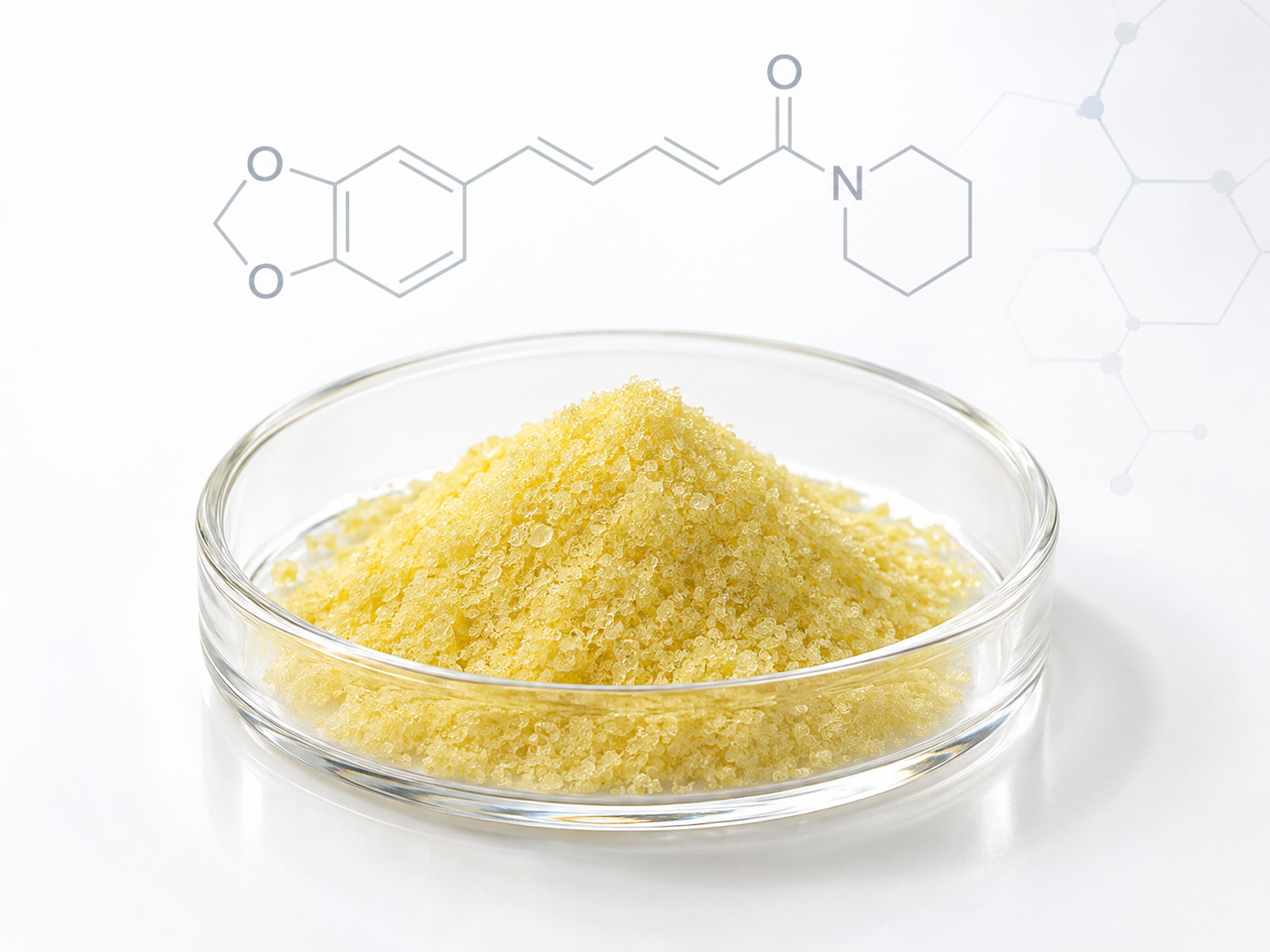
Appearance: Light yellow to yellow crystalline solid or powder
Odor: Characteristic, slightly pungent odor
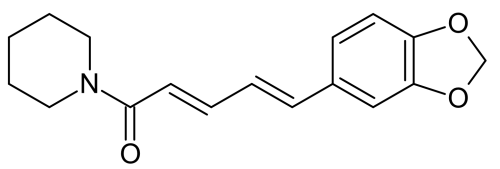
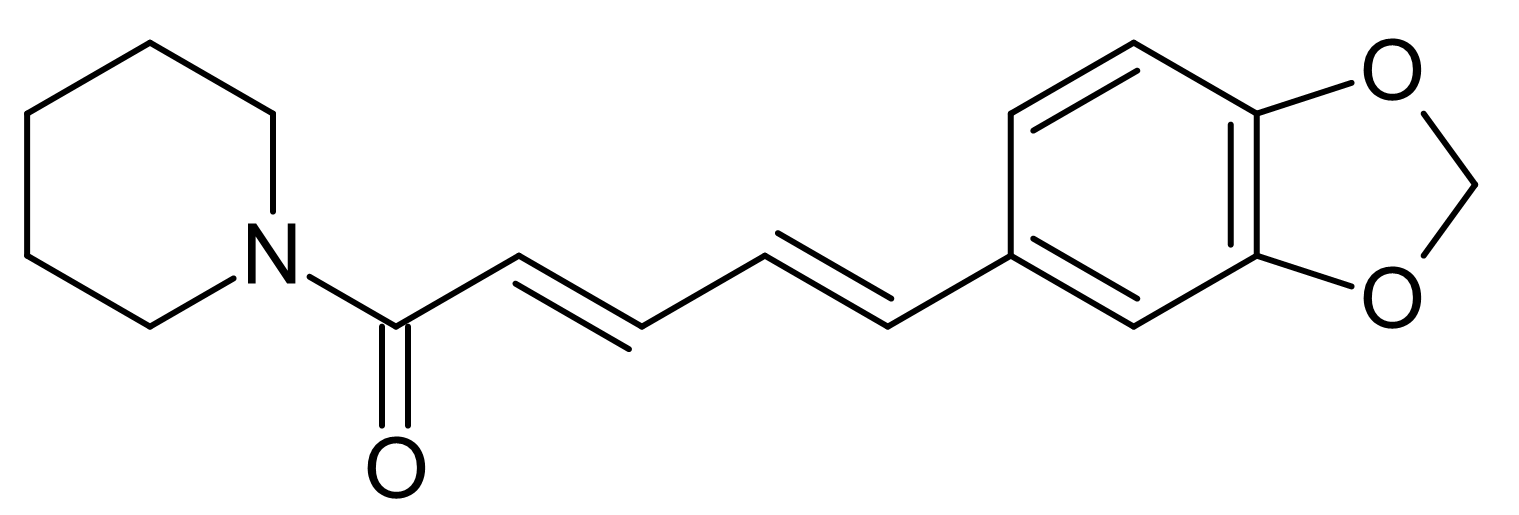
SMILES: O=C(N1CCCCC1)/C=C/C=C/c1ccc2c(c1)OCO2
Piperine is a naturally occurring nitrogen-containing alkaloid belonging to the class of piperidine amides. It is isolated primarily from plants of the Piperaceae family, particularly Piper nigrum and Piper longum. Chemically, piperine consists of a piperidine ring connected through an amide group to a conjugated dienyl chain terminating in a 1,3-benzodioxole aromatic system. Its systematic chemical name is (2E,4E)-5-(1,3-benzodioxol-5-yl)-1-(piperidin-1-yl)penta-2,4-dien-1-one.
The conjugated molecular structure of piperine contributes to its distinctive physicochemical properties, photochemical behavior and biological activity. The compound has attracted considerable scientific interest because of its interactions with biological membranes, metabolic enzymes and cellular signaling pathways. Experimental investigations have examined its antioxidant, anti-inflammatory, antimicrobial and antiproliferative properties, as well as its effects on the transport and metabolism of other chemical substances.
Piperine is also an important model compound in natural-product chemistry, analytical chemistry and medicinal chemistry. Its molecular structure provides a useful framework for investigating structure–activity relationships, stereoisomerization and the development of synthetic derivatives. Scientific studies have demonstrated that modifications of its piperidine ring, conjugated carbon chain and aromatic substituents can influence its biological and physicochemical characteristics.
Chemical and physical properties
Piperine is a crystalline organic compound that generally appears as a light yellow or yellow solid under ambient conditions. Published experimental data report a melting point of approximately 128–130 °C, although the observed melting range may vary depending on sample purity and analytical conditions.
Piperine has very low solubility in water, which represents an important limitation in experimental formulation and pharmaceutical development. Reported reference data indicate an aqueous solubility of approximately 0.04 mg/mL at 18 °C. The compound is considerably more soluble in suitable organic solvents, including ethanol and certain other organic media. Its limited aqueous solubility has stimulated research into cyclodextrin inclusion complexes, solid dispersions, nanoparticles and other solubility-enhancing systems.
The molecular structure contains a conjugated system of carbon–carbon double bonds connecting the aromatic benzodioxole group with the amide functionality. This extended electronic system contributes to its ultraviolet absorption characteristics and photochemical reactivity.
One particularly important property of piperine is its ability to undergo light-induced geometric isomerization. Experimental photochemical studies have demonstrated the formation of stereoisomers, including isopiperine, chavicine and isochavicine. These compounds differ in the geometric configurations of their conjugated double bonds. Their formation and separation have been investigated using high-performance liquid chromatography, mass spectrometry and nuclear magnetic resonance spectroscopy.
Piperine contains a tertiary amide group and oxygen atoms capable of participating in intermolecular interactions. Its aromatic ring and conjugated carbon chain contribute to its relatively hydrophobic character. These structural characteristics influence its dissolution, molecular association, interaction with biological membranes and behavior in different solvent systems.
Applications
Piperine is widely investigated in medicinal chemistry and pharmaceutical research as a naturally occurring bioactive alkaloid. Experimental studies have explored its effects on inflammatory signaling, oxidative stress, cellular proliferation and several enzyme systems. Piperine and structurally modified analogues are used as research compounds in investigations of molecular mechanisms and structure–activity relationships. These applications remain primarily experimental and do not establish piperine as an approved treatment for specific diseases.
In pharmaceutical formulation research, piperine is studied in connection with drug absorption, membrane permeability and interactions with metabolic enzymes and transport proteins. Research has examined its effects on cytochrome P450 enzymes and P-glycoprotein-mediated transport. These properties make it relevant to pharmacokinetic investigations and studies of potential interactions between concurrently administered compounds.
Piperine is also employed as a reference substance in analytical chemistry. It can serve as an analytical standard in high-performance liquid chromatography (HPLC), liquid chromatography–mass spectrometry (LC-MS), ultraviolet-visible spectroscopy and other methods developed for the identification and quantification of alkaloids in botanical extracts, chemical preparations and experimental samples.
In organic synthesis, piperine provides a structural framework for preparing derivatives with modified amide groups, aromatic substituents and conjugated carbon chains. Such derivatives are investigated in drug-discovery programs and biochemical screening studies. Its photochemical isomerization also makes piperine a useful model for studying conjugated organic molecules and the influence of molecular geometry on chemical and biological properties.
Additionally, piperine is investigated in materials and drug-delivery research involving polymeric carriers, nanoparticles, lipid-based systems and inclusion complexes. These studies focus on improving dissolution, controlling compound release and understanding interactions between hydrophobic natural products and carrier materials.
Scientific references
1. Li, S., Lv, M., Xu, H. (2023). Overview of Piperine: Bioactivities, Total Synthesis, Structural Modification, and Structure-Activity Relationships. Mini-Reviews in Medicinal Chemistry, 23(8), 917–940.
https://doi.org/10.2174/1389557522666220726121012
2. Tripathi, A. K. et al. (2022). Molecular and pharmacological aspects of piperine as a potential molecule for disease prevention and management: evidence from clinical trials. Beni-Suef University Journal of Basic and Applied Sciences, 11, 16.
https://doi.org/10.1186/s43088-022-00196-1
3. Hashimoto, K. et al. (1996). Photochemical Isomerization of Piperine, a Pungent Constituent in Pepper. Food Science and Technology International, Tokyo, 2(1), 24–29.
https://doi.org/10.3136/fsti9596t9798.2.24
4. Kinetics of Light-Induced Cis–Trans Isomerization of Four Piperines and Their Levels in Ground Black Peppers as Determined by HPLC and LC/MS. (2007). Journal of Agricultural and Food Chemistry, 55(17), 7131–7139.
https://doi.org/10.1021/jf070831p
5. Characteristics, Biological Properties and Analytical Methods of Piperine: A Review. (2019). Critical Reviews in Analytical Chemistry.
https://doi.org/10.1080/10408347.2019.1573656
6. National Institute of Standards and Technology (NIST). Chemistry WebBook, SRD 69: Piperine, CAS 94-62-2. Chemical identity and molecular data.
https://webbook.nist.gov/cgi/cbook.cgi?ID=C94-62-2
SAFETY


Warning Pictograms GHS07, GHS09 Hazard statements H302 Harmful if swallowed H411 Toxic to aquatic life with long lasting effects Precautionary statements Precautionary statements - prevention P273 Avoid release to the environment P280 Wear protective gloves/eye protection Precautionary statements - response P330 Rinse mouth