
 CATEGORIES
- ORGANIC COMPOUNDS(1134)
- Thiols(1)
- Metal-organic compounds(1)
- Sulfonic acids(6)
- Alcohols(74)
- Aldehydes(47)
- Alkyl nitrites(6)
- Amines(56)
- Aminoacids(59)
- Amides(33)
- Anhydrides(11)
- Acyl Halides(5)
- Carboxylic Acids(170)
- Dyes and Indicators(99)
- Esters(52)
- Ethers(17)
- Organic Halogens (Organohalides)(30)
- Flavonoids(5)
- Heterocycles(25)
- Hydrocarbons(38)
- Imides(2)
- Ketones(29)
- Mixed solvents(16)
- Nitro Compounds(5)
- Nitriles(9)
- Organic salts(74)
- Phenols(30)
- Polymers ( HMW compounds )(68)
- Sugars (Saccharides)(24)
- Silicoorgano and Phosphoorganocompounds(1)
- Peptides(2)
- Terpenes(16)
- Others(125)
- INORGANIC COMPOUNDS(1055)
- LAB EQUIPMENT(5176)
- *(1)
- Organic Synthesis(421)
- Industry(775)
Language
US version allows shipping to all available destinations


 MANUFACTURER
Niacynamide, Vitamin B3
Regular price:
Regular price:
product unavailable
add to wish list
0

Description
Niacinamide, Vitamin B3
Other Names: Nicotinamide, Niacinamide, Pyridine-3-carboxamide, 3-Pyridinecarboxamide, Nicotinic Acid Amide
Chemical Formula: C6H6N2O
Molar Mass: 122.12 g/mol
CAS Number: 98-92-0
Appearance: White crystalline powder or crystalline solid
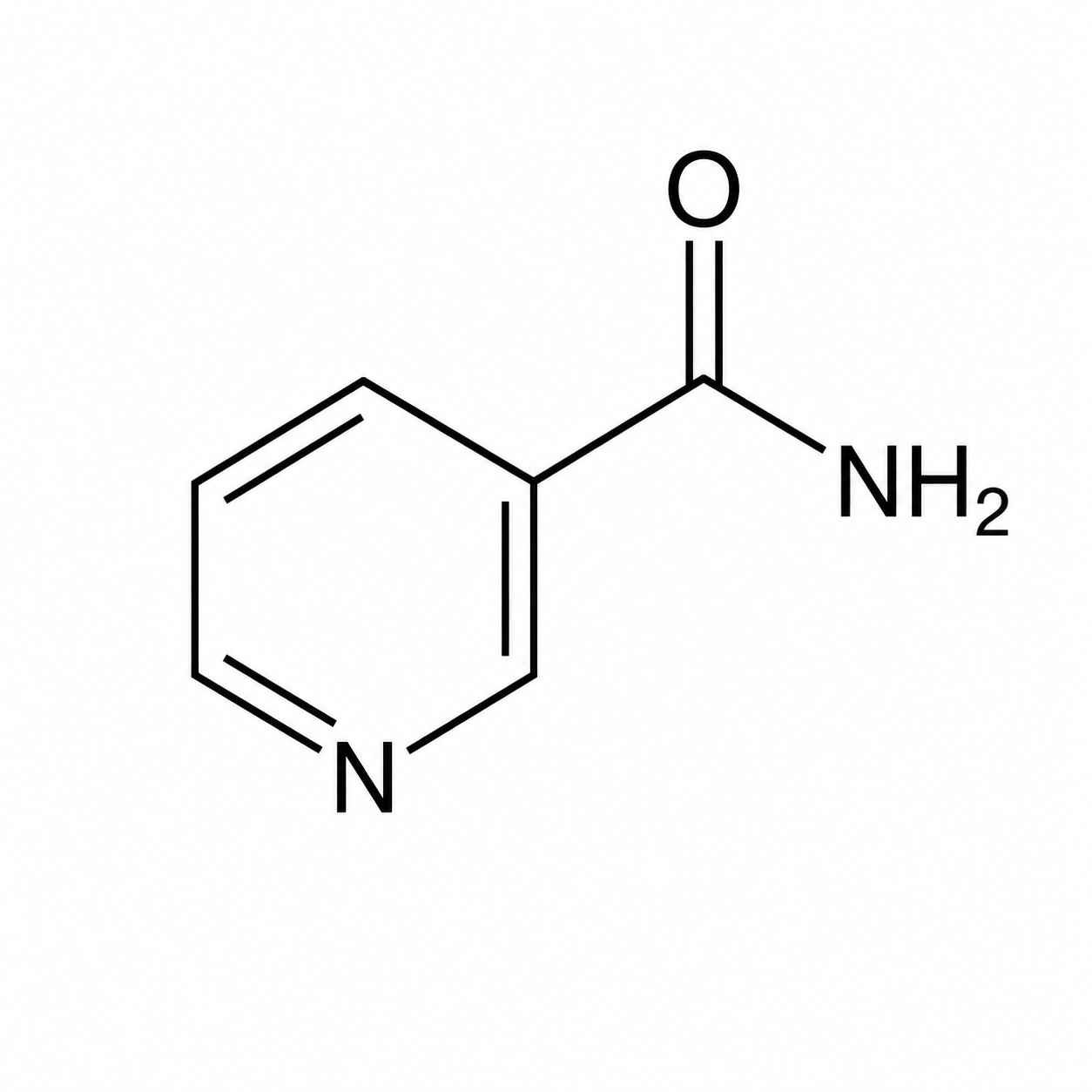
Niacinamide, also known as nicotinamide, is the amide derivative of nicotinic acid and one of the compounds collectively associated with vitamin B3. Chemically, it is pyridine-3-carboxamide and consists of a pyridine ring substituted at the 3-position by a carboxamide group. Niacinamide is a biologically important precursor involved in the formation and maintenance of cellular nicotinamide adenine dinucleotide (NAD+) and related pyridine nucleotide systems. NAD+ participates in numerous oxidation-reduction reactions and also acts as a substrate for enzymes involved in cellular signaling, DNA repair and regulation of protein function.
Chemical and physical properties
Niacinamide is a polar, hydrophilic crystalline compound. Experimental differential scanning calorimetry measurements have reported a melting temperature of approximately 404 K, corresponding to about 131 °C. Its crystalline structure and intermolecular interactions are strongly influenced by hydrogen bonding involving the carboxamide group and the nitrogen atom of the pyridine ring.
The compound exhibits high affinity for polar solvents. Experimental studies have investigated its solubility in water as well as methanol, ethanol, isopropanol and numerous other organic solvents. Solubility is strongly dependent on both solvent composition and temperature and generally increases with increasing temperature. These properties are important in crystallization, purification and pharmaceutical formulation processes.
The pyridine nitrogen can participate in acid-base interactions, while the carboxamide group provides both hydrogen-bond donor and acceptor sites. As a result, niacinamide readily forms intermolecular hydrogen-bonding networks and has been extensively investigated in studies of crystal engineering, polymorphism and pharmaceutical cocrystal formation.
Biochemical properties
Niacinamide is closely connected with cellular NAD+ metabolism. NAD+ and its reduced form NADH constitute an essential redox pair involved in cellular energy metabolism and numerous enzymatic processes. Nicotinamide is also generated when NAD+ is consumed by enzymes such as poly(ADP-ribose) polymerases and sirtuins and can subsequently be recycled through cellular NAD+ salvage pathways.
Research has additionally demonstrated interactions between nicotinamide metabolism and processes involving oxidative stress, inflammatory signaling, cellular energy balance and DNA repair. These biochemical characteristics make niacinamide a frequently investigated compound in molecular biology, pharmacology and cellular metabolism research.
Applications
Niacinamide is extensively used in cosmetic and dermatological formulations. Scientific and clinical studies have investigated topical niacinamide for supporting epidermal barrier function, reducing transepidermal water loss, regulating sebum production and influencing inflammatory processes. Research has also examined its effects on uneven pigmentation, skin appearance and changes associated with cutaneous aging.
Topically applied niacinamide has been studied in formulations intended for acne-prone skin, hyperpigmentation, dermatitis and other dermatological conditions. Proposed mechanisms include modulation of inflammatory signaling, support of cellular energy metabolism and effects on epidermal lipid and protein synthesis. Reviews of clinical studies indicate that niacinamide is generally well tolerated in topical preparations, although observed effects depend on concentration, formulation and treatment conditions.
In pharmaceutical and formulation research, niacinamide is used as an active compound and as a model molecule for investigations of dermal delivery, membrane permeation, crystallization and drug-delivery systems. Its hydrogen-bonding characteristics also make it useful in pharmaceutical cocrystal research, where interactions between niacinamide and other crystalline compounds are studied to modify solid-state properties such as crystal packing, dissolution behavior and stability.
Niacinamide is additionally employed as a biochemical and analytical research reagent in studies of NAD+ metabolism, enzyme activity, cellular redox systems, DNA repair pathways and metabolic regulation. Because of its close relationship with NAD-dependent biochemical processes, it is widely used in experimental studies examining cellular responses to metabolic and oxidative stress.
Scientific references
Ong, R. R.; Goh, C. F. Niacinamide: a review on dermal delivery strategies and clinical evidence. Drug Delivery and Translational Research, 2024, 14, 3512–3548. DOI: 10.1007/s13346-024-01593-y.
Wohlrab, J.; Kreft, D. Niacinamide – mechanisms of action and its topical use in dermatology. Skin Pharmacology and Physiology, 2014, 27, 311–315. DOI: 10.1159/000359974.
Chen, A. C.; Damian, D. L. Nicotinamide and the skin. Australasian Journal of Dermatology, 2014, 55, 169–175. DOI: 10.1111/ajd.12163.
Solid–Liquid Phase Equilibrium of Nicotinamide in Different Pure Solvents: Measurements and Thermodynamic Modeling. Industrial & Engineering Chemistry Research, 2014, 53, 1707–1711. DOI: 10.1021/ie403628d.
Solubility Determination of Nicotinamide and Its Application for the Cocrystallization with Benzoic Acid. Journal of Chemical & Engineering Data, 2018, 63, 4157–4165. DOI: 10.1021/acs.jced.8b00560.