
 CATEGORIES
- ORGANIC COMPOUNDS(1129)
- Thiols(1)
- Metal-organic compounds(1)
- Sulfonic acids(6)
- Alcohols(74)
- Aldehydes(47)
- Alkyl nitrites(6)
- Amines(55)
- Aminoacids(59)
- Amides(33)
- Anhydrides(11)
- Acyl Halides(5)
- Carboxylic Acids(170)
- Dyes and Indicators(99)
- Esters(52)
- Ethers(17)
- Organic Halogens (Organohalides)(30)
- Flavonoids(5)
- Heterocycles(24)
- Hydrocarbons(34)
- Imides(2)
- Ketones(29)
- Mixed solvents(16)
- Nitro Compounds(5)
- Nitriles(9)
- Organic salts(74)
- Phenols(30)
- Polymers ( HMW compounds )(68)
- Sugars (Saccharides)(24)
- Silicoorgano and Phosphoorganocompounds(1)
- Peptides(2)
- Terpenes(16)
- Others(126)
- INORGANIC COMPOUNDS(1055)
- LAB EQUIPMENT(5176)
- *(1)
- Organic Synthesis(417)
- Industry(775)
Language
US version allows shipping to all available destinations


 MANUFACTURER
D-Mannose
Regular price:
Regular price:
product unavailable
add to wish list
0

Description
D-Mannose
Other Names: D-(+)-Mannose, D-manno-hexose, Carubinose, Seminose
Chemical Formula: C6H12O6
Molar Mass: 180.16 g/mol
CAS Number: 3458-28-4
SMILES: C([C@H]([C@H]([C@@H]([C@@H](C=O)O)O)O)O)O
Appearance: White crystalline solid or powder
Odor: Odorless
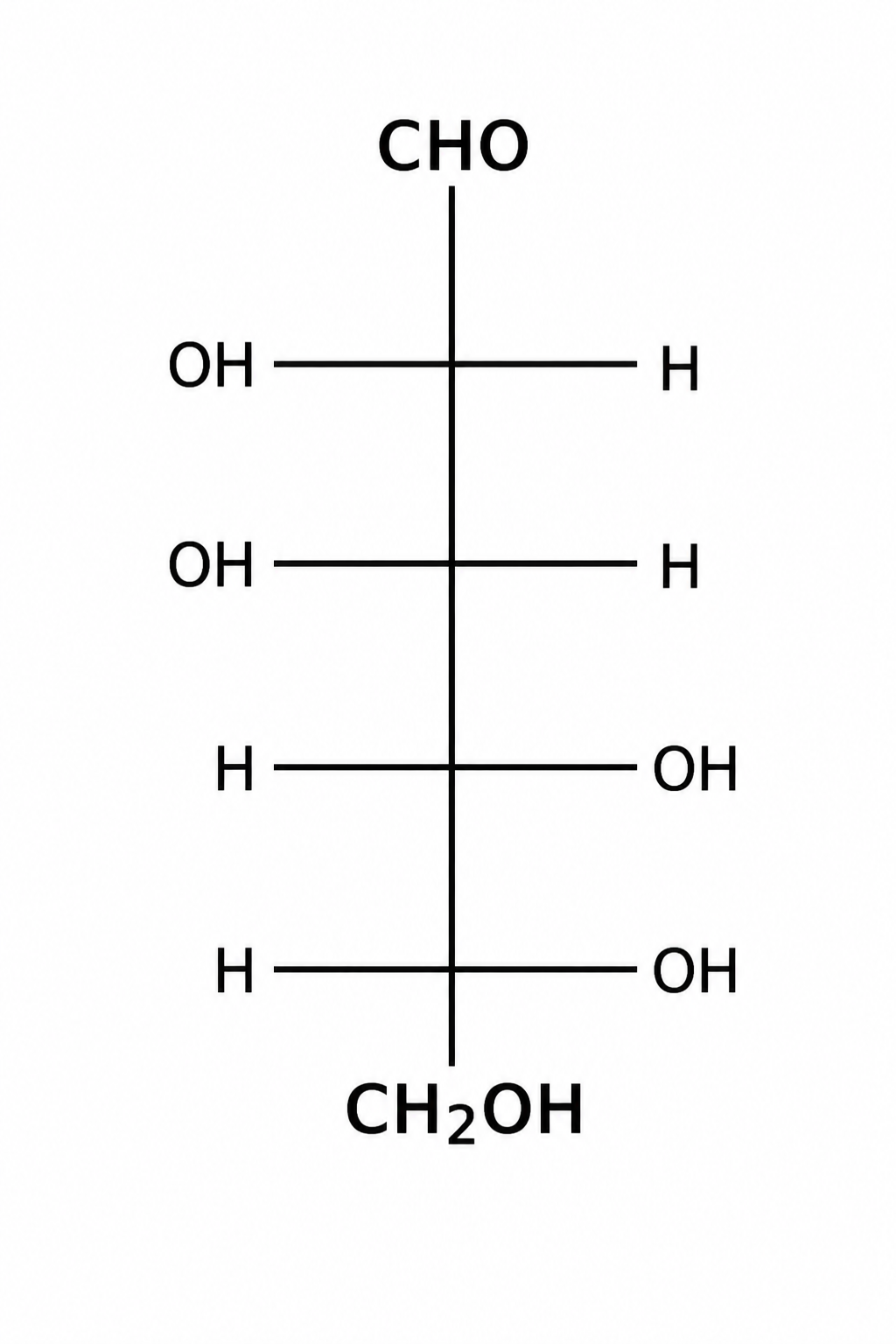
D-Mannose is a naturally occurring aldohexose monosaccharide and the C-2 epimer of D-glucose. Its molecular structure contains six carbon atoms and multiple hydroxyl groups, giving the compound high polarity and extensive hydrogen-bonding capability. In aqueous solution, D-mannose exists predominantly in cyclic pyranose forms and undergoes mutarotation through reversible interconversion of its α- and β-anomers via the open-chain aldehyde form. Because mannose residues are important structural components of numerous glycans and glycoconjugates, D-mannose is extensively investigated in carbohydrate chemistry, glycobiology, enzymology and cellular metabolism.
Chemical and physical properties
D-Mannose is a white crystalline solid with a molar mass of 180.16 g/mol. The α-form has been reported to melt at approximately 133 °C, while structural forms of D-mannose may display slightly different thermal behavior depending on anomeric composition and experimental conditions.
The compound is highly soluble in water as a consequence of its five hydroxyl groups and their ability to form extensive hydrogen-bonding interactions with water molecules. Experimental solubility studies have investigated D-mannose in water and water–ethanol mixtures, demonstrating a strong dependence of carbohydrate solubility on solvent composition.
In aqueous solution, D-mannose undergoes mutarotation. The α- and β-pyranose forms interconvert through transient opening of the hemiacetal ring to the aldehydic form, followed by ring closure. Infrared spectroscopic studies have directly monitored this process and have been used to determine anomer concentration profiles and mutarotation kinetics.
D-Mannose differs stereochemically from D-glucose only in the configuration of the hydroxyl group at carbon C-2. Despite this apparently small structural difference, the altered stereochemistry significantly affects molecular recognition by enzymes, lectins and carbohydrate-binding proteins. This makes D-mannose particularly useful for investigating stereochemical selectivity in biochemical and synthetic systems.
Applications
D-Mannose is widely used as a biochemical research reagent for studying carbohydrate metabolism and glycosylation. Intracellular mannose can be phosphorylated to mannose-6-phosphate and subsequently converted into intermediates involved in the formation of GDP-mannose and dolichol-phosphate mannose. These activated mannose derivatives participate in several glycosylation pathways, including the biosynthesis of mannose-containing glycans.
In glycobiology, D-mannose is used to investigate N-linked and O-linked glycosylation, C-mannosylation, glycosylphosphatidylinositol anchor biosynthesis and the function of mannose-recognizing proteins. Its well-defined stereochemistry makes it suitable for experiments examining carbohydrate–protein recognition and the specificity of lectins and glycan-processing enzymes.
Isotopically labelled D-mannose has been extensively employed as a metabolic tracer. In particular, radiolabelled mannose has been used to follow mannose uptake, phosphorylation, catabolism and incorporation into glycan biosynthetic pathways. Such tracer experiments have contributed significantly to the understanding of mammalian mannose metabolism and protein glycosylation.
D-Mannose is also a useful chiral starting material in organic synthesis. Its multiple stereogenic centers allow it to function as a readily available member of the chiral pool. Synthetic studies have demonstrated its use as a multipurpose building block for preparing structurally diverse polyhydroxylated cyclic and bicyclic compounds, carbohydrate derivatives and glycomimetic molecular scaffolds.
In enzymology and biocatalysis, D-mannose is used as a substrate for enzymes including mannose isomerases, phosphomannose isomerases, hexokinases and other carbohydrate-processing enzymes. It is therefore useful for determining enzyme activity, substrate specificity, reaction kinetics and mechanisms of carbohydrate interconversion.
D-Mannose is additionally employed as a model solute in physicochemical studies of aqueous carbohydrate systems. Measurements of solubility, water activity, density, viscosity and other thermodynamic properties provide information about hydrogen bonding and solute–solvent interactions in carbohydrate-containing solutions.
Scientific references
- NIST Chemistry WebBook, SRD 69. D-Mannose, CAS 3458-28-4. National Institute of Standards and Technology. Molecular formula, molecular weight, stereochemical identification and spectroscopic data.
- Sharma, V.; Ichikawa, M.; Freeze, H. H. Mannose Metabolism: More Than Meets the Eye. Biochemical and Biophysical Research Communications, 2014, 453(2), 220–228. DOI: 10.1016/j.bbrc.2014.06.021.
- Libnau, F. O.; Kvalheim, O. M.; Christy, A. A.; Toft, J. Resolution of Infrared Spectra and Kinetic Analysis of Mutarotation of D-Mannose in Water. Chemometrics and Intelligent Laboratory Systems, 1999, 45, 7–21. DOI: 10.1016/S0169-7439(98)00086-0.
- Lenci, E.; Menchi, G.; Guarna, A.; Trabocchi, A. Skeletal Diversity from Carbohydrates: Use of Mannose for the Diversity-Oriented Synthesis of Polyhydroxylated Compounds. Journal of Organic Chemistry, 2015, 80, 2182–2191. DOI: 10.1021/jo502701c.
- Gabas, N.; Carillon, T.; Hiquily, N. Solubilities of D-Xylose and D-Mannose in Water-Ethanol Mixtures at 25 °C. Journal of Chemical & Engineering Data, 1988, 33(2), 128–130. DOI: 10.1021/je00052a020.
- Isbell, H. S. Preparation of D-Mannose. Journal of Research of the National Bureau of Standards, 1941, 26, 47. DOI: 10.6028/jres.026.032.
- Isbell, H. S.; Frush, H. L.; Wade, C. W. R.; Fatiadi, A. J. Tritium-Labeled Compounds XII. Note on the Synthesis of D-Glucose-2-t and D-Mannose-2-t. Journal of Research of the National Bureau of Standards A, 1969, 73A(1), 75–77. DOI: 10.6028/jres.073A.009.
- Measurement and PC-SAFT Modeling of the Water Activity for Aqueous Solutions of D-Mannose in Some Deep Eutectic Solvents. Journal of the Taiwan Institute of Chemical Engineers, 2021, 125, 58–68. DOI: 10.1016/j.jtice.2021.06.029.
Safety:
According to available data, erythritol is not classified as a hazardous substance under GHS/CLP criteria.
Signal word: none
Hazard statements:
No GHS classification
Precautionary statements:
No specific P-statements resulting from GHS classification
Storage:
Store the product in a tightly closed container in a dry, cool and well-ventilated place.
Store at room temperature.
Protect from moisture, contamination and direct sunlight.
Handling:
Avoid formation and inhalation of dust.
Use in a well-ventilated area.
Avoid contact of dust with eyes.
During handling, standard personal protective equipment suitable for laboratory work is recommended, including protective gloves, eye protection and a dust mask when dust may be generated.
This product is intended strictly for technical, laboratory and research use. It is not intended for consumption, medical, pharmaceutical, cosmetic or feed applications.