
 CATEGORIES
- ORGANIC COMPOUNDS(1134)
- Thiols(1)
- Metal-organic compounds(1)
- Sulfonic acids(6)
- Alcohols(74)
- Aldehydes(47)
- Alkyl nitrites(6)
- Amines(56)
- Aminoacids(59)
- Amides(33)
- Anhydrides(11)
- Acyl Halides(5)
- Carboxylic Acids(170)
- Dyes and Indicators(99)
- Esters(52)
- Ethers(17)
- Organic Halogens (Organohalides)(30)
- Flavonoids(5)
- Heterocycles(25)
- Hydrocarbons(38)
- Imides(2)
- Ketones(29)
- Mixed solvents(16)
- Nitro Compounds(5)
- Nitriles(9)
- Organic salts(74)
- Phenols(30)
- Polymers ( HMW compounds )(68)
- Sugars (Saccharides)(24)
- Silicoorgano and Phosphoorganocompounds(1)
- Peptides(2)
- Terpenes(16)
- Others(125)
- INORGANIC COMPOUNDS(1055)
- LAB EQUIPMENT(5176)
- *(1)
- Organic Synthesis(421)
- Industry(775)
Language
US version allows shipping to all available destinations


 MANUFACTURER
D-Mannitol (Mannite) >99%
Regular price:
Regular price:
product unavailable
add to wish list
0

 >99% "Pin It")
Description
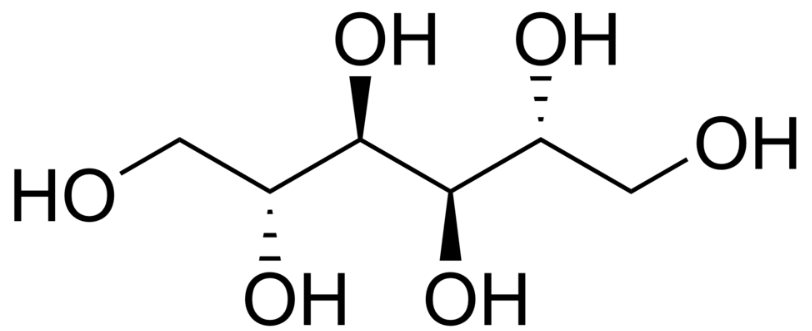
D-Mannitol
Other Names: Mannitol, D-(−)-Mannitol, Mannite, (2R,3R,4R,5R)-Hexane-1,2,3,4,5,6-hexol
Chemical Formula: C6H14O6
Molar Mass: 182.17 g/mol
CAS Number: 69-65-8
SMILES: C([C@@H]([C@@H]([C@H]([C@H](CO)O)O)O)O)O
Appearance: White crystalline powder or colorless crystals
Odor: Odorless
D-Mannitol is a six-carbon acyclic polyol containing six hydroxyl groups and four stereogenic carbon atoms. Its molecular structure gives it extensive hydrogen-bonding capacity and makes its solid-state properties strongly dependent on molecular packing and crystal form. D-Mannitol is particularly important in crystallization research, materials chemistry, asymmetric organic synthesis and catalytic conversion studies. Its well-defined stereochemistry also makes it a useful renewable chiral starting material for the preparation of structurally complex organic compounds.
Chemical and physical properties
D-Mannitol is a crystalline solid under ambient conditions. Thermodynamic measurements compiled by the NIST Chemistry WebBook report a fusion temperature of approximately 439.1 K, corresponding to about 166 °C.
The compound contains six hydroxyl groups capable of forming extensive intermolecular hydrogen-bonding networks. These interactions influence its relatively high melting temperature, crystal packing and strong affinity for polar solvents such as water.
D-Mannitol exhibits pronounced polymorphism. Three principal anhydrous crystalline forms, designated α, β and δ, have been characterized by X-ray diffraction. The polymorphs contain the same chemical molecule but differ in molecular conformation, crystal packing and hydrogen-bonding arrangement. Crystallization conditions such as supersaturation, temperature, solvent environment and seeding can therefore influence which solid form is produced.
Crystallographic studies have also identified a D-mannitol hemihydrate with the composition C6H14O6·0.5H2O. Its crystal structure contains water incorporated into a hydrogen-bonding network that differs significantly from those of the anhydrous polymorphs.
D-Mannitol forms complexes with borate species in aqueous solution. Experimental thermodynamic and titration studies have demonstrated strong interactions between borate and the multiple hydroxyl groups of mannitol. This behavior is characteristic of polyols containing appropriately oriented hydroxyl groups and is useful in analytical and coordination chemistry.
Applications
D-Mannitol is used as a chiral starting material in synthetic organic chemistry. Its defined stereochemistry and symmetrical carbon framework enable its conversion into enantiomerically pure epoxides, aziridines, lactones, dihydropyrans and other functional intermediates. It is therefore useful as a chiral-pool reagent in stereoselective synthesis.
It is also an important starting material for the production of isomannide by acid-catalyzed dehydration. Isomannide is a rigid bicyclic diol investigated as a renewable building block for high-performance polymers and other advanced materials. Studies using solid acid catalysts such as Hβ zeolite have demonstrated selective conversion of mannitol to isomannide.
In analytical and inorganic chemistry, D-mannitol is used to study and control borate complexation. Formation of mannitol–borate complexes changes the acid-base behavior of boric acid and borate systems, making mannitol useful in investigations of boron speciation, equilibrium constants and complex-formation thermodynamics.
D-Mannitol is also widely employed as a model compound in crystallization science. Its α, β and δ polymorphs provide a useful system for studying nucleation, crystal growth, polymorphic transformation, cross-nucleation and the relationship between molecular conformation and crystal stability.
Scientific references
- NIST Chemistry WebBook, SRD 69. D-Mannitol, CAS 69-65-8. National Institute of Standards and Technology. Molecular formula, molecular mass, thermochemical data and phase-change properties.
- Fronczek F. R., Kamel H. N., Slattery M. “Three polymorphs (alpha, beta, and delta) of D-mannitol at 100 K.” Acta Crystallographica Section C, 2003, 59, o567–o570. DOI: 10.1107/S0108270103018961.
- Su W., Jia N., Li H., Hao H., Li C. “Polymorphism of D-mannitol: Crystal structure and the crystal growth mechanism.” Chinese Journal of Chemical Engineering, 2017, 25(3), 358–362. DOI: 10.1016/j.cjche.2016.09.002.
- Nunes C., Suryanarayanan R., Botez C. E., Stephens P. W. “Characterization and Crystal Structure of D-Mannitol Hemihydrate.” Journal of Pharmaceutical Sciences, 2004, 93(11), 2800–2809. DOI: 10.1002/jps.20185.
- Yu L., Reutzel-Edens S. M., Mitchell C. A. “Cross-Nucleation between D-Mannitol Polymorphs in Seeded Crystallization.” Crystal Growth & Design, 2007, 7(12), 2410–2414. DOI: 10.1021/cg070387i.
- Kobayashi H., Yokoyama H., Feng B., Fukuoka A. “Selective Dehydration of Mannitol to Isomannide over Hβ Zeolite.” ACS Catalysis, 2017, 7(7), 4828–4834. DOI: 10.1021/acscatal.7b01295.
- Marotta E., Baravelli M., Maini L., Righi P., Rosini G. “D-Mannitol as the Chiral Source for the EPC Synthesis of Both Enantiomers of 3-Ethoxycarbonyl-4-hydroxy-2-isoxazolines and Highly Functionalized Tricyclic Systems.” The Journal of Organic Chemistry, 1998, 63(23), 8235–8246. DOI: 10.1021/jo980941i.
- “Borate-polyol complexes in aqueous solution: Determination of enthalpies by thermometric titrimetry.” Talanta, 1985, 32(6), 517–519. DOI: 10.1016/0039-9140(85)80269-1.
Safety and Handling:
No labelling required according to GHS.
Mannitol is generally regarded as a low-hazard material; however, care must be taken to avoid inhalation of dust or prolonged skin contact.