
 CATEGORIES
- ORGANIC COMPOUNDS(1140)
- Thiols(1)
- Metal-organic compounds(1)
- Sulfonic acids(6)
- Alcohols(74)
- Aldehydes(47)
- Alkyl nitrites(6)
- Amines(61)
- Aminoacids(59)
- Amides(33)
- Anhydrides(11)
- Acyl Halides(5)
- Carboxylic Acids(170)
- Dyes and Indicators(99)
- Esters(52)
- Ethers(18)
- Organic Halogens (Organohalides)(30)
- Flavonoids(5)
- Heterocycles(25)
- Hydrocarbons(38)
- Imides(2)
- Ketones(29)
- Mixed solvents(16)
- Nitro Compounds(5)
- Nitriles(9)
- Organic salts(74)
- Phenols(30)
- Polymers ( HMW compounds )(68)
- Sugars (Saccharides)(24)
- Silicoorgano and Phosphoorganocompounds(1)
- Peptides(2)
- Terpenes(16)
- Others(125)
- INORGANIC COMPOUNDS(1055)
- LAB EQUIPMENT(5176)
- *(1)
- Organic Synthesis(421)
- Industry(775)
Language
US version allows shipping to all available destinations


 MANUFACTURER
Anhydrous Ethyl Alcohol (Denatured Ethanol) >99%
Regular price:
Regular price:
product unavailable
add to wish list
0

 >99% "Pin It")
Description
ETHYL ALCOHOL >99%
NOT FOR HUMAN CONSUMPTION DENATURED (EU METHOD).
- Molecular Formula: C₂H₅OH
- CAS Number: 64-17-5
- Molar Mass: 46.07 g/mol
- Appearance: Colorless, volatile liquid
- Solubility: Miscible with water, acetone, chloroform, ether, and many other solvents
- Melting Point: -114°C
- Boiling Point: 78.37°C
- Density: 0.789 g/cm³
- Other Names: Ethyl alcohol, Alcohol, EtOH, Hydroxyethane
Denatured according to (WE) nr 1272/2008 (CLP)
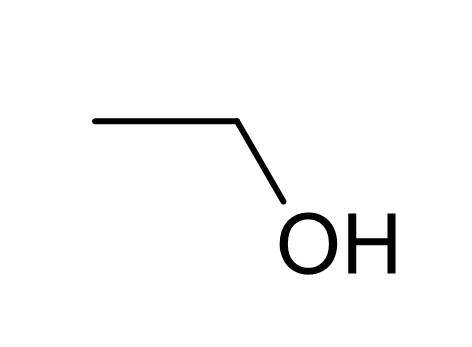
Ethanol is a low-molecular-weight organic compound belonging to the primary alcohols. Its structure consists of a two-carbon ethyl group bonded to a hydroxyl group. The molecule contains both a polar hydroxyl functionality capable of hydrogen bonding and a small nonpolar hydrocarbon group. This amphiphilic molecular character gives ethanol excellent miscibility with water while also allowing it to dissolve a broad range of organic compounds. Ethanol is extensively investigated as a model solvent in physical chemistry, spectroscopy and solution thermodynamics and is widely employed as a solvent, reagent and processing medium in laboratory and industrial chemistry.
Chemical and physical properties
Ethanol is a clear, colorless and volatile liquid under ambient conditions. Experimental data give a melting point of approximately −114.1 °C and a normal boiling point of approximately 78.3 °C.
The density of pure ethanol is approximately 0.785 g/cm3 at 25 °C. Its dynamic viscosity is approximately 1.1 mPa·s near room temperature, while its refractive index is approximately 1.36.
Ethanol is completely miscible with water over the entire composition range. Its hydroxyl group acts as both a hydrogen-bond donor and hydrogen-bond acceptor, resulting in extensive hydrogen-bond networks in pure ethanol and in ethanol–water mixtures. Neutron diffraction, spectroscopic and molecular simulation studies have demonstrated significant composition-dependent restructuring of these intermolecular networks.
Ethanol has a dielectric constant of approximately 24 at 25 °C, substantially lower than that of water but much higher than that of nonpolar hydrocarbons. This intermediate polarity contributes to its ability to dissolve numerous polar, moderately polar and nonpolar organic compounds.
The vapor pressure of ethanol is approximately 7.9 kPa at 25 °C. Ethanol and water form a minimum-boiling azeotropic mixture at atmospheric pressure, which limits the concentration obtainable by conventional fractional distillation alone.
Applications
Ethanol is one of the most widely used solvents in laboratory and industrial chemistry. Its combination of polarity, hydrogen-bonding capability, volatility and miscibility with water makes it suitable for extraction, crystallization, washing, purification and reaction processes involving a broad range of organic compounds.
In synthetic organic chemistry, ethanol is commonly employed as a polar protic reaction medium. It can facilitate reactions involving ionic and polar intermediates and is frequently used in substitution, condensation, reduction and transition-metal-catalyzed transformations. Its relatively low boiling point facilitates subsequent removal by evaporation or distillation.
Ethanol is also an important chemical feedstock. Catalytic oxidation can convert ethanol into acetaldehyde and subsequently acetic acid, while dehydration can produce ethylene or diethyl ether depending on the catalyst and reaction conditions. These transformations make ethanol a useful starting compound for studies of catalytic reaction mechanisms and selective oxidation processes.
In analytical chemistry, ethanol is widely employed as a solvent and sample-preparation medium in chromatographic and spectroscopic procedures. It can also be used for cleaning laboratory glassware and analytical surfaces because it dissolves many organic residues and evaporates readily.
In materials chemistry, ethanol is frequently used as a processing solvent in sol–gel synthesis, nanoparticle preparation, deposition of thin films and preparation of coatings. Its miscibility with water allows solvent composition and hydrolysis conditions to be adjusted in processes involving metal alkoxides and related precursors.
Ethanol is additionally an important model compound in fundamental physicochemical research. Ethanol–water mixtures are extensively studied to investigate hydrogen bonding, preferential solvation, molecular clustering, dielectric behavior, diffusion and deviations from ideal solution behavior.
Scientific references
National Institute of Standards and Technology (NIST). NIST Chemistry WebBook: Ethanol, CAS 64-17-5. Experimental thermodynamic, phase-change, spectroscopic and physicochemical data for ethanol.
National Center for Biotechnology Information (NCBI), PubChem. Ethanol, CID 702. Chemical identity and physicochemical information including molecular formula, molecular mass, structure, melting point, boiling point, density, vapor pressure and solubility.
Soper, A. K.; Dougan, L.; Crain, J.; Finney, J. L. Excess entropy in alcohol–water solutions: a simple clustering explanation. Journal of Physics: Condensed Matter, 2006, 18, S2231–S2244. DOI: 10.1088/0953-8984/18/36/S04.
Guo, J.-H.; Luo, Y.; Augustsson, A.; Kashtanov, S.; Rubensson, J.-E.; Shuh, D. K.; Ågren, H.; Nordgren, J. Molecular structure of alcohol-water mixtures. Physical Review Letters, 2003, 91, 157401. DOI: 10.1103/PhysRevLett.91.157401.
Dixit, S.; Crain, J.; Poon, W. C. K.; Finney, J. L.; Soper, A. K. Molecular segregation observed in a concentrated alcohol-water solution. Nature, 2002, 416, 829–832. DOI: 10.1038/416829a.
GHS Classification:
Anhydrous ethanol is classified under the GHS for its flammability and health hazards.
-
GHS Hazard Statements (H):
- H225: Highly flammable liquid and vapor.
- H319: Causes serious eye irritation.
- H336: May cause drowsiness or dizziness.
-
GHS Precautionary Statements (P):
- P210: Keep away from heat/sparks/open flames/hot surfaces. No smoking.
- P241: Use explosion-proof electrical/ventilating/lighting equipment.
- P280: Wear protective gloves/eye protection/face protection.
- P305+P351+P338: IF IN EYES: Rinse cautiously with water for several minutes. Remove contact lenses if present and easy to do. Continue rinsing.
- P370+P378: In case of fire: Use dry sand, dry chemical, or alcohol-resistant foam to extinguish.
- P312: Call a POISON CENTER or doctor/physician if you feel unwell.
Pictograms:
- GHS02 (Flame): Number 02 – Indicates the substance is highly flammable.
- GHS07 (Exclamation Mark): Number 03 – Indicates irritation, particularly eye irritation.
Notes:
Anhydrous ethanol should be handled with care, particularly in environments where there is a risk of fire or excessive exposure to vapors. Always ensure proper ventilation and use of personal protective equipment (PPE) when working with this substance. In case of accidental exposure, wash the affected area with water and seek medical advice if symptoms persist.