
 CATEGORIES
- ORGANIC COMPOUNDS(1134)
- Thiols(1)
- Metal-organic compounds(1)
- Sulfonic acids(6)
- Alcohols(74)
- Aldehydes(47)
- Alkyl nitrites(6)
- Amines(56)
- Aminoacids(59)
- Amides(33)
- Anhydrides(11)
- Acyl Halides(5)
- Carboxylic Acids(170)
- Dyes and Indicators(99)
- Esters(52)
- Ethers(17)
- Organic Halogens (Organohalides)(30)
- Flavonoids(5)
- Heterocycles(25)
- Hydrocarbons(38)
- Imides(2)
- Ketones(29)
- Mixed solvents(16)
- Nitro Compounds(5)
- Nitriles(9)
- Organic salts(74)
- Phenols(30)
- Polymers ( HMW compounds )(68)
- Sugars (Saccharides)(24)
- Silicoorgano and Phosphoorganocompounds(1)
- Peptides(2)
- Terpenes(16)
- Others(125)
- INORGANIC COMPOUNDS(1055)
- LAB EQUIPMENT(5176)
- *(1)
- Organic Synthesis(421)
- Industry(775)
Language
US version allows shipping to all available destinations


 MANUFACTURER
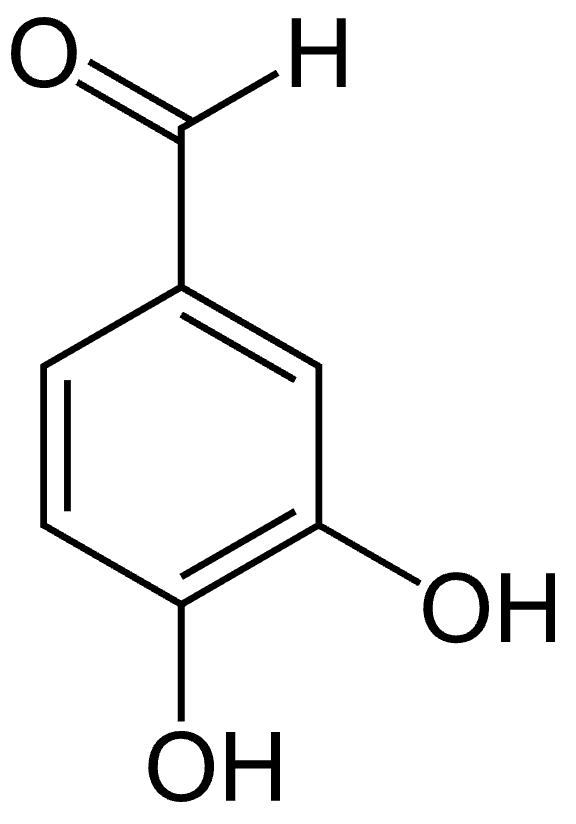
3,4-Dihydroxybenzaldehyde (Protocatechuic Aldehyde)
Regular price:
Regular price:
product unavailable
add to wish list
0
 "Pin It")
Description
3,4-Dihydroxybenzaldehyde (Protocatechuic Aldehyde)
Other Names: Protocatechuic aldehyde, 3,4-Dihydroxybenzal, 3,4-DHBAL
CAS Number: 139-85-5
Sum Formula: C₇H₆O₃
Molar Mass: 138.12 g/mol
Appearance: Yellowish crystalline powder or needles
3,4-Dihydroxybenzaldehyde is an aromatic aldehyde bearing two hydroxyl groups on the benzene ring. It is mainly used as an intermediate in organic synthesis for the preparation of fine chemicals, heterocycles, and bioactive compounds. Its reactive functional groups make it useful in condensation reactions, polymer chemistry, and as a research reagent.
Chemical and Physical Properties
Density: ~1.36 g/cm³
Melting Point: 152–154°C
Boiling Point: ~350°C (decomposes)
Solubility in Water: Slightly soluble
Solubility in Organic Solvents: Soluble in ethanol, methanol, acetone, and ether
Stability: Sensitive to air and light; may oxidize on exposure
Applications
Intermediate in the synthesis of fine organic compounds
Used in research for the preparation of bioactive molecules and natural product derivatives
Applied in polymer and material science as a functional aromatic aldehyde
Laboratory reagent for condensation and coupling reactions
Safety

Signal Word: Warning
H315 (34.5%): Causes skin irritation [Warning Skin corrosion/irritation]
H319 (37.3%): Causes serious eye irritation [Warning Serious eye damage/eye irritation]
H335 (34.5%): May cause respiratory irritation [Warning Specific target organ toxicity, single exposure; Respiratory tract irritation]
First Aid Measures
Eye Contact: Rinse with water for several minutes. Seek medical attention if irritation persists
Skin Contact: Wash thoroughly with soap and water. Remove contaminated clothing
Inhalation: Move to fresh air. Seek medical help if symptoms occur
Ingestion: Rinse mouth with water. Do not induce vomiting. Seek medical advice if unwell
Handling and Storage
Store in a tightly closed container in a cool, dry, and well-ventilated area
Protect from air, light, and moisture
Avoid contact with oxidizing agents