
 CATEGORIES
- ORGANIC COMPOUNDS(1134)
- Thiols(1)
- Metal-organic compounds(1)
- Sulfonic acids(6)
- Alcohols(74)
- Aldehydes(47)
- Alkyl nitrites(6)
- Amines(56)
- Aminoacids(59)
- Amides(33)
- Anhydrides(11)
- Acyl Halides(5)
- Carboxylic Acids(170)
- Dyes and Indicators(99)
- Esters(52)
- Ethers(17)
- Organic Halogens (Organohalides)(30)
- Flavonoids(5)
- Heterocycles(25)
- Hydrocarbons(38)
- Imides(2)
- Ketones(29)
- Mixed solvents(16)
- Nitro Compounds(5)
- Nitriles(9)
- Organic salts(74)
- Phenols(30)
- Polymers ( HMW compounds )(68)
- Sugars (Saccharides)(24)
- Silicoorgano and Phosphoorganocompounds(1)
- Peptides(2)
- Terpenes(16)
- Others(125)
- INORGANIC COMPOUNDS(1055)
- LAB EQUIPMENT(5176)
- *(1)
- Organic Synthesis(421)
- Industry(775)
Language
US version allows shipping to all available destinations


 MANUFACTURER
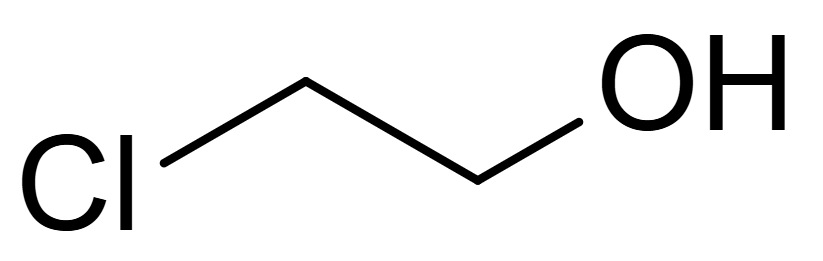
2-Chloroethanol
Regular price:
Regular price:
product unavailable
add to wish list
0

Description
2-Chloroethanol
Other Names: Ethylene chlorohydrin, Chloroethanol, Glycol chlorohydrin
CAS Number: 107-07-3
Sum Formula: C₂H₅ClO
Molar Mass: 80.51 g/mol
Appearance: Colorless, viscous liquid
2-Chloroethanol is a halogenated alcohol with both hydroxyl and chloro functional groups. It is a reactive intermediate used primarily in chemical synthesis, including the production of ethylene oxide derivatives, plasticizers, surfactants, and pharmaceutical intermediates (note: not referencing their application here). It is miscible with water and many polar solvents.
Chemical and Physical Properties
Density: 1.20 g/cm³ (20 °C)
Melting Point: -70°C
Boiling Point: 128°C
Solubility in Water: Miscible
Solubility in Organic Solvents: Miscible with alcohols, ethers, acetone
Vapor Pressure: ~8.7 hPa at 20°C
Flash Point: 49°C (closed cup)
Autoignition Temperature: 385°C
Odor: Mild, ether-like
Stability: Sensitive to light and heat; reacts with strong bases and oxidizers
Applications
Used as an intermediate in organic synthesis and surface modification
Precursor to ethylene oxide derivatives and specialty resins
Applied in the production of stabilizers, plasticizers, and surfactant components
Used in chemical manufacturing processes where halohydrins are required
Utilized in laboratory-scale transformations and derivatizations
Safety

Signal Word: Danger
H300: Fatal if swallowed [Danger Acute toxicity, oral]
H310: Fatal in contact with skin [Danger Acute toxicity, dermal]
H330: Fatal if inhaled [Danger Acute toxicity, inhalation]
P260, P262, P264, P270, P271, P280, P284, P301+P316, P302+P352, P304+P340, P316, P320, P321, P330, P361+P364, P403+P233, P405, and P501
First Aid Measures
Eye Contact: Rinse with water for several minutes. Seek immediate medical attention
Skin Contact: Wash with plenty of soap and water. Remove contaminated clothing
Inhalation: Move to fresh air. Administer oxygen if needed. Seek medical help
Ingestion: Rinse mouth. Do not induce vomiting. Call poison control immediately
Handling and Storage
Store in tightly sealed containers in a cool, dry, well-ventilated place
Keep away from light, heat sources, and incompatible materials (e.g., strong bases)
Avoid all sources of ignition
Use under fume hood with appropriate PPE