
 CATEGORIES
- ORGANIC COMPOUNDS(1135)
- Thiols(1)
- Metal-organic compounds(1)
- Sulfonic acids(6)
- Alcohols(74)
- Aldehydes(47)
- Alkyl nitrites(6)
- Amines(56)
- Aminoacids(59)
- Amides(33)
- Anhydrides(11)
- Acyl Halides(5)
- Carboxylic Acids(170)
- Dyes and Indicators(99)
- Esters(52)
- Ethers(17)
- Organic Halogens (Organohalides)(30)
- Flavonoids(5)
- Heterocycles(25)
- Hydrocarbons(38)
- Imides(2)
- Ketones(29)
- Mixed solvents(16)
- Nitro Compounds(5)
- Nitriles(9)
- Organic salts(74)
- Phenols(30)
- Polymers ( HMW compounds )(68)
- Sugars (Saccharides)(24)
- Silicoorgano and Phosphoorganocompounds(1)
- Peptides(2)
- Terpenes(16)
- Others(126)
- INORGANIC COMPOUNDS(1055)
- LAB EQUIPMENT(5176)
- *(1)
- Organic Synthesis(421)
- Industry(775)
Language
US version allows shipping to all available destinations


 MANUFACTURER
Hydrocarbons are organic compounds composed only of carbon and hydrogen atoms. Their structures may include straight chains, branched chains, rings, unsaturated systems and aromatic rings. In organic synthesis, hydrocarbons are used as substrates, solvents, reference materials, components of reaction mixtures and model compounds for studies of C-H, C-C and π-electron system reactivity.

Alpha- Methylstyrene - (Prop-1-en-2-yl)benzene - 2-Phenylpropene - AMS >99% - 1000ml

Availability: Large quantity
Dispatched within: 7 days
Alpha- Methylstyrene - (Prop-1-en-2-yl)benzene - 2-Phenylpropene - AMS >99% - 100ml

Availability: Large quantity
Dispatched within: 7 days
Alpha- Methylstyrene - (Prop-1-en-2-yl)benzene - 2-Phenylpropene - AMS >99% - 20 000ml = 4x5L

Availability: Large quantity
Dispatched within: 7 days
Alpha- Methylstyrene - (Prop-1-en-2-yl)benzene - 2-Phenylpropene - AMS >99% - 5000ml

Availability: Large quantity
Dispatched within: 7 days
Alpha- Methylstyrene - (Prop-1-en-2-yl)benzene - 2-Phenylpropene - AMS >99% - 500ml

Availability: Large quantity
Dispatched within: 7 days


Crystaline Naphtalene ( naphthalin , naphthaline , antimite ) - 1000g = 1kg

Availability: Large quantity
Dispatched within: 7 days
Crystaline Naphtalene ( naphthalin , naphthaline , antimite ) - 100g

Availability: Large quantity
Dispatched within: 7 days
Crystaline Naphtalene ( naphthalin , naphthaline , antimite ) - 10g

Availability: Large quantity
Dispatched within: 7 days
Crystaline Naphtalene ( naphthalin , naphthaline , antimite ) - 500g

Availability: Large quantity
Dispatched within: 7 days
Cyclohexane ( hexahydrobenzene ) Pure - 20 000ml

Availability: Large quantity
Dispatched within: 7 days
Cyclohexane ( Hexahydroxybenzene, Hexamethylene, Hexanaphthen ) >99% - 1000ml

Availability: Large quantity
Dispatched within: 7 days
Cyclohexane ( Hexahydroxybenzene, Hexamethylene, Hexanaphthen ) >99% - 100ml

Availability: Large quantity
Dispatched within: 7 days
Cyclohexane ( Hexahydroxybenzene, Hexamethylene, Hexanaphthen ) >99% - 10ml

Availability: Large quantity
Dispatched within: 7 days
Cyclohexane ( Hexahydroxybenzene, Hexamethylene, Hexanaphthen ) >99% - 5000ml

Availability: Large quantity
Dispatched within: 7 days
Cyclohexane ( Hexahydroxybenzene, Hexamethylene, Hexanaphthen ) >99% - 500ml

Availability: Large quantity
Dispatched within: 7 days




How are hydrocarbons classified?
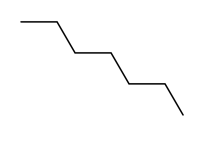
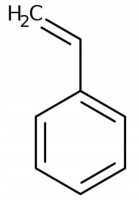
Hydrocarbons are mainly classified according to the type of carbon-carbon bonding and the presence of ring systems. Compounds containing only single C-C bonds are classified as saturated hydrocarbons, while compounds containing double or triple bonds are classified as unsaturated hydrocarbons. Aromatic hydrocarbons form a separate group in which properties arise from a stabilized π-electron system.
Aliphatic and aromatic hydrocarbons
Aliphatic hydrocarbons include alkanes, cycloalkanes, alkenes, alkynes and systems containing several multiple bonds. They may be linear, branched or cyclic, but they do not contain a typical aromatic system. Aromatic hydrocarbons include arenes and polycyclic aromatic systems, whose reactivity differs from classical alkenes despite the presence of π electrons.
Why are hydrocarbons important in organic synthesis?
Hydrocarbons are fundamental skeletons of many organic molecules. They may serve as simple reactivity models, feedstocks for functionalization, hydrophobic fragments, solvents or starting points for the preparation of more complex compounds. In organic synthesis, transformations that functionalize less reactive C-H bonds or use multiple bonds to form new bonds are particularly important.
Reactivity depends on bond type
Saturated hydrocarbons mainly contain sigma bonds and often require more demanding activation conditions. Unsaturated hydrocarbons contain π bonds that can participate in addition, hydrofunctionalization, polymerization and catalytic reactions. Aromatic hydrocarbons tend to preserve the aromatic system, so they often undergo substitution rather than simple destruction of the π system.
Which properties affect hydrocarbon use?
Chain length, branching, ring presence, number of multiple bonds, volatility, boiling point, hydrophobicity and chemical stability are important. Lighter hydrocarbons may be volatile and flammable, while larger molecules often have higher boiling points and greater lipophilicity. These features influence their use as solvents, substrates, fuels, model materials and components of technical mixtures.
Safety and limitations of use
Hydrocarbons do not represent a single hazard class because their properties depend on the specific structure. Many are flammable, volatile and hydrophobic, and some may present significant toxicological or environmental concerns. Each product from this group should be evaluated individually according to its safety data sheet, volatility, flash point, toxicity and compatibility with the intended use.