
 CATEGORIES
- ORGANIC COMPOUNDS(1303)
- Alcohols(83)
- Aldehydes(57)
- Alkyl nitrites(6)
- Amines(89)
- Aminoacids(76)
- Amides(33)
- Anhydrides(9)
- Acyl Halides(5)
- Carboxylic Acids(209)
- Dyes and Indicators(104)
- Esters(52)
- Ethers(17)
- Organic Halogens (Organohalides)(35)
- Heterocycles(25)
- Hydrocarbons(41)
- Imides(2)
- Ketones(33)
- Lactams(4)
- Lactones(14)
- Mixed solvents(16)
- Nitro Compounds(15)
- Nitriles(9)
- Organic salts(71)
- Phenols(37)
- Polymers ( HMW compounds )(72)
- Sugars (Saccharides)(21)
- Silicoorgano and Phosphoorganocompounds(1)
- Peptides(1)
- Terpenes(22)
- Others(145)
- INORGANIC COMPOUNDS(1006)
- LAB EQUIPMENT(5338)
- *(1)
- Organic Synthesis(532)
- Industry(840)
Language
US version allows shipping to all available destinations


 MANUFACTURER
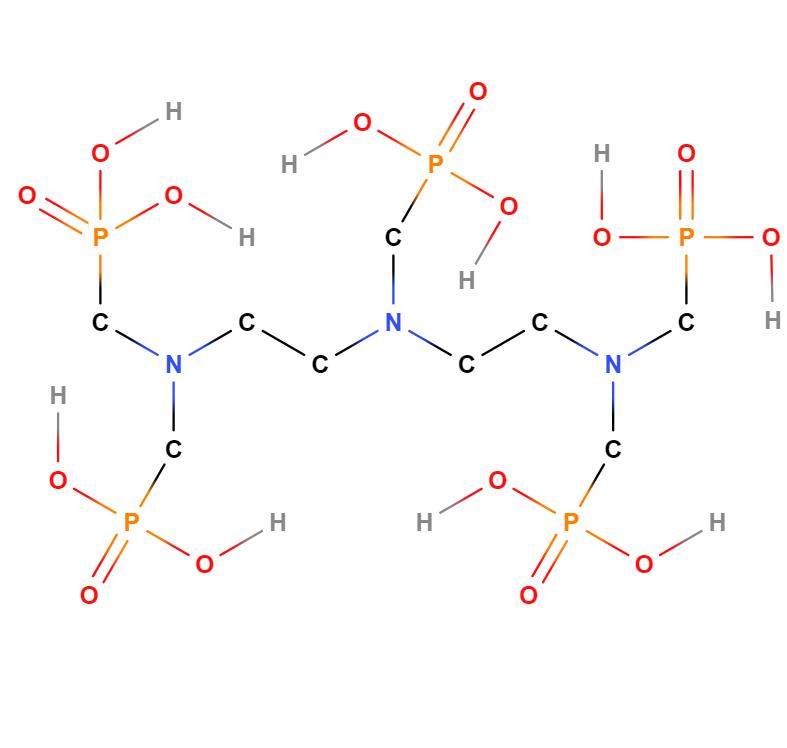
Sodium Diethylenetriamine Pentamethylene Phosphonate, 32%
Regular price:
Regular price:
product unavailable
add to wish list
0

Description
Sodium Diethylenetriamine Pentamethylene Phosphonate, 32%
Other Names: Na-DTPMP, Sodium salt of DTPMP, Sodium diethylenetriamine penta(methylene phosphonic acid)
CAS Number: 22042-96-2
Sum Formula: C₉H₂₈-xN₃NaₓO₁₅P₅ (x ≈ 5–7; sodium salt form)
Molar Mass: Approx. 573–650 g/mol (depending on degree of neutralization)
Appearance: Clear to pale yellow liquid
Na-DTPMP (32%) is a water-soluble, high-performance phosphonate chelating and scale-inhibiting agent. It exhibits strong sequestration of divalent metal ions (Ca²⁺, Fe²⁺/Fe³⁺), making it useful in water treatment and industrial cleaning applications. Its multi-functional structure enables both chelation and corrosion inhibition in alkaline conditions.
Chemical and Physical Properties
Active Content: 32% (w/w)
pH (1% solution): ~6.0–8.0
Density: ~1.20–1.25 g/cm³ (at 20°C)
Solubility in Water: Fully miscible
Odor: Odorless or mild
Stability: Stable under normal storage conditions; not oxidizing
Applications
Water Treatment: Inhibits scale and corrosion in industrial cooling systems and boilers
Detergent Industry: Chelating agent in alkaline cleaning formulations and hard surface cleaners
Oil & Gas: Used as a scale inhibitor in injection and production water systems
Pulp & Paper: Prevents scale buildup on machinery and piping
Industrial Cleaners: Improves cleaning efficiency in formulations targeting mineral residues
Safety

Signal Word: Warning
GHS Hazard Statements
H290 (17.9%): May be corrosive to metals [Warning Corrosive to Metals]
H315 (15.1%): Causes skin irritation [Warning Skin corrosion/irritation]
H319 (15.3%): Causes serious eye irritation [Warning Serious eye damage/eye irritation]
Precautionary Statement Codes
P234, P264, P264+P265, P280, P302+P352, P305+P351+P338, P321, P332+P317, P337+P317, P362+P364, P390, and P406
First Aid Measures
Eye Contact: Rinse thoroughly with water. Seek medical attention if irritation persists
Skin Contact: Wash skin with water and soap. Remove contaminated clothing
Inhalation: Move to fresh air. Seek medical attention if symptoms occur
Ingestion: Rinse mouth with water. Do not induce vomiting. Seek medical advice
Handling and Storage
Storage Conditions: Store in a cool, dry, and well-ventilated area. Protect from freezing and direct sunlight. Keep containers tightly closed
Handling Precautions: Avoid contact with eyes and prolonged skin exposure. Use appropriate PPE and local ventilation