
 CATEGORIES
- ORGANIC COMPOUNDS(1252)
- Thiols(1)
- Metal-organic compounds(1)
- Sulfonic acids(6)
- Alcohols(78)
- Aldehydes(56)
- Alkyl nitrites(6)
- Amines(67)
- Aminoacids(78)
- Amides(33)
- Anhydrides(11)
- Acyl Halides(5)
- Carboxylic Acids(200)
- Dyes and Indicators(107)
- Esters(52)
- Ethers(17)
- Organic Halogens (Organohalides)(35)
- Flavonoids(5)
- Heterocycles(37)
- Hydrocarbons(42)
- Imides(2)
- Ketones(29)
- Mixed solvents(16)
- Nitro Compounds(6)
- Nitriles(9)
- Organic salts(74)
- Phenols(35)
- Polymers ( HMW compounds )(66)
- Sugars (Saccharides)(24)
- Silicoorgano and Phosphoorganocompounds(1)
- Peptides(2)
- Terpenes(16)
- Others(137)
- INORGANIC COMPOUNDS(1108)
- LAB EQUIPMENT(5176)
- *(1)
- Organic Synthesis(450)
- Industry(783)
Language
US version allows shipping to all available destinations


 MANUFACTURER
Pure Cannabidiol, CBD Isolate >99,9%


Regular price:
Regular price:
product unavailable
add to wish list
4.67


Description
Cannabidiol
Other Names: CBD, (-)-Cannabidiol, (-)-trans-Cannabidiol
Chemical Formula: C21H30O2
Molar Mass: 314.47 g/mol
CAS Number: 13956-29-1
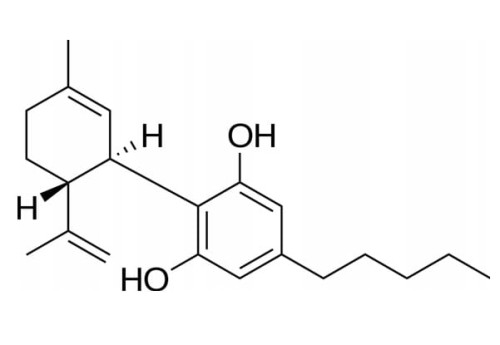
SMILES: CCCCCC1=CC(=C(C(=C1)O)[C@@H]2C=C(CC[C@H]2C(=C)C)C)O
Appearance: White to off-white crystalline solid or powder
Odor: Not specifically characterized in standard scientific references
Cannabidiol (CBD) is a naturally occurring phytocannabinoid with a terpenophenolic molecular structure. It contains a substituted resorcinol aromatic ring connected to a cyclohexene moiety bearing methyl and isopropenyl substituents. Two phenolic hydroxyl groups contribute to its hydrogen-bonding capability, whereas the extended hydrocarbon portion of the molecule gives CBD strongly lipophilic characteristics. Cannabidiol has the same molecular formula as several other cannabinoids but differs in molecular connectivity and stereochemistry, resulting in distinct physicochemical and pharmacological properties. It is extensively investigated in medicinal chemistry, neuropharmacology, analytical chemistry, pharmaceutical formulation and cannabinoid metabolism research.
Chemical and physical properties
Pure cannabidiol is a crystalline material with a molecular mass of approximately 314.47 g/mol. Experimental differential scanning calorimetry measurements published in the Journal of Chemical & Engineering Data determined a melting temperature of approximately 341.4 K, corresponding to about 68.3 °C, and an enthalpy of fusion of approximately 24.4 kJ/mol.
Cannabidiol is strongly hydrophobic and has very low solubility in water. Experimental and formulation studies generally report aqueous solubility in the low microgram-per-milliliter range, with values dependent on temperature, pH, crystalline state and experimental methodology. Considerably higher solubility can be obtained in suitable organic solvents, lipid phases and formulation vehicles. This low intrinsic aqueous solubility is an important factor in pharmaceutical and physicochemical investigations involving CBD.
The two phenolic hydroxyl groups can participate in hydrogen-bonding interactions, while the pentyl side chain and terpenoid portion of the molecule contribute substantial hydrophobic surface area. This combination results in pronounced partitioning into non-polar phases and biological membranes and influences chromatographic retention, formulation behavior and molecular interactions.
Cannabidiol is sensitive to environmental conditions. Experimental stability investigations have demonstrated that temperature, oxygen, light and solvent composition can influence its degradation rate. Oxidative conditions can produce several oxygenated degradation products, while increased temperature can accelerate decomposition. Stability studies have therefore emphasized controlled temperature, limited oxygen exposure and protection from conditions promoting photochemical or oxidative degradation.
Experimental measurements of molten cannabidiol between approximately 318 and 403 K reported densities in the range of about 945–980 kg/m3. Density and viscosity measurements of purified CBD have been used for thermophysical characterization and for the design of cannabinoid separation and processing systems.
Applications
Cannabidiol is widely used as a reference compound in pharmacological and biochemical research. It interacts with multiple molecular targets and signaling systems rather than acting simply as a conventional high-affinity agonist of cannabinoid CB1 or CB2 receptors. Experimental studies have investigated its interactions with targets including transient receptor potential channels, GPR55, serotonin-related signaling systems and mechanisms affecting cellular excitability and neurotransmission.
In pharmaceutical research, CBD is studied as an antiseizure active substance and as a model highly lipophilic drug compound. Purified cannabidiol is used in prescription pharmaceutical preparations for specific seizure disorders, while continuing research investigates its pharmacokinetics, metabolism, drug interactions and mechanisms of action.
Cannabidiol is frequently used in formulation science because its low aqueous solubility and lipophilic character present significant drug-delivery challenges. Lipid systems, phospholipid complexes, polymeric nanoparticles, cyclodextrin-based systems, emulsions and other delivery technologies have been investigated to improve CBD dispersion, dissolution, stability and transport through biological membranes.
In analytical chemistry, cannabidiol is used as a reference standard for chromatographic and mass-spectrometric analysis. HPLC, UHPLC, GC-MS and LC-MS/MS methods are routinely employed for its separation, identification and quantitative determination. Analytical methods have also been developed for simultaneous determination of CBD and metabolites such as 7-hydroxy-cannabidiol in biological matrices.
CBD is additionally used in metabolism and pharmacokinetic research. Oxidative metabolism generates several hydroxylated and carboxylated metabolites, and quantitative LC-MS/MS methods are employed to investigate their formation and distribution. Such studies provide information about cannabinoid biotransformation, elimination and exposure in experimental and clinical systems.
In physicochemical research, cannabidiol serves as a model natural product for studies of crystallization, melting behavior, solubility, degradation kinetics, partitioning and intermolecular interactions. Its combination of low melting temperature, strong lipophilicity and limited aqueous solubility makes it particularly useful for research concerning poorly water-soluble bioactive molecules.
Scientific references
- PubChem. Cannabidiol, CID 644019. National Center for Biotechnology Information. Molecular formula, molecular weight, CAS number, stereochemical identifiers and SMILES.
- Idárraga-Vélez, A. M.; Gil Chaves, I. D.; Orozco, G. A. Densities and Viscosities of Cannabis Extracts and Distillates, and Densities, Viscosities, Fusion Enthalpy, and Melting Point of Cannabidiol. Journal of Chemical & Engineering Data, 2023, 68(12), 2982–2988. DOI: 10.1021/acs.jced.3c00105.
- Fraguas-Sánchez, A. I.; Fernández-Carballido, A.; Martin-Sabroso, C.; Torres-Suárez, A. I. Stability characteristics of cannabidiol for the design of pharmacological, biochemical and pharmaceutical studies. Journal of Chromatography B, 2020, 1150, 122188. DOI: 10.1016/j.jchromb.2020.122188.
- Britch, S. C.; Babalonis, S.; Walsh, S. L. Cannabidiol: Pharmacology and Therapeutic Targets. Psychopharmacology, 2021, 238, 9–28. DOI: 10.1007/s00213-020-05712-8.
- Atalay, S.; Jarocka-Karpowicz, I.; Skrzydlewska, E. Antioxidative and Anti-Inflammatory Properties of Cannabidiol. Antioxidants, 2020, 9(1), 21. DOI: 10.3390/antiox9010021.
- Franco, V.; Perucca, E. Pharmacological and Therapeutic Properties of Cannabidiol for Epilepsy. Drugs, 2019, 79, 1435–1454. DOI: 10.1007/s40265-019-01171-4.
- Contin, M.; Mohamed, S.; Santucci, M.; et al. On-Line Solid Phase Extraction High Performance Liquid Chromatography Method Coupled With Tandem Mass Spectrometry for the Therapeutic Monitoring of Cannabidiol and 7-Hydroxy-cannabidiol in Human Serum and Saliva. Frontiers in Pharmacology, 2022, 13, 915004. DOI: 10.3389/fphar.2022.915004.
- Muta, T.; Khetan, R.; Song, Y.; Garg, S. Optimising Cannabidiol Delivery: Improving Water Solubility and Permeability Through Phospholipid Complexation. International Journal of Molecular Sciences, 2025, 26(6), 2647. DOI: 10.3390/ijms26062647.
- Nelson, K. M.; Bisson, J.; Singh, G.; et al. The Essential Medicinal Chemistry of Cannabidiol (CBD). Journal of Medicinal Chemistry, 2020, 63(21), 12137–12155. DOI: 10.1021/acs.jmedchem.0c00724.
WARNING:
This product is intended strictly for laboratory research purposes. It is not approved for human consumption or pharmaceutical use.
Safety

Signal Word: Warning
H302 (41.7%): Harmful if swallowed [Warning Acute toxicity, oral]
H332 (11.1%): Harmful if inhaled [Warning Acute toxicity, inhalation]
H361 (80.6%): Suspected of damaging fertility or the unborn child [Warning Reproductive toxicity]
P203, P261, P264, P270, P271, P280, P301+P317, P304+P340, P317, P318, P330, P405, and P501
Handling and Storage
Storage Conditions:
-
Store in a tightly sealed container, protected from light, air, and moisture.
-
Recommended storage temperature: 2–8°C.
Handling Precautions:
-
Minimize exposure to light and air to maintain stability.
-
Use appropriate personal protective equipment (PPE) when handling powdered forms.