
 CATEGORIES
- ORGANIC COMPOUNDS(1135)
- Thiols(1)
- Metal-organic compounds(1)
- Sulfonic acids(6)
- Alcohols(74)
- Aldehydes(47)
- Alkyl nitrites(6)
- Amines(56)
- Aminoacids(59)
- Amides(33)
- Anhydrides(11)
- Acyl Halides(5)
- Carboxylic Acids(170)
- Dyes and Indicators(99)
- Esters(52)
- Ethers(17)
- Organic Halogens (Organohalides)(30)
- Flavonoids(5)
- Heterocycles(25)
- Hydrocarbons(38)
- Imides(2)
- Ketones(29)
- Mixed solvents(16)
- Nitro Compounds(5)
- Nitriles(9)
- Organic salts(74)
- Phenols(30)
- Polymers ( HMW compounds )(68)
- Sugars (Saccharides)(24)
- Silicoorgano and Phosphoorganocompounds(1)
- Peptides(2)
- Terpenes(16)
- Others(126)
- INORGANIC COMPOUNDS(1055)
- LAB EQUIPMENT(5176)
- *(1)
- Organic Synthesis(421)
- Industry(775)
Language
US version allows shipping to all available destinations


 MANUFACTURER
Potassium Citrate
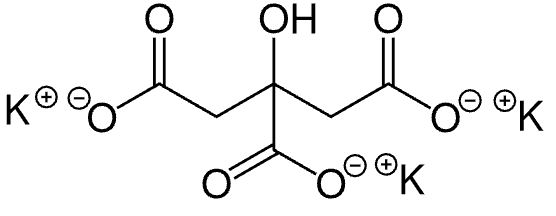
Regular price:
Regular price:
product unavailable
add to wish list
0

Description
POTASSIUM CITRATE
Other Names: Potassium salt of citric acid, potassium citrate, tripotassium citrate
CAS Number: 866-84-2
Chemical Formula: C₆H₅K₃O₇
Molar Mass: 306.39 g/mol
Appearance: White solid, powder, granules or crystals
Potassium citrate is the potassium salt of citric acid. The product is most commonly supplied as a white powder, granules or crystals and is readily soluble in water. It is characterized by buffering properties and the ability to influence the pH of aqueous solutions. It may be used as a reagent, a component of technical formulations, an auxiliary substance in chemical mixtures and a source of potassium and citrate ions.
Chemical and Physical Properties
Form: Solid, powder, granules or crystals
Color: White
Odor: Odorless or slightly characteristic
Solubility in Water: Readily soluble
Solubility in Organic Solvents: Limited
Chemical Character: Organic potassium salt of citric acid
pH of Aqueous Solution: Usually slightly alkaline
Properties: Buffering compound, source of potassium and citrate ions
Stability: Stable under normal storage conditions, protect from moisture
Applications
Laboratory Use: Used as a reagent, buffer solution component and auxiliary material in chemical procedures.
pH Adjustment: Applied for correction and stabilization of the pH of aqueous solutions.
Technical Formulations: May be used as a component of mixtures requiring the presence of a citrate salt.
Source of Potassium Ions: Provides K⁺ ions in a readily soluble form.
Source of Citrate Ions: Used where the presence of citrate anions in solution is required.
Buffer Systems: Applied in mixtures where maintaining a defined pH range is important.
Not intended for food, pharmaceutical or cosmetic applications unless the product has the appropriate grade and documentation required for such uses.
Handling and Storage
Store in a tightly closed container in a dry, cool and well-ventilated place. Protect from moisture, direct sunlight and product contamination. Close the container tightly after use to reduce caking and maintain product quality. Keep away from chemically incompatible substances