
 CATEGORIES
- ORGANIC COMPOUNDS(1135)
- Thiols(1)
- Metal-organic compounds(1)
- Sulfonic acids(6)
- Alcohols(74)
- Aldehydes(47)
- Alkyl nitrites(6)
- Amines(56)
- Aminoacids(59)
- Amides(33)
- Anhydrides(11)
- Acyl Halides(5)
- Carboxylic Acids(170)
- Dyes and Indicators(99)
- Esters(52)
- Ethers(17)
- Organic Halogens (Organohalides)(30)
- Flavonoids(5)
- Heterocycles(25)
- Hydrocarbons(38)
- Imides(2)
- Ketones(29)
- Mixed solvents(16)
- Nitro Compounds(5)
- Nitriles(9)
- Organic salts(74)
- Phenols(30)
- Polymers ( HMW compounds )(68)
- Sugars (Saccharides)(24)
- Silicoorgano and Phosphoorganocompounds(1)
- Peptides(2)
- Terpenes(16)
- Others(126)
- INORGANIC COMPOUNDS(1055)
- LAB EQUIPMENT(5176)
- *(1)
- Organic Synthesis(421)
- Industry(775)
Language
US version allows shipping to all available destinations


 MANUFACTURER
Melatonin (Pure Compound) >99%

Regular price:
Regular price:
product unavailable
add to wish list
0
 >99% "Pin It")
Description
Melatonin
Other Names: N-Acetyl-5-methoxytryptamine, N-[2-(5-Methoxy-1H-indol-3-yl)ethyl]acetamide, Melatonine, MLT
Chemical Formula: C13H16N2O2
Molar Mass: 232.28 g/mol
CAS Number: 73-31-4
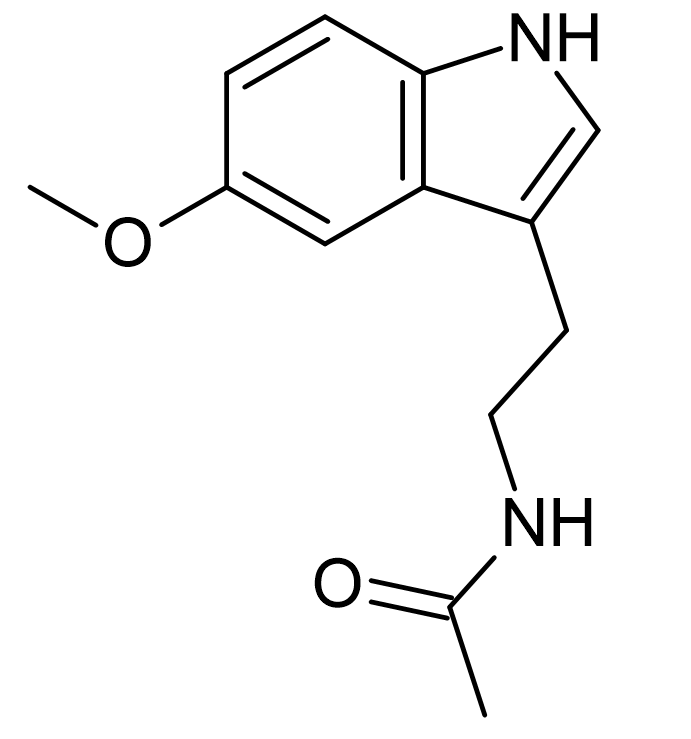
SMILES: COc1ccc2[nH]cc(CCNC(C)=O)c2c1
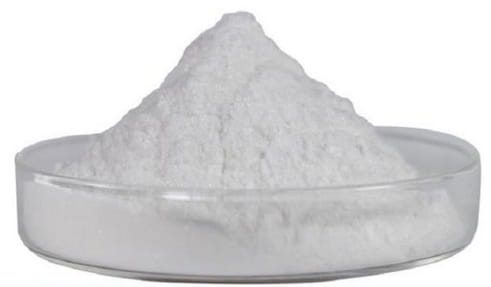
Appearance: White to off-white crystalline powder
Odor: Practically odorless
Melatonin is an indoleamine compound chemically identified as N-acetyl-5-methoxytryptamine. Its molecular structure contains an indole ring substituted with a methoxy group and an N-acetylethylamine side chain. In biological systems, melatonin is biosynthesized from tryptophan through a pathway involving serotonin and N-acetylserotonin. The molecule is extensively investigated in biochemistry, molecular biology, chronobiology, redox chemistry and analytical chemistry. Its conjugated indole system also gives melatonin characteristic absorption and fluorescence properties that facilitate sensitive analytical determination.
Chemical and physical properties
Melatonin is a crystalline organic solid with a molar mass of approximately 232.28 g/mol. Thermal analysis has reported a melting point of approximately 116.9 °C, with thermal decomposition occurring upon further heating.
Melatonin exhibits limited aqueous solubility but dissolves more readily in a variety of organic solvent systems. Its solubility is strongly dependent on solvent composition, and experimental investigations have examined the use of solvents and molecular complexing agents to modify its dissolution behavior.
The molecule contains both hydrogen-bond donor and acceptor sites. The indole nitrogen and amide group participate in intermolecular interactions, while the methoxy and carbonyl oxygen atoms provide additional hydrogen-bond-accepting functionality. These structural characteristics influence crystal packing, solvation and interactions with surrounding molecular environments.
Melatonin possesses intrinsic fluorescence associated with its indole chromophore. Analytical studies have used excitation wavelengths in the approximate range of 275–285 nm and fluorescence emission around 345–350 nm. This property enables highly sensitive determination by high-performance liquid chromatography coupled with fluorescence detection and by spectrofluorimetric techniques.
The indole structure of melatonin also participates in oxidation and free-radical reactions. Experimental studies have demonstrated direct reactions with reactive oxygen and nitrogen species. Oxidative transformation can produce metabolites such as N1-acetyl-N2-formyl-5-methoxykynuramine (AFMK), making melatonin an extensively investigated model compound in studies of biological redox chemistry.
Applications
Melatonin is extensively used as a research standard and reference compound in analytical chemistry. High-performance liquid chromatography with fluorescence detection is frequently employed for its quantitative determination. Chromatographic methods have been developed for detecting very low concentrations of melatonin in complex biological matrices and for studying its chemical stability and transformation products.
In biochemical and molecular research, melatonin is used to investigate circadian signaling and the molecular mechanisms associated with biological timekeeping. Experimental studies examine its synthesis, metabolism, receptor interactions and variations in concentration associated with light-dark cycles.
Melatonin is also widely investigated in redox chemistry as a free-radical-reactive indole compound. Research has examined its reactions with reactive oxygen and nitrogen species, the structures of its oxidation products and the mechanisms by which sequential oxidative transformations occur.
In analytical method development, melatonin's natural fluorescence enables its use in fluorescence spectroscopy and chromatographic detection. Oxidative derivatization procedures have additionally been developed to convert melatonin into products with enhanced fluorescence, allowing highly sensitive instrumental analysis.
Melatonin is employed as a model indole compound in physicochemical research involving solubility, molecular complexation and stability. Experimental studies using propylene glycol, cyclodextrin systems and mixed solvents have provided information about its dissolution behavior and interactions with molecular carriers.
The compound is additionally used in experimental biological research to investigate oxidative stress, cellular signaling, mitochondrial processes and interactions between circadian regulation and cellular metabolism. These applications make melatonin an important research reagent across analytical chemistry, biochemistry and molecular biology.
Scientific references
Rizzo, V.; Porta, C.; Moroni, M.; Scoglio, E.; Moratti, R. Determination of free and total (free plus protein-bound) melatonin in plasma and cerebrospinal fluid by high-performance liquid chromatography with fluorescence detection. Journal of Chromatography B, 2002, 774(1), 17–24. DOI: 10.1016/S1570-0232(02)00168-X.
Muñoz, J. L. P.; Ceinos, R. M.; Soengas, J. L.; Míguez, J. M. A simple and sensitive method for determination of melatonin in plasma, bile and intestinal tissues by high performance liquid chromatography with fluorescence detection. Journal of Chromatography B, 2009, 877(22), 2173–2177. DOI: 10.1016/j.jchromb.2009.06.001.
Tomita, T.; Hamase, K.; Hayashi, H.; Fukuda, H.; Hirano, J.; Zaitsu, K. Determination of endogenous melatonin in the individual pineal glands of inbred mice using precolumn oxidation reversed-phase micro-high-performance liquid chromatography. Analytical Biochemistry, 2003, 316(2), 154–161. DOI: 10.1016/S0003-2697(03)00079-4.
Lee, B. J.; Choi, H. G.; Kim, C. K.; Parrott, K. A.; Ayres, J. W.; Sack, R. L. Solubility and stability of melatonin in propylene glycol and 2-hydroxypropyl-beta-cyclodextrin vehicles. Archives of Pharmacal Research, 1997, 20(6), 560–565. DOI: 10.1007/BF02975212.
Alarma-Estrany, P.; Pintor, J. Melatonin receptors in the eye: location, second messengers and role in ocular physiology. Pharmacology & Therapeutics, 2007, 113(3), 507–522. DOI: 10.1016/j.pharmthera.2006.11.003.
Safety
Important Note:
This product is intended strictly for laboratory research purposes. It is not approved for human consumption or pharmaceutical use.
Classification acc. to GHS, This substance does not meet the criteria for classification.
Label elements: Labelling not required
Handling and Storage
Storage Conditions:
-
Store in a tightly closed container, in a cool, dry, and dark place.
-
Recommended storage temperature: 2–8°C.
-
Protect from light and moisture to prevent degradation.
Handling Precautions:
-
Handle under low-light conditions if possible to prevent photodegradation.
-
Use appropriate PPE when working with powdered forms.