




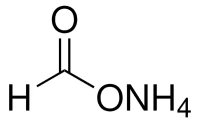


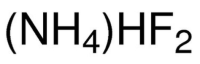
Inorganic salts consist of positively charged ions (metal cations or inorganic polycations such as NH₄⁺) and negatively charged ions (halides, oxoanions, sulfides, carbonates, phosphates, etc.) arranged in an electrostatically stabilized crystal lattice. Their structures are governed by charge balance, ionic radii, and lattice-energy minimization, leading to common motifs such as rock-salt (NaCl), fluorite (CaF₂), and perovskite (CaTiO₃) types. High lattice energies generally yield high melting points, brittleness, and low volatility.
Classification.
Salts are often grouped by anion type:
-
Binary salts (e.g., chlorides, sulfides) containing a single anion species.
-
Oxo-salts derived from oxoacids (e.g., nitrates NO₃⁻, sulfates SO₄²⁻, phosphates PO₄³⁻).
-
Double/mixed salts containing more than one cation or anion (e.g., alum KAl(SO₄)₂·12H₂O).
They can also be normal, acid salts (partially protonated anions such as NaHCO₃), or basic salts (containing hydroxide or oxide along with another anion).
Formation and equilibria.
Typical synthetic routes include acid–base neutralization (HCl + NaOH → NaCl + H₂O), precipitation reactions driven by low solubility products (K_sp), direct combination of elements (2Na + Cl₂ → 2NaCl), and redox processes (metal + acid → salt + H₂). In aqueous systems, salts may dissociate fully or partially, and their ions undergo hydration and sometimes hydrolysis, shifting pH depending on the conjugate acid/base strengths (e.g., NH₄Cl acidifies; Na₂CO₃ alkalinizes). Many salts form hydrates, incorporating water into their lattice with defined stoichiometry, which can alter stability, solubility, and thermal behavior.
Physical properties.
Solubility is controlled by the balance of lattice energy and hydration enthalpy; trends follow charge density and polarization (e.g., many alkali nitrates are soluble, while many carbonates and sulfides of heavier metals are sparingly soluble). Molten salts and aqueous solutions conduct electricity via mobile ions, and some solids exhibit ionic conductivity (e.g., AgI, doped ZrO₂) important in batteries and fuel cells.
Importance and applications.
Inorganic salts regulate osmotic pressure and ionic strength in biology (Na⁺, K⁺, Ca²⁺, Cl⁻), build minerals and rocks (silicates, carbonates), and enable industrial processes such as fertilizers (NH₄NO₃, K₃PO₄), electroplating, water treatment, and metallurgy. Their predictable lattice-based structures and solution chemistry make them central to both fundamental inorganic chemistry and real-world technology.