
 CATEGORIES
- ORGANIC COMPOUNDS(1135)
- INORGANIC COMPOUNDS(1055)
- Mineral Acids(51)
- Chelates(3)
- Elements(130)
- Salts(556)
- Oxides(121)
- Hydroxides(30)
- Hydrides(15)
- Other(19)
- Nanoparticles(3)
- Standard solutions(126)
- LAB EQUIPMENT(5176)
- *(1)
- Organic Synthesis(421)
- Industry(775)
Language
US version allows shipping to all available destinations


 MANUFACTURER
Elements are pure substances made of atoms with the same number of protons (atomic number). They are the fundamental chemical building blocks of matter and are organized in the periodic table by their electronic structure and properties.


Active Carbon (Coconut) For Chemical Purification, Recrystallisation

Availability: Large quantity
Dispatched within: 7 days

Aluminium Powder Dust ( Aluminum Atomized ) 45um Al >99,7%

Availability: Large quantity
Dispatched within: 7 days
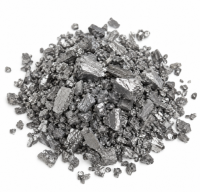
Atomized Aluminium Granules Granulated Pellet Coarse Powder High Purity Al >99,7% Size <3mm - 1000g

Availability: Large quantity
Dispatched within: 7 days
Atomized Aluminium Granules Granulated Pellet Coarse Powder High Purity Al >99,7% Size <3mm - 100g

Availability: Large quantity
Dispatched within: 7 days
Atomized Aluminium Granules Granulated Pellet Coarse Powder High Purity Al >99,7% Size <3mm - 10g

Availability: Large quantity
Dispatched within: 7 days
Atomized Aluminium Granules Granulated Pellet Coarse Powder High Purity Al >99,7% Size <3mm - 5000g

Availability: Large quantity
Dispatched within: 7 days
Atomized Aluminium Granules Granulated Pellet Coarse Powder High Purity Al >99,7% Size <3mm - 500g

Availability: Large quantity
Dispatched within: 7 days


Carbon Black Powder ( Soot Smoke Black - Powdered ) < 45um - 1000g

Availability: Large quantity
Dispatched within: 7 days
Carbon Black Powder ( Soot Smoke Black - Powdered ) < 45um - 100g

Availability: Large quantity
Dispatched within: 7 days
Carbon Black Powder ( Soot Smoke Black - Powdered ) < 45um - 10g

Availability: Large quantity
Dispatched within: 7 days
Carbon Black Powder ( Soot Smoke Black - Powdered ) < 45um - 5000g

Availability: Large quantity
Dispatched within: 7 days
A chemical element is defined by its atomic number (Z), the number of protons in the nucleus, which uniquely determines the element’s identity and governs its electron configuration in neutral atoms. Elements exist as single atoms (e.g., noble gases), molecules of the same element (e.g., O₂, P₄, S₈), or extended lattices (e.g., metals, diamond, silicon). Variants of an element with different neutron counts are isotopes; they share Z but differ in mass number (A), influencing nuclear stability and, subtly, physical properties. Radioactive isotopes decay via α, β, or γ processes, forming the basis of radiometric dating, imaging, and energy applications.
Periodic classification and trends.
The periodic table arranges elements by increasing Z, revealing recurring patterns due to quantized electron shells. Elements are broadly grouped as metals, metalloids, and nonmetals, with further families such as alkali metals, alkaline earths, halogens, chalcogens, pnictogens, and noble gases. Periodic trends arise from changes in effective nuclear charge and principal quantum number: atomic radius generally decreases across a period and increases down a group; ionization energy and electronegativity typically increase across a period and decrease down a group. These trends rationalize reactivity, bonding preferences, and oxidation states.
Bonding and oxidation states.
Elements form compounds through ionic, covalent, metallic, or coordinative bonding, depending on electronegativity differences and orbital interactions. Many elements exhibit multiple oxidation states, especially transition metals, due to the energetic proximity of s and d orbitals. This variability underpins catalysis, complex formation, conductivity, and magnetic behavior.
Origin and abundance.
Elemental abundances reflect nucleosynthesis: light elements (H, He) formed in Big Bang nucleosynthesis; heavier elements arise from stellar fusion and supernova/neutron-star processes. On Earth, distribution is shaped by geochemical differentiation, leading to lithophilic, siderophilic, chalcophilic, and atmophilic tendencies. In biology, a subset of elements are essential because their chemistry supports structure and catalysis (C, N, O, P, S, metals like Fe, Zn, Mg).
Overall, elements are the discrete atomic “alphabet” of chemistry; their nuclear identity and electron structure determine the vast diversity of matter and chemical behavior seen in nature and technology.