


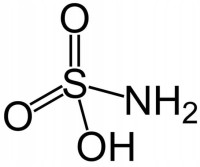



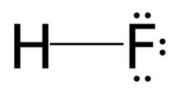

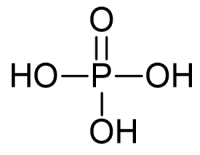


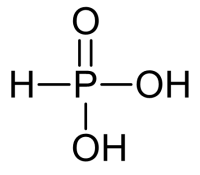


Mineral acids (also called inorganic acids) encompass binary acids (HX, where X is a nonmetal) and oxoacids (HₙXO_m, where X is a central atom bonded to oxygen). In aqueous solution they act as Brønsted–Lowry acids, with their strength quantified by pKₐ and typically expressed through extent of ionization to H₃O⁺. Many common mineral acids—hydrochloric, nitric, and sulfuric acids—are effectively strong acids in water, displaying near-complete first dissociation and high conductivity. Others, such as phosphoric or carbonic acid, are polyprotic but weaker, with stepwise dissociation constants that decrease for successive deprotonations.
Structure–acidity relationships.
For binary acids HX, acidity generally increases down a group as the H–X bond weakens and X becomes more polarizable (e.g., HF < HCl < HBr < HI), despite fluorine’s higher electronegativity. For oxoacids, acidity increases with:
-
higher oxidation state of X (more electron withdrawal through the X–O framework), and
-
greater number of terminal oxygens, which stabilize the conjugate base by resonance and inductive effects (e.g., HClO < HClO₂ < HClO₃ < HClO₄).
These trends reflect stabilization of the anion and polarization of the O–H bond.
Reactivity.
Mineral acids participate in neutralization to form salts, catalyze dehydration and hydrolysis, and drive redox chemistry when the anion is oxidizing or reducing. For example:
-
HNO₃ is a strong oxidizing acid, enabling nitration and metal oxidation.
-
H₂SO₄ is strongly dehydrating and can act as an oxidant at high concentrations/temperatures.
-
HCl is non-oxidizing and mainly provides Cl⁻ for salt formation or substitution.
Polyprotic mineral acids (H₂SO₄, H₃PO₄) form characteristic hydrogen sulfate/phosphate equilibria important in buffering and speciation.
Physical properties and safety.
Concentrated mineral acids are typically dense, highly polar liquids (or gases in the case of HCl, HF) with strong exothermic heats of solution and significant corrosivity due to proton activity and, sometimes, oxidative power. They can cause severe chemical burns and react violently with bases and many organics; safe handling requires dilution by adding acid to water, ventilation, and appropriate PPE.
Applications.
Mineral acids are foundational reagents in fertilizers (H₂SO₄, H₃PO₄), explosives and nitration processes (HNO₃/H₂SO₄), metal pickling and leaching (HCl, H₂SO₄), petroleum refining (HF, H₂SO₄ catalysts), and bulk salt production. Their predictable proton activity and, in some cases, redox behavior make them central to both industrial chemistry and laboratory synthesis.