
 CATEGORIES
- ORGANIC COMPOUNDS(1135)
- INORGANIC COMPOUNDS(1055)
- Mineral Acids(51)
- Chelates(3)
- Elements(130)
- Salts(556)
- Oxides(121)
- Hydroxides(30)
- Hydrides(15)
- Other(19)
- Nanoparticles(3)
- Standard solutions(126)
- LAB EQUIPMENT(5176)
- *(1)
- Organic Synthesis(421)
- Industry(775)
Language
US version allows shipping to all available destinations


 MANUFACTURER
Nanoparticles are particles with at least one dimension typically in the 1–100 nm range. At this scale they exhibit size-dependent optical, electronic, and chemical properties distinct from bulk materials, enabling uses in catalysis, medicine, and nanotechnology.

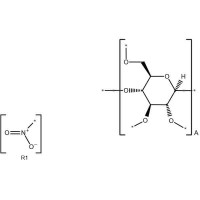

Nanoparticles occupy the regime where surface and quantum effects dominate. Their extremely high surface-to-volume ratio increases the fraction of atoms at or near the surface, enhancing adsorption, catalytic activity, and dissolution rates. For many inorganic nanoparticles, shrinking size also alters band structure and density of states, producing quantum confinement (notably in semiconductors), which shifts absorption/emission spectra and enables tunable photoluminescence (“quantum dots”). Collective electron oscillations in metallic nanoparticles generate localized surface plasmon resonances (LSPR), responsible for intense, size- and shape-dependent colors and strong electromagnetic field enhancement.
Classification and structure.
Nanoparticles can be metallic (Au, Ag, Pt), metal oxides (TiO₂, Fe₃O₄, ZnO), semiconducting (CdSe, PbS), carbon-based (fullerenes, graphene fragments), polymeric, or lipid/biogenic. Morphologies range from spheres and rods to plates, cores–shells, and porous structures, each influencing reactivity and transport. Surface chemistry is critical: nanoparticles are often functionalized with ligands, polymers, or biomolecules to control stability, charge (zeta potential), dispersibility, and targeting.
Synthesis.
Two broad strategies dominate:
-
Top-down: breaking bulk materials into nanoscale objects (milling, lithography, laser ablation).
-
Bottom-up: assembling nanoparticles from atoms/ions/molecules (sol–gel, precipitation, microemulsions, vapor deposition, polyol reduction).
Controlling nucleation vs growth enables tuning of size distribution and shape; stabilizers prevent aggregation by steric and/or electrostatic repulsion.
Properties and characterization.
Key descriptors include size and polydispersity, shape, crystallinity, surface area, composition, and surface charge. Common characterization tools are TEM/SEM (size/shape), DLS (hydrodynamic size), XRD (phase/crystallite size), BET adsorption (surface area), UV–Vis/PL spectroscopy (optical response), and XPS/FTIR (surface chemistry).
Applications and safety.
Nanoparticles are central to heterogeneous catalysis, drug delivery and imaging (e.g., magnetic Fe₃O₄, gold nanoshells), antimicrobial coatings (Ag), energy devices (battery electrodes, photovoltaics), and sensors. Their small size can also raise toxicological concerns: inhalation, persistence, and surface reactivity may cause oxidative stress or bioaccumulation depending on material and coating. Thus, safe-by-design surface engineering and exposure control are major aspects of modern nanoparticle research.