
 CATEGORIES
- ORGANIC COMPOUNDS(1140)
- INORGANIC COMPOUNDS(1055)
- Mineral Acids(51)
- Chelates(3)
- Elements(130)
- Salts(556)
- Aluminium(18)
- Ammonium(51)
- Antimony(4)
- Barium(20)
- Bismuth(5)
- Caesium(9)
- Cadmium(2)
- Calcium(33)
- Cesium(3)
- Copper(22)
- Cobalt(13)
- Chromium(11)
- Lead(14)
- Lanthanum(12)
- Lithium(15)
- Manganese(12)
- Sodium(151)
- Silver(7)
- Potassium(54)
- Zinc(16)
- Cerium(2)
- Tin(5)
- Nickel(11)
- Gold(0)
- Iron(22)
- Zirconium(1)
- Mercury(2)
- Magnesium(21)
- Strontium(17)
- Mixed Salts(1)
- Oxides(121)
- Hydroxides(30)
- Hydrides(15)
- Other(19)
- Nanoparticles(3)
- Standard solutions(126)
- LAB EQUIPMENT(5176)
- *(1)
- Organic Synthesis(421)
- Industry(775)
Language
US version allows shipping to all available destinations


 MANUFACTURER
Sodium Pyrosulfite ( metabisulfite ) metabisulphite Na2S2O5 - 100g
Regular price:
Regular price:
product unavailable
add to wish list
0

 metabisulphite Na2S2O5 - 100g "Pin It")
Description
Sodium Pyrosulfite
Other Names: Sodium metabisulfite, Sodium disulfite, Disodium pyrosulfite, Disodium metabisulfite
Chemical Formula: Na2S2O5
Molar Mass: 190.11 g/mol
CAS Number: 7681-57-4
SMILES: [O-]S(=O)S(=O)(=O)[O-].[Na+].[Na+]
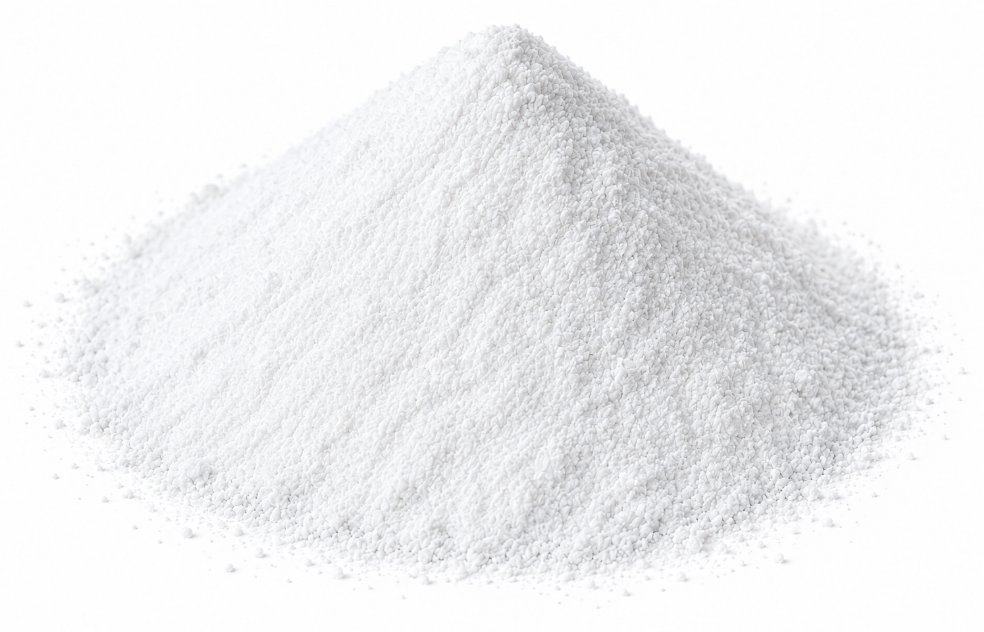
Appearance: White to slightly yellow crystalline powder
Odor: Slight sulfur dioxide odor
Sodium pyrosulfite, more commonly known as sodium metabisulfite, is an inorganic sodium salt containing the disulfite ion S2O52−. Crystallographic studies have shown that the solid has a comparatively complex ionic structure in which the conformation of the disulfite anion is strongly influenced by electrostatic interactions within the crystal lattice. The compound is an effective reducing agent and is particularly important in aqueous systems because dissolution converts metabisulfite predominantly into bisulfite species. This chemistry gives sodium pyrosulfite strong reducing and oxygen-consuming properties and enables it to react readily with oxidizing substances such as free chlorine. It is therefore widely investigated and applied in water-treatment chemistry, membrane technology and laboratory redox chemistry.
Chemical and physical properties
Sodium pyrosulfite is a crystalline inorganic solid that is highly soluble in water. Calorimetric investigations of its dissolution at 298.15 K describe the overall process as Na2S2O5(s) + H2O(l) → 2NaHSO3(aq), demonstrating that aqueous solutions are primarily characterized by bisulfite chemistry rather than by unchanged molecular sodium metabisulfite.
The disulfite ion contains two sulfur atoms connected through an S–S bond and coordinated by oxygen atoms. Single-crystal X-ray diffraction studies have demonstrated that sodium metabisulfite forms a monoclinic crystal structure and that the S2O52− ions can adopt conformationally inequivalent arrangements within the crystal lattice.
Sodium pyrosulfite is a strong reducing compound. In aqueous solution, the bisulfite species produced from it react rapidly with oxidants. This behavior is particularly relevant to chlorine removal, where bisulfite reduces hypochlorous acid and other free-chlorine species to chloride while sulfur-containing species are oxidized toward sulfate.
The compound is thermally unstable and decomposes on heating rather than exhibiting a conventional boiling transition. Thermal-analysis studies have shown that its initial decomposition is an endothermic process involving evolution of sulfur dioxide and formation of sodium sulfite. Further heating in air promotes oxidation of the sulfite residue and formation of sodium sulfate.
Applications
Sodium pyrosulfite is extensively used as a reducing agent in water-treatment and membrane-processing systems. In reverse-osmosis installations it can be added after chlorination to remove residual free chlorine before the water reaches chlorine-sensitive polyamide membranes. Scientific studies of seawater reverse-osmosis plants have investigated sodium metabisulfite dosing specifically as a dechlorination stage and its relationship with membrane biofouling and process performance.
It is also used in the chemical preservation of reverse-osmosis membranes during periods when membrane systems are not operating. Experimental research has shown that sodium metabisulfite creates reducing preservation conditions, although the effect on membrane properties depends strongly on parameters such as solution pH, concentration and storage conditions.
In laboratory and industrial chemistry, sodium pyrosulfite serves as a convenient source of bisulfite and as a reducing reagent for controlling oxidation-reduction conditions. Its rapid reaction with oxidizing species makes it useful in reaction quenching, removal of residual oxidants and preparation of reducing aqueous environments. It is additionally employed in studies of sulfur(IV) aqueous chemistry, thermodynamics, spectroscopy and the behavior of sulfur-oxygen anions.
Scientific references
- PubChem. Sodium Pyrosulfite, CID 656671. National Center for Biotechnology Information. Molecular formula, molecular weight, CAS number and canonical SMILES.
- Carter K. L., Siddiquee T. A., Murphy K. L., Bennett D. W. “The surprisingly elusive crystal structure of sodium metabisulfite.” Acta Crystallographica Section B, 2004, 60, 155–162. DOI: 10.1107/S0108768104003325.
- Vanderzee C. E., Noll L. “The standard enthalpies of ionization of sulfurous acid and the standard enthalpies of solution of sodium sulfite and sodium metabisulfite in water at 298.15 K.” The Journal of Chemical Thermodynamics, 1987, 19(4), 417–431. DOI: 10.1016/0021-9614(87)90127-3.
- Malanchuk M. “Thermal analysis of sodium metabisulfite.” Analytica Chimica Acta, 1971, 56(3), 377–384. DOI: 10.1016/S0003-2670(01)80926-0.
- Saeed M. O. “Effect of dechlorination point location and residual chlorine on biofouling in a seawater reverse osmosis plant.” Desalination, 2002, 143(3), 229–235. DOI: 10.1016/S0011-9164(02)00261-8.
- Tu K. L., Chivas A. R., Nghiem L. D. “Effects of chemical preservation on flux and solute rejection by reverse osmosis membranes.” Journal of Membrane Science, 2014, 472, 202–209. DOI: 10.1016/j.memsci.2014.08.052.
Safety

Signal Word: ⚠️ Warning
H302 (98.9%): Harmful if swallowed [Warning Acute toxicity, oral]
H318 (99.5%): Causes serious eye damage [Danger Serious eye damage/eye irritation]
P264, P264+P265, P270, P280, P301+P317, P305+P354+P338, P317, P330, and P501
Handling and Storage
-
Storage Conditions: Keep container tightly closed in a dry, cool, well-ventilated area. Protect from moisture
-
Handling Precautions: Avoid dust formation. Use protective equipment. Ensure good ventilation in the working area