
 CATEGORIES
- ORGANIC COMPOUNDS(1135)
- INORGANIC COMPOUNDS(1055)
- Mineral Acids(51)
- Chelates(3)
- Elements(130)
- Salts(556)
- Aluminium(18)
- Ammonium(51)
- Antimony(4)
- Barium(20)
- Bismuth(5)
- Caesium(9)
- Cadmium(2)
- Calcium(33)
- Cesium(3)
- Copper(22)
- Cobalt(13)
- Chromium(11)
- Lead(14)
- Lanthanum(12)
- Lithium(15)
- Manganese(12)
- Sodium(151)
- Silver(7)
- Potassium(54)
- Zinc(16)
- Cerium(2)
- Tin(5)
- Nickel(11)
- Gold(0)
- Iron(22)
- Zirconium(1)
- Mercury(2)
- Magnesium(21)
- Strontium(17)
- Mixed Salts(1)
- Oxides(121)
- Hydroxides(30)
- Hydrides(15)
- Other(19)
- Nanoparticles(3)
- Standard solutions(126)
- LAB EQUIPMENT(5176)
- *(1)
- Organic Synthesis(421)
- Industry(775)
Language
US version allows shipping to all available destinations


 MANUFACTURER
Sodium Potassium Tartarate Tetrahydrate (Rochelle Salt)
Regular price:
Regular price:
product unavailable
add to wish list
0

 "Pin It")
Description
Sodium Potassium Tartrate Tetrahydrate
Other Names: Potassium sodium tartrate tetrahydrate, Rochelle salt, Seignette salt, Potassium sodium L-(+)-tartrate tetrahydrate
Chemical Formula: KNaC4H4O6·4H2O
Molar Mass: 282.22 g/mol
CAS Number: 6381-59-5
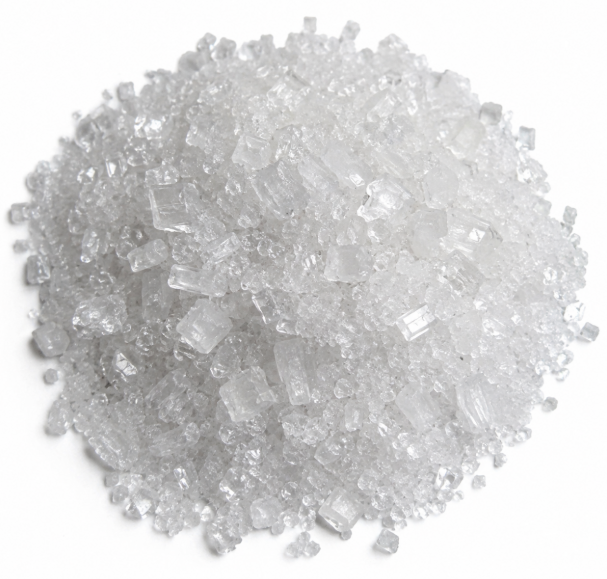
Appearance: Colorless to white crystalline solid
Odor: Odorless
SMILES: [C@@H]([C@H](C(=O)[O-])O)(C(=O)[O-])O.O.O.O.O.[Na+].[K+]
Sodium potassium tartrate tetrahydrate, commonly known as Rochelle salt, is a crystalline double salt containing sodium and potassium cations together with the tartrate dianion and four molecules of water of crystallization. It is one of the historically most important ferroelectric and piezoelectric crystalline materials. Its unusual electrical properties arise from temperature-dependent structural ordering and interactions involving the tartrate groups, coordinated water molecules and hydrogen-bonding network. Rochelle salt has consequently played an important role in the development of the fundamental understanding of ferroelectricity, dielectric hysteresis and piezoelectricity.
Chemical and physical properties
Sodium potassium tartrate tetrahydrate is readily soluble in water and can be grown as large transparent single crystals from concentrated aqueous solutions. Experimental solubility measurements show a strong temperature dependence, making controlled cooling and evaporation useful methods for producing high-quality crystals.
The density of the tetrahydrate is approximately 1.77 g/cm3 at 25 °C. The compound contains four molecules of crystallization water and undergoes dehydration when heated. Thermal-analysis studies demonstrate multistep loss of water followed by decomposition of the anhydrous material at higher temperatures.
Rochelle salt exhibits two characteristic phase-transition temperatures, approximately 255 K (−18 °C) and 297 K (24 °C). Between these temperatures the crystal is ferroelectric and possesses spontaneous electric polarization. Below and above this temperature interval it exists in paraelectric phases.
Structural investigations show that the paraelectric phases are orthorhombic, whereas the intermediate ferroelectric phase has lower monoclinic symmetry. X-ray diffraction studies have demonstrated that structural changes associated with the hydrogen-bond network and molecular arrangement accompany the ferroelectric transitions.
Rochelle salt is strongly piezoelectric, meaning that mechanical deformation can generate an electrical charge and, conversely, an applied electric field can produce mechanical deformation. It also exhibits pronounced dielectric anomalies near its phase-transition temperatures. These properties have made it an important model material for studying dielectric relaxation, electromechanical coupling, polarization and domain-wall dynamics.
Applications
Sodium potassium tartrate tetrahydrate is used in piezoelectric and ferroelectric research. Single crystals and composite materials containing Rochelle salt have been investigated for pressure sensors, vibration sensors, acoustic transducers, actuators, resonators, energy-harvesting devices and other electromechanical systems.
Rochelle salt can be incorporated into polymer, paper and other composite matrices to produce flexible piezoelectric materials. Scientific studies have demonstrated paper-based Rochelle salt composites capable of generating electrical signals during mechanical deformation and functioning as sensing and actuating elements.
In electrochemistry and surface engineering, sodium potassium tartrate is used as a complexing agent for metal ions. Tartrate-containing electrolytes have been investigated for electrodeposition of metallic and alloy coatings, including Ni-Mo systems, where complex formation influences metal-ion availability, deposition kinetics, coating composition and morphology.
Potassium sodium tartrate is also used as a complexing ligand in electroless copper deposition. Research on copper-plating solutions has shown that tartrate complexes can regulate Cu2+ chemistry and influence the reduction and deposition of conductive copper coatings.
In analytical and coordination chemistry, the tartrate dianion acts as a chelating ligand capable of binding a range of metal ions. Sodium potassium tartrate is therefore used in laboratory reagent systems where stabilization of dissolved metal ions and suppression of unwanted metal hydroxide precipitation are required.
Rochelle salt is additionally used as a model crystal in solid-state physics and materials science for investigations of ferroelectric hysteresis, dielectric relaxation, phase transitions, crystal growth, hydrogen bonding, piezoelectric resonance and temperature-dependent structural transformations.
Scientific references
- Görbitz, C. H.; Sagstuen, E. Potassium sodium (2R,3R)-tartrate tetrahydrate: the paraelectric phase of Rochelle salt at 105 K. Acta Crystallographica Section E, 2008, 64, m507-m508. DOI: 10.1107/S1600536808005266.
- Beevers, C. A.; Hughes, W. Crystal Structure of Rochelle Salt. Nature, 1940, 146, 96. DOI: 10.1038/146096a0.
- Valasek, J. Piezo-Electric and Allied Phenomena in Rochelle Salt. Physical Review, 1921, 17, 475-481. DOI: 10.1103/PhysRev.17.475.
- Valasek, J. Properties of Rochelle Salt Related to the Piezo-electric Effect. Physical Review, 1922, 20, 639-664. DOI: 10.1103/PhysRev.20.639.
- Sawyer, C. B.; Tower, C. H. Rochelle Salt as a Dielectric. Physical Review, 1930, 35, 269-273. DOI: 10.1103/PhysRev.35.269.
- Sandy, F.; Jones, R. V. Dielectric Relaxation of Rochelle Salt. Physical Review, 1968, 168, 481-493. DOI: 10.1103/PhysRev.168.481.
- Moina, A. P.; Levitskii, R. R.; Zachek, I. R. Piezoelectric resonance and sound attenuation in the Rochelle salt NaKC4H4O6·4H2O. Physical Review B, 2005, 71, 134108. DOI: 10.1103/PhysRevB.71.134108.
- Shyju, T. S.; Anandhi, S.; Gopalakrishnan, R. Comparative studies on conventional solution and Sankaranarayanan–Ramasamy methods grown potassium sodium tartrate tetrahydrate single crystals. CrystEngComm, 2012, 14, 1387-1396. DOI: 10.1039/C1CE05849E.
- Lemaire, E.; Moser, R.; Borsa, C. J.; Briand, D. Green paper-based piezoelectronics for sensors and actuators. Sensors and Actuators A: Physical, 2016, 244, 285-291. DOI: 10.1016/j.sna.2016.04.024.
- Filgueira de Almeida, A.; et al. Influence of bath composition on the electrodeposition of amorphous Ni-Mo alloys using potassium-sodium tartrate as complexing agent. Canadian Journal of Chemical Engineering, 2021, 99, S284-S294. DOI: 10.1002/cjce.24043.
- PubChem, National Center for Biotechnology Information. Potassium sodium tartrate tetrahydrate, CID 165453. Molecular formula, molecular mass, CAS number, chemical structure and SMILES.
Safety Data (CLP Classification):

-
Hazard Classification (CLP):
- Eye Irrit. 2 (H319): Causes serious eye irritation.
- STOT SE 3 (H335): May cause respiratory irritation.
-
Hazard Statement(s) (H):
- H319: Causes serious eye irritation.
- H335: May cause respiratory irritation.
-
Precautionary Statement(s) (P):
- P264: Wash hands thoroughly after handling.
- P280: Wear protective gloves/eye protection/face protection.
- P305+P351+P338: IF IN EYES: Rinse cautiously with water for several minutes. Remove contact lenses if present and easy to do. Continue rinsing.
- P304+P340: IF INHALED: Remove person to fresh air and keep comfortable for breathing.
- P312: Call a POISON CENTER or doctor/physician if you feel unwell.
Pictograms:
- ⚠️ Exclamation Mark (Indicating irritation to eyes and respiratory system)
Notes:
Although sodium potassium tartrate is generally considered safe when used correctly, it may cause irritation to the eyes and respiratory system, particularly in the form of dust or when handling large quantities. Appropriate protective measures, such as wearing gloves, safety goggles, and ensuring adequate ventilation, are recommended during handling. Always follow the safety instructions provided in the Safety Data Sheet (SDS).