
 CATEGORIES
- ORGANIC COMPOUNDS(1240)
- INORGANIC COMPOUNDS(1103)
- Mineral Acids(51)
- Chelates(3)
- Elements(136)
- Salts(593)
- Aluminium(22)
- Ammonium(57)
- Antimony(4)
- Barium(20)
- Bismuth(5)
- Caesium(9)
- Cadmium(2)
- Calcium(33)
- Cesium(3)
- Copper(22)
- Cobalt(13)
- Chromium(11)
- Lead(14)
- Lanthanum(12)
- Lithium(17)
- Manganese(12)
- Sodium(169)
- Silver(7)
- Potassium(54)
- Zinc(16)
- Cerium(2)
- Tin(5)
- Nickel(18)
- Gold(0)
- Iron(22)
- Zirconium(1)
- Mercury(2)
- Magnesium(21)
- Strontium(17)
- Mixed Salts(1)
- Oxides(120)
- Hydroxides(36)
- Hydrides(15)
- Other(19)
- Nanoparticles(3)
- Standard solutions(126)
- LAB EQUIPMENT(5176)
- *(1)
- Organic Synthesis(438)
- Industry(783)
Language
US version allows shipping to all available destinations


 MANUFACTURER
Potassium Nitrate (Saltpeter)
Regular price:
Regular price:
product unavailable
add to wish list
0

 "Pin It")
Description
Potassium Nitrate
Other Names: Potassium nitrate(V), Nitric acid potassium salt, Nitrate of potash, Saltpetre
Chemical Formula: KNO3
Molar Mass: 101.10 g/mol
CAS Number: 7757-79-1
SMILES: [K+].[O-][N+](=O)[O-]
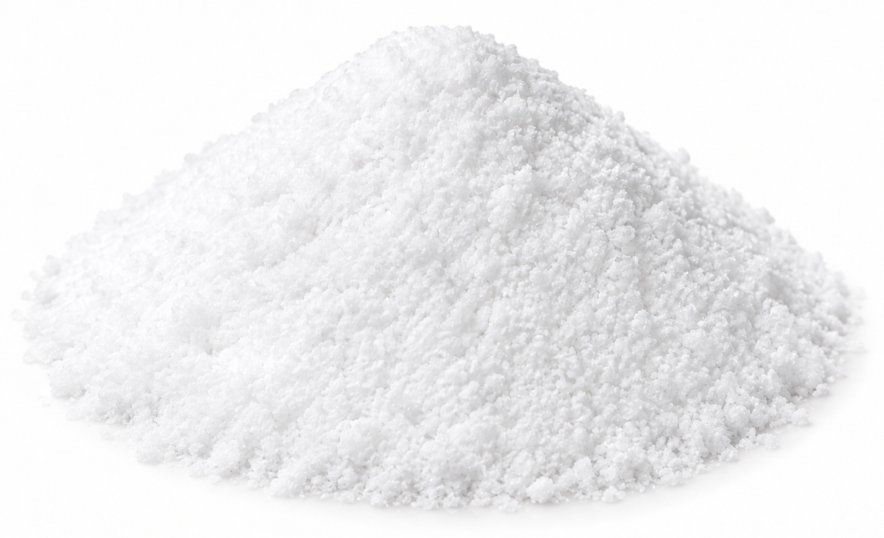
Appearance: White crystalline solid or powder
Odor: Odorless
Potassium nitrate is an inorganic ionic compound composed of potassium cations, K+, and nitrate anions, NO3−. The nitrate ion has a trigonal planar structure with extensive resonance delocalization of the negative charge over its oxygen atoms. Potassium nitrate is highly soluble in water and dissociates readily into hydrated potassium and nitrate ions. It is an important model compound in inorganic chemistry, crystallography, thermodynamics and molten-salt research, where its phase transitions, thermal properties, ionic structure and spectroscopic characteristics have been extensively investigated.
Chemical and physical properties
Potassium nitrate is a white crystalline material with a molar mass of 101.10 g/mol. Its density is approximately 2.11 g/cm3 near room temperature. It is readily soluble in water, with reported solubility of approximately 35.7 g per 100 mL of water at 25 °C. Its aqueous solubility increases strongly with increasing temperature.
The compound melts at approximately 334 °C. At substantially higher temperatures it undergoes thermal decomposition rather than conventional boiling. Heating alkali-metal nitrates can lead to partial formation of nitrite species with release of oxygen, and the thermal stability of nitrate melts is therefore strongly dependent on temperature, atmosphere and exposure time.
Solid potassium nitrate exhibits several temperature-dependent crystalline phases. At atmospheric pressure, the stable low-temperature α-phase has an orthorhombic structure. Heating through approximately 128 °C produces transformation to a higher-temperature rhombohedral β-phase. During cooling, an intermediate γ-phase may form over a limited temperature range. This γ-phase has attracted considerable scientific interest because of its ferroelectric properties.
The nitrate ion gives potassium nitrate characteristic vibrational bands that can be investigated using infrared and Raman spectroscopy. Spectroscopic measurements, neutron diffraction and X-ray diffraction have therefore been widely used to study nitrate-ion orientation, lattice dynamics and structural changes associated with its solid-state phase transitions.
Applications
Potassium nitrate is widely used in laboratory chemistry as a soluble source of potassium and nitrate ions. It is suitable for preparing defined nitrate-containing solutions and is used in analytical and physicochemical experiments where accurately controlled ionic composition is required.
In analytical chemistry, potassium nitrate can be employed as a reference or calibration material in nitrate-related measurements. High-purity potassium nitrate has also been used in scientific investigations of nitrogen and oxygen isotope composition, providing a well-defined nitrate source for the development and validation of analytical procedures.
Potassium nitrate is extensively investigated as a component of high-temperature molten-salt systems. Mixtures of potassium nitrate and sodium nitrate have been studied as heat-transfer and thermal-energy-storage media because nitrate melts combine relatively high heat capacity, low vapor pressure, non-flammability and useful thermal stability. A widely researched system contains sodium nitrate and potassium nitrate and is used as a reference mixture in concentrated solar thermal-energy research.
In materials science and solid-state physics, potassium nitrate is used as a model ionic crystal for investigations of structural phase transitions, ferroelectricity, dielectric behavior and lattice dynamics. Single-crystal studies using neutron diffraction, X-ray diffraction, Raman spectroscopy and optical techniques have provided detailed information about the orientation and motion of nitrate ions within its crystalline phases.
Potassium nitrate is also used in thermal-analysis research. Its melting, crystallization, heat capacity and solid-state transformations have been investigated by differential scanning calorimetry and related calorimetric techniques. These measurements provide fundamental thermodynamic data used in the modeling and design of nitrate-based molten-salt systems.
Scientific references
- PubChem. Potassium Nitrate, CID 24434. National Center for Biotechnology Information. Molecular formula, molecular weight, CAS number, structural identifiers, density and solubility data.
- NIST Chemistry WebBook, SRD 69. Potassium nitrate, CAS 7757-79-1. National Institute of Standards and Technology. Molecular identification and infrared spectroscopic data.
- Nimmo, J. K.; Lucas, B. W. Conformation and Orientation of NO3 in α-Phase Potassium Nitrate. Nature Physical Science, 1972, 237, 61–63.
- Carling, R. W. Heat Capacities of NaNO3 and KNO3 from 350 to 800 K. Thermochimica Acta, 1983, 60, 265–275. DOI: 10.1016/0040-6031(83)80248-2.
- Rogers, D. J.; Janz, G. J. Melting-Crystallization and Premelting Properties of Sodium Nitrate-Potassium Nitrate: Enthalpies and Heat Capacities. Journal of Chemical & Engineering Data, 1982, 27, 424–428. DOI: 10.1021/je00030a017.
- Takahashi, Y.; Sakamoto, R.; Kamimoto, M. Heat Capacities and Latent Heats of LiNO3, NaNO3, and KNO3. International Journal of Thermophysics, 1988, 9, 1081–1090. DOI: 10.1007/BF01133275.
- Bauer, T.; Pfleger, N.; Laing, D.; Steinmann, W. D.; Eck, M.; Kaesche, S. Thermal Energy Storage – Overview and Specific Insight into Nitrate Salts for Sensible and Latent Heat Storage. Beilstein Journal of Nanotechnology, 2015, 6, 1487–1497. DOI: 10.3762/bjnano.6.154.
- Revesz, K.; Böhlke, J. K.; Yoshinari, T. Determination of δ18O and δ15N in Nitrate. Analytical Chemistry, 1997. DOI: 10.1021/ac9610523.

Safety
Signal Word: Danger
Hazard statement(s)
H272: May intensify fire; oxidizer.
Precautionary statement(s)
P102: Keep out of reach of children.
P210: Keep away from heat, hot surfaces, sparks, open flames, and other ignition sources. No smoking.
P220: Keep away from clothing and other combustible materials.
P280: Wear protective gloves, eye protection, and face protection.
P370+P378: In case of fire: Use dry chemical, sand, or carbon dioxide to extinguish.
P501: Dispose of contents/container to an authorized waste disposal facility or return to supplier.
First Aid Measures
General advice: Ensure personal safety. If any health symptoms appear or there is uncertainty, seek medical advice and provide this safety information.
If inhaled: Immediately remove the affected person to fresh air. Protect from cold and consult a physician if symptoms persist.
In case of skin contact: Remove contaminated clothing. Rinse the affected area thoroughly with lukewarm water. Use soap if skin is uninjured. Seek medical attention if irritation continues.
In case of eye contact: Rinse eyes immediately with plenty of water, keeping eyelids open. Remove contact lenses if present. Continue rinsing for at least 10 minutes.
If swallowed: Rinse mouth with water. Do not induce vomiting. Seek medical assistance if feeling unwell.
Handling and Storage
Storage Conditions: Store in a dry, cool, and well-ventilated area away from flammable or combustible materials.
Handling Precautions: Avoid dust formation. Use appropriate personal protective equipment. Prevent contamination with organic substances or reducing agents.