
 CATEGORIES
- ORGANIC COMPOUNDS(1221)
- INORGANIC COMPOUNDS(1072)
- Mineral Acids(51)
- Chelates(3)
- Elements(133)
- Salts(571)
- Aluminium(18)
- Ammonium(57)
- Antimony(4)
- Barium(20)
- Bismuth(5)
- Caesium(9)
- Cadmium(2)
- Calcium(33)
- Cesium(3)
- Copper(22)
- Cobalt(13)
- Chromium(11)
- Lead(14)
- Lanthanum(12)
- Lithium(17)
- Manganese(12)
- Sodium(158)
- Silver(7)
- Potassium(54)
- Zinc(16)
- Cerium(2)
- Tin(5)
- Nickel(11)
- Gold(0)
- Iron(22)
- Zirconium(1)
- Mercury(2)
- Magnesium(21)
- Strontium(17)
- Mixed Salts(1)
- Oxides(120)
- Hydroxides(30)
- Hydrides(15)
- Other(19)
- Nanoparticles(3)
- Standard solutions(126)
- LAB EQUIPMENT(5176)
- *(1)
- Organic Synthesis(438)
- Industry(779)
Language
US version allows shipping to all available destinations


 MANUFACTURER
Lithium Chloride (LiCl)
Regular price:
Regular price:
product unavailable
add to wish list
0

 "Pin It")
Description
Lithium Chloride
Other Names: Lithium(1+) chloride, Lithium chloride anhydrous, Lithium muriate
Chemical Formula: LiCl
Molar Mass: 42.39 g/mol
CAS Number: 7447-41-8
SMILES: [Li+].[Cl-]
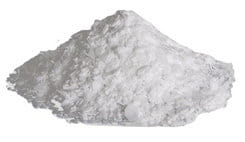
Appearance: Colorless to white crystalline solid or powder
Odor: Odorless
Lithium chloride is an inorganic ionic compound composed of lithium cations (Li+) and chloride anions (Cl−). In the solid state, anhydrous lithium chloride adopts a highly ordered ionic crystal structure related to the sodium chloride structure, in which the ions exhibit octahedral coordination. The compound is notable for its strong affinity for water and pronounced hygroscopic behavior. It readily absorbs moisture from the surrounding atmosphere and can form hydrated phases. These properties are associated with the strong hydration of the small lithium ion and make lithium chloride an important compound in physicochemical studies of concentrated electrolyte solutions, ion hydration, phase equilibria and transport phenomena.
Chemical and physical properties
Anhydrous lithium chloride is a colorless to white crystalline material with a molar mass of approximately 42.39 g/mol. It has a high melting point, reported at approximately 605–614 °C, and a boiling point of approximately 1382 °C.
Lithium chloride is exceptionally soluble in water. Reported solubility is approximately 84.25 g per 100 mL of water at 25 °C, and the solubility increases substantially with temperature. The strong interaction between Li+ ions and water molecules contributes to the pronounced hydration behavior of aqueous lithium chloride solutions.
The compound is strongly hygroscopic and aqueous lithium chloride solutions exhibit a low equilibrium water-vapor pressure. Consequently, concentrated solutions can absorb significant quantities of water vapor from surrounding air. This behavior has been extensively investigated in heat- and mass-transfer studies involving liquid desiccant systems.
Molten lithium chloride is an ionic liquid containing mobile lithium and chloride ions and therefore exhibits ionic conductivity. Electrochemical studies of molten LiCl have investigated lithium deposition, lithium intercalation into electrode materials and other high-temperature electrochemical processes.
Applications
Lithium chloride is widely investigated and used as a highly hygroscopic inorganic salt in drying and dehumidification systems. Concentrated aqueous LiCl solutions can function as liquid desiccants, absorbing water vapor from air. Experimental studies have examined lithium chloride absorbers and regenerators for controlled air-dehumidification processes.
In electrochemistry and high-temperature inorganic chemistry, lithium chloride is used as a component of molten-salt media. Molten LiCl and mixtures containing LiCl have been studied as electrolytes for electrochemical deposition and preparation of lithium metal. Research on LiCl–KCl melts, for example, has demonstrated their application as electrolytic media for lithium production.
Lithium chloride is also used as a laboratory reagent and as a source of lithium and chloride ions in chemical synthesis and physicochemical research. Its high aqueous solubility makes it useful for preparing concentrated lithium-containing electrolyte solutions and for studies of ionic interactions, hydration, solution structure and thermodynamic properties.
In materials and electrochemical research, molten lithium chloride has been employed to investigate interactions between lithium and carbonaceous electrode materials. Electrochemical experiments have demonstrated lithium intercalation into graphite from molten LiCl prior to metallic lithium deposition, making the system relevant to fundamental investigations of lithium electrochemistry.
Scientific references
PubChem, National Center for Biotechnology Information. Lithium Chloride, CID 433294. Compound database providing chemical identity, molecular formula, molar mass, structure, CAS number and physicochemical information.
Fumo, N.; Goswami, D. Y. Study of an aqueous lithium chloride desiccant system: air dehumidification and desiccant regeneration. Solar Energy, 2002, 72(4), 351–361. DOI: 10.1016/S0038-092X(02)00013-0.
Hoh, Y. C.; Chiu, T. M.; Chung, Z. J. Preparation of lithium metal by molten salt electrolysis. In: Production and Electrolysis of Light Metals, 1989, 223–234. DOI: 10.1016/B978-0-08-037295-2.50025-9.
Xu, Q.; Schwandt, C.; Chen, G. Z.; Fray, D. J. Electrochemical investigation of lithium intercalation into graphite from molten lithium chloride. Journal of Electroanalytical Chemistry, 2002, 530, 16–22. DOI: 10.1016/S0022-0728(02)00998-1.
CLP Classification:
H Statements (Hazards):
- H302: Harmful if swallowed.
- H315: Causes skin irritation.
- H319: Causes serious eye irritation.
- H335: May cause respiratory irritation.
P Statements (Precautions):
- P264: Wash hands thoroughly after handling.
- P280: Wear protective gloves/protective clothing/eye protection/face protection.
- P301+P312: IF SWALLOWED: Call a POISON CENTER/doctor if you feel unwell.
- P302+P352: IF ON SKIN: Wash with plenty of soap and water.
- P305+P351+P338: IF IN EYES: Rinse cautiously with water for several minutes. Remove contact lenses if present and easy to do. Continue rinsing.
- P337+P313: If eye irritation persists: Get medical advice/attention.
- P501: Dispose of contents/container in accordance with local regulations.
GHS Pictograms:
- GHS07: Harmful