
 CATEGORIES
- ORGANIC COMPOUNDS(1140)
- INORGANIC COMPOUNDS(1055)
- Mineral Acids(51)
- Chelates(3)
- Elements(130)
- Salts(556)
- Aluminium(18)
- Ammonium(51)
- Antimony(4)
- Barium(20)
- Bismuth(5)
- Caesium(9)
- Cadmium(2)
- Calcium(33)
- Cesium(3)
- Copper(22)
- Cobalt(13)
- Chromium(11)
- Lead(14)
- Lanthanum(12)
- Lithium(15)
- Manganese(12)
- Sodium(151)
- Silver(7)
- Potassium(54)
- Zinc(16)
- Cerium(2)
- Tin(5)
- Nickel(11)
- Gold(0)
- Iron(22)
- Zirconium(1)
- Mercury(2)
- Magnesium(21)
- Strontium(17)
- Mixed Salts(1)
- Oxides(121)
- Hydroxides(30)
- Hydrides(15)
- Other(19)
- Nanoparticles(3)
- Standard solutions(126)
- LAB EQUIPMENT(5176)
- *(1)
- Organic Synthesis(421)
- Industry(775)
Language
US version allows shipping to all available destinations


 MANUFACTURER
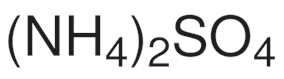
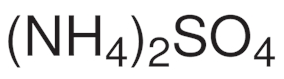
Ammonium Sulfate (NH4)2SO4
Regular price:
Regular price:
product unavailable
add to wish list
0

2SO4 "Pin It")
Description
Ammonium Sulfate
Other Names: Ammonium Sulphate, Diammonium Sulfate, Sulfuric Acid Diammonium Salt
Chemical Formula: (NH4)2SO4
Molar Mass: 132.14 g/mol
CAS Number: 7783-20-2
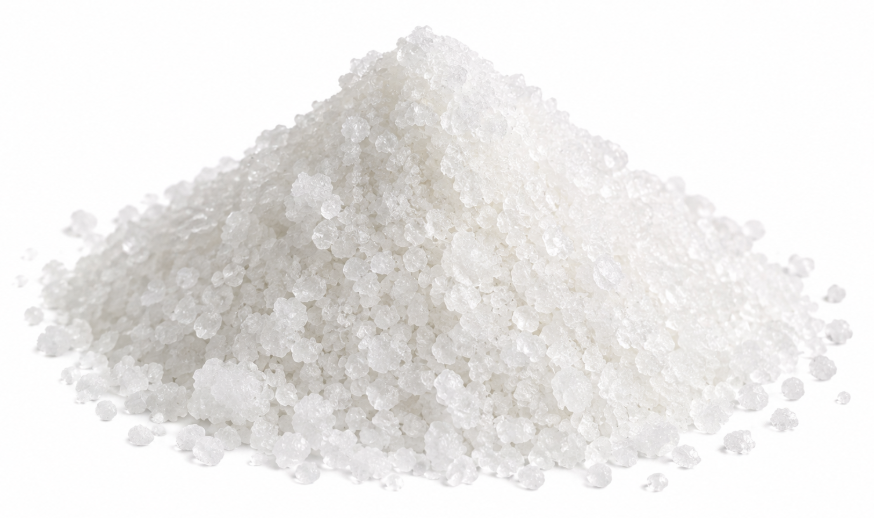
Appearance: White crystalline solid or crystalline powder
Odor: Odorless
Ammonium sulfate is an inorganic salt composed of two ammonium cations (NH4+) and one sulfate anion (SO42−). It is a highly water-soluble ionic compound and an important laboratory reagent, particularly in biochemistry and protein chemistry. NIST reference data give its molecular formula as H8N2O4S, corresponding conventionally to (NH4)2SO4, with a molar mass of 132.140 g/mol and CAS Registry Number 7783-20-2.
Chemical and physical properties
Ammonium sulfate is a crystalline ionic solid that dissolves readily in water, producing ammonium and sulfate ions. Its aqueous solutions are typically mildly acidic because the ammonium ion acts as a weak Brønsted acid. The high ionic strength attainable in concentrated ammonium sulfate solutions is central to many of its laboratory applications, particularly processes involving changes in macromolecular solubility.
In the solid state, ammonium sulfate exhibits structurally interesting phase behavior associated with orientation and hydrogen bonding of ammonium ions within the sulfate lattice. First-principles studies describe several possible structural configurations and show that interactions between NH4+ and SO42− contribute strongly to the structural and dielectric properties of the crystal.
Ammonium sulfate should not be regarded as having a simple boiling point because it undergoes thermal decomposition upon strong heating. Thermal-analysis studies indicate that decomposition proceeds through several stages. Experimental DSC and thermogravimetric measurements have observed significant decomposition above approximately 250 °C, with further mass loss occurring at higher temperatures and formation of volatile decomposition products. The precise decomposition behavior depends on heating rate, atmosphere, sample purity and experimental conditions.
Solid-state studies have additionally identified temperature-dependent structural and electrical phenomena in ammonium sulfate. An anomaly observed near 130 °C has been associated with the onset of thermally activated processes and increased protonic conductivity, while continued heating ultimately leads to decomposition of the material.
Applications
One of the most important laboratory applications of ammonium sulfate is the precipitation and fractionation of proteins by the process commonly known as ammonium sulfate precipitation or “salting out.” Increasing the concentration of ammonium sulfate raises the ionic strength of a protein solution and reduces the amount of water available for effective solvation of protein surfaces. At sufficiently high salt concentrations, selected proteins lose solubility and precipitate while many other components remain in solution.
Ammonium sulfate fractionation is widely employed as an initial purification and concentration step in protein biochemistry. By progressively increasing salt saturation, protein mixtures can be separated into fractions with different solubility ranges. The precipitated proteins can subsequently be recovered by centrifugation and redissolved in an appropriate buffer for further purification by chromatography or other biochemical techniques.
The compound is particularly useful for protein precipitation because high concentrations can often be applied without causing irreversible denaturation of many proteins. Its high aqueous solubility enables a broad range of ionic strengths to be generated, while the resulting precipitation can frequently be reversed by dilution, dialysis or buffer exchange. These properties make ammonium sulfate useful in enzyme purification, antibody isolation and general biochemical sample preparation.
Ammonium sulfate is also used in crystallization and structural studies of proteins. Control of salt concentration changes protein solubility and intermolecular interactions, allowing ammonium sulfate to function as a precipitating agent in crystallization experiments. Its effects on hydration, electrostatic screening and macromolecular association are also studied in physical chemistry and biophysical research.
In analytical and physical chemistry, ammonium sulfate is used to prepare solutions of controlled ionic strength and as a model inorganic electrolyte in investigations of gas solubility, electrolyte interactions and solution thermodynamics. Experimental data on systems containing ammonium sulfate, water and gases such as carbon dioxide are included in the IUPAC-NIST Solubility Data Series.
Handling and stability
Ammonium sulfate is stable under ordinary dry storage conditions but should be protected from excessive moisture and high temperatures. Strong heating causes progressive thermal decomposition rather than simple volatilization. Operations involving powdered material should minimize dust formation and use appropriate laboratory eye and respiratory protection where airborne particles may be generated.
Scientific references
NIST Chemistry WebBook, SRD 69. Ammonium sulfate. CAS Registry Number 7783-20-2.
Wingfield, P. Protein Precipitation Using Ammonium Sulfate. Current Protocols in Protein Science, 2001, Appendix 3F. DOI: 10.1002/0471140864.psa03fs13.
Protein Precipitation Using Ammonium Sulfate. Current Protocols in Protein Science, 2016, 84, A.3F.1–A.3F.9. DOI: 10.1002/0471140864.psa03fs84.
Andriyevsky, B.; Doll, K.; Jansen, M. First principles study of structural stability, electronic and related properties of (NH4)2SO4. Journal of Physics and Chemistry of Solids, 2010, 71, 357–363. DOI: 10.1016/j.jpcs.2009.12.090.
High-temperature phase transformation and topochemical nature in ferroelastic (NH4)2SO4. Journal of Solid State Chemistry, 2014, 212, 107–113. DOI: 10.1016/j.jssc.2014.01.014.
Thermal stability of systems containing ammonium nitrate and sulfate salts: an experimental study. Journal of Thermal Analysis and Calorimetry, 2023. DOI: 10.1007/s10973-023-12328-5.
Safety
Label Elements: None required
First Aid Measures
Eye Contact: Rinse thoroughly with water for several minutes. Seek medical attention if irritation occurs.
Skin Contact: Wash with soap and water. Remove contaminated clothing.
Inhalation: Move to fresh air. Seek medical help if symptoms persist.
Ingestion: Rinse mouth with water. Do not induce vomiting. Seek medical advice if feeling unwell.
Handling and Storage
Storage Conditions: Store in a dry, cool, and well-ventilated area. Protect from moisture and incompatible materials such as strong oxidizers.
Handling Precautions: Avoid dust generation. Use appropriate personal protective equipment.