
 CATEGORIES
- ORGANIC COMPOUNDS(1135)
- INORGANIC COMPOUNDS(1055)
- Mineral Acids(51)
- Chelates(3)
- Elements(130)
- Salts(556)
- Aluminium(18)
- Ammonium(51)
- Antimony(4)
- Barium(20)
- Bismuth(5)
- Caesium(9)
- Cadmium(2)
- Calcium(33)
- Cesium(3)
- Copper(22)
- Cobalt(13)
- Chromium(11)
- Lead(14)
- Lanthanum(12)
- Lithium(15)
- Manganese(12)
- Sodium(151)
- Silver(7)
- Potassium(54)
- Zinc(16)
- Cerium(2)
- Tin(5)
- Nickel(11)
- Gold(0)
- Iron(22)
- Zirconium(1)
- Mercury(2)
- Magnesium(21)
- Strontium(17)
- Mixed Salts(1)
- Oxides(121)
- Hydroxides(30)
- Hydrides(15)
- Other(19)
- Nanoparticles(3)
- Standard solutions(126)
- LAB EQUIPMENT(5176)
- *(1)
- Organic Synthesis(421)
- Industry(775)
Language
US version allows shipping to all available destinations


 MANUFACTURER
Calcium Carbide (CaC2)
Regular price:
Regular price:
product unavailable
add to wish list
0

 "Pin It")
Description
Calcium Carbide
Other Names: Calcium Acetylide, Calcium Ethynediide, Calcium Dicarbide
Chemical Formula: CaC2
Molar Mass: 64.10 g/mol
CAS Number: 75-20-7
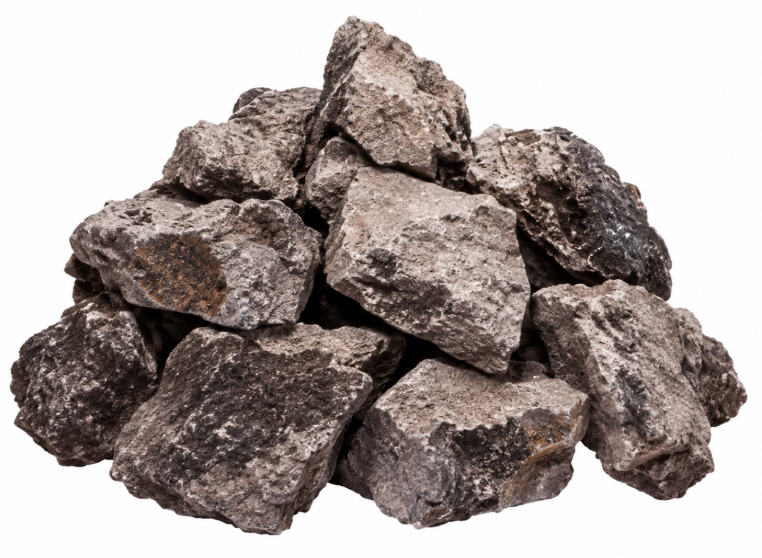
Appearance: Colorless to white crystalline solid when pure; commercial material is typically grey, brown or black
Odor: Odorless when pure; commercial material may exhibit a characteristic odor due to impurities and reaction products formed in the presence of moisture
Density: Approximately 2.22 g/cm3
SMILES: [Ca+2].[C-]#[C-]
Calcium carbide is an inorganic ionic compound composed of Ca2+ cations and acetylide C22− anions. The carbon atoms within the acetylide ion are connected by a strong carbon–carbon triple bond, making calcium carbide an important member of the salt-like acetylide carbide family. Structural investigations by X-ray diffraction, Raman spectroscopy and computational methods have demonstrated that CaC2 exhibits several crystalline polymorphs, including tetragonal and monoclinic modifications.
The compound is especially notable for its strong chemical reactivity toward water. Hydrolysis converts calcium carbide into acetylene and calcium hydroxide according to the reaction CaC2 + 2H2O → C2H2 + Ca(OH)2. This reaction is strongly exothermic and provides a convenient chemical route to acetylene. Because acetylene is a highly reactive carbon–carbon triple-bond building block, calcium carbide has also attracted considerable interest as a solid acetylene equivalent in modern synthetic chemistry.
Chemical and physical properties
Calcium carbide is a crystalline solid with a molar mass of 64.10 g/mol and a density of approximately 2.22 g/cm3. Pure CaC2 may be colorless or white, whereas technical-grade material usually appears grey to black because of carbon, calcium oxide and other impurities introduced during industrial preparation.
The compound has an exceptionally high melting temperature. Values near 2160 °C are commonly reported for pure calcium carbide, while technical material can exhibit lower melting temperatures because of impurities, particularly calcium oxide. At still higher temperatures, decomposition and phase changes become important rather than conventional volatilization behavior.
Calcium carbide does not exhibit ordinary aqueous solubility because it reacts chemically with water. Contact with moisture generates acetylene gas and calcium hydroxide. Consequently, the material must be regarded as strongly moisture-sensitive, and its chemical behavior is fundamentally different from that of simple water-soluble calcium salts.
Solid-state studies demonstrate complex polymorphism. At ambient conditions, tetragonal CaC2-I and monoclinic CaC2-II and CaC2-III modifications have been characterized. In these structures, discrete C22− dumbbells are coordinated by calcium ions. Raman spectroscopy and high-pressure X-ray diffraction experiments show that pressure can induce transformations between these phases and, at sufficiently high pressures, can produce structures containing polymerized carbon chains.
The acetylide ion is isoelectronic with molecular nitrogen and contains a strongly bonded C≡C unit. This structural feature accounts for many of the characteristic spectroscopic properties of calcium carbide and provides the carbon framework ultimately transferred into acetylene and numerous acetylene-derived reaction products.
Applications
Calcium carbide is extensively used as a chemical source of acetylene. Controlled hydrolysis releases C2H2, which can subsequently be employed in industrial chemical synthesis, metalworking processes and other acetylene-based technologies.
In metallurgical applications, calcium carbide is used as a desulfurizing reagent for molten iron and steel. Its strong affinity for sulfur-containing species enables removal of sulfur from metal melts and makes it an important reagent in selected steelmaking and foundry operations.
Calcium carbide is increasingly investigated as a solid acetylene reagent in laboratory organic synthesis. Instead of supplying compressed acetylene directly, CaC2 can generate acetylene in situ or participate in reactions that introduce C2 units into organic molecules. Research has demonstrated its application in carbon–carbon and carbon–heteroatom bond-forming transformations and in the preparation of a variety of alkyne-derived compounds.
The compound is also studied in materials chemistry and nanotechnology as a carbon-containing precursor. Its unusual combination of an ionic calcium component and a reactive acetylide unit has enabled research into carbon materials, carbide-derived structures and new synthetic routes involving activated C≡C units.
In solid-state chemistry, calcium carbide serves as an important model compound for investigating acetylide bonding, structural polymorphism, high-pressure phase transitions, lattice dynamics and pressure-induced carbon polymerization. Raman spectroscopy, synchrotron X-ray diffraction and first-principles calculations have all been extensively applied to CaC2.
Scientific references
- Konar, S.; Nylén, J.; Svensson, G.; Bernin, D.; Edén, M.; Ruschewitz, U.; Häussermann, U. “The Many Phases of CaC2.” Journal of Solid State Chemistry, 2016, 239, 204–213. DOI: 10.1016/j.jssc.2016.04.030.
- Nylén, J.; Konar, S.; Lazor, P.; Benson, D.; Häussermann, U. “Structural Behavior of the Acetylide Carbides Li2C2 and CaC2 at High Pressure.” The Journal of Chemical Physics, 2012, 137, 224507. DOI: 10.1063/1.4770268.
- Wang, L.; Huang, X.; Li, D.; Huang, Y.; Bao, K.; Li, F.; Wu, G.; Liu, B.; Cui, T. “Pressure-Induced Structural Transformation of CaC2.” The Journal of Chemical Physics, 2016, 144, 194506. DOI: 10.1063/1.4948705.
- Rodygin, K. S.; Werner, G.; Kucherov, F. A.; Ananikov, V. P. “Calcium Carbide: A Unique Reagent for Organic Synthesis and Nanotechnology.” Chemistry – An Asian Journal, 2016, 11, 965–976. DOI: 10.1002/asia.201501323.
- Rodygin, K. S.; Werner, G.; Kucherov, F. A.; Ananikov, V. P. “Calcium Carbide: Versatile Synthetic Applications, Green Methodology and Sustainability.” European Journal of Organic Chemistry, 2021, 43–52. DOI: 10.1002/ejoc.202001098.
- Cameron, R. E. “Calcium Carbide.” Kirk-Othmer Encyclopedia of Chemical Technology. Wiley. DOI: 10.1002/0471238961.0301120303011305.a01.

Danger Pictograms GHS02, GHS05, GHS07
Hazard statements H260 In contact with water releases flammable gases, which may ignite spontaneously H315 Causes skin irritation H318 Causes serious eye damage H335 May cause respiratory irritation Precautionary statements
Precautionary statements - prevention P231+P232 Handle and store contents under inert gas. Protect from moisture Precautionary statements - response P302+P335+P334 IF ON SKIN: Brush off loose particles from skin. Immerse in cool water or wrap in wet bandages P302+P352 IF ON SKIN: Wash with plenty of soap and water P305+P351+P338 IF IN EYES: Rinse cautiously with water for several minutes. Remove contact lenses, if present and easy to do. Continue rinsing P370+P378 In case of fire: Use sand, carbon dioxide or powder extinguisher to extinguish Precautionary statements - storage P403+P233 Store in a well-ventilated place. Keep container tightly closed