
 CATEGORIES
- ORGANIC COMPOUNDS(1140)
- INORGANIC COMPOUNDS(1055)
- Mineral Acids(51)
- Chelates(3)
- Elements(130)
- Salts(556)
- Aluminium(18)
- Ammonium(51)
- Antimony(4)
- Barium(20)
- Bismuth(5)
- Caesium(9)
- Cadmium(2)
- Calcium(33)
- Cesium(3)
- Copper(22)
- Cobalt(13)
- Chromium(11)
- Lead(14)
- Lanthanum(12)
- Lithium(15)
- Manganese(12)
- Sodium(151)
- Silver(7)
- Potassium(54)
- Zinc(16)
- Cerium(2)
- Tin(5)
- Nickel(11)
- Gold(0)
- Iron(22)
- Zirconium(1)
- Mercury(2)
- Magnesium(21)
- Strontium(17)
- Mixed Salts(1)
- Oxides(121)
- Hydroxides(30)
- Hydrides(15)
- Other(19)
- Nanoparticles(3)
- Standard solutions(126)
- LAB EQUIPMENT(5176)
- *(1)
- Organic Synthesis(421)
- Industry(775)
Language
US version allows shipping to all available destinations


 MANUFACTURER
Ammonium Persulfate (APS) Ammonium peroxydisulfate
Regular price:
Regular price:
product unavailable
add to wish list
0

 Ammonium peroxydisulfate "Pin It")
Description
Ammonium Persulfate
Other Names: Ammonium peroxydisulfate, Ammonium peroxodisulfate, Diammonium peroxydisulfate, APS
Chemical Formula: (NH4)2S2O8
Molar Mass: 228.20 g/mol
CAS Number: 7727-54-0
SMILES: [NH4+].[NH4+].[O-]S(=O)(=O)OOS(=O)(=O)[O-]
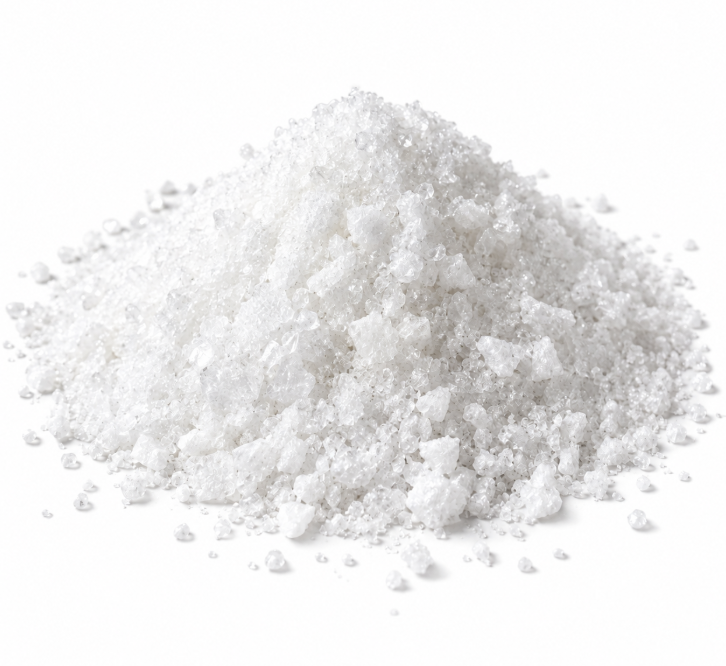
Appearance: Colorless crystals or white crystalline powder
Odor: Odorless
Ammonium persulfate is an inorganic salt containing ammonium cations and the peroxydisulfate anion, S2O82−. The peroxydisulfate ion contains a peroxide O–O bond and acts as a strong oxidizing species. Thermal, chemical or catalytic activation of persulfate can generate highly reactive sulfate radical anions (SO4•−), which are important intermediates in oxidation and free-radical processes. Because of this chemistry, ammonium persulfate is extensively investigated as an oxidizing reagent and as an initiator of radical polymerization. Its high solubility in water makes it particularly suitable for reactions performed in aqueous media, including the preparation and modification of polymeric materials.
Chemical and physical properties
Ammonium persulfate is a colorless to white crystalline solid with a density of approximately 1.98 g/cm3 at room temperature. It is highly soluble in water, with reported solubility of approximately 83.5 g per 100 g of water at 25 °C.
The compound does not exhibit a conventional melting point under atmospheric conditions because it undergoes thermal decomposition. Decomposition is reported at approximately 120 °C. The stability of persulfate solutions decreases with increasing temperature, and aqueous solutions can undergo gradual decomposition even at ambient conditions.
The characteristic chemical behavior of ammonium persulfate originates from the peroxide bond within the S2O82− ion. Homolytic cleavage can generate sulfate radical anions, which are highly reactive oxidizing radicals. In aqueous systems, sulfate radicals can also participate in reactions that generate hydroxyl radicals and other reactive intermediates.
Aqueous ammonium persulfate solutions are acidic. The combination of high water solubility, strong oxidizing properties and the ability to generate radicals makes the compound useful in both homogeneous aqueous reactions and multiphase polymerization systems.
Applications
Ammonium persulfate is widely used as an initiator in free-radical polymerization. Thermal decomposition of persulfate generates sulfate radical species capable of initiating polymerization of vinyl monomers. Scientific studies report its use in polymerization reactions involving acrylamide, acrylic acid, acrylates, methacrylates, acrylonitrile and related monomers.
It is particularly useful for aqueous polymerization because of its high water solubility. Ammonium persulfate has been employed in solution, emulsion, inverse-emulsion and suspension polymerization processes, as well as in graft copolymerization and the preparation of hydrogels and polymer coatings.
Ammonium persulfate can also be combined with reducing agents to form redox initiation systems. Such systems generate radicals through electron-transfer reactions and can initiate polymerization at temperatures lower than those required for purely thermal persulfate decomposition. Examples investigated in polymer research include ammonium persulfate combined with sodium metabisulfite or systems activated by tetramethylethylenediamine (TEMED).
In materials research, ammonium persulfate is used as an oxidizing reagent in the synthesis and modification of functional polymers. Its radical-generating properties are particularly important in studies of polymer grafting, surface modification, hydrogel formation and preparation of polymeric coatings.
Ammonium persulfate is also used in laboratory oxidation chemistry and in studies of persulfate activation. The formation and reactions of sulfate radicals are investigated in relation to oxidation mechanisms, reaction kinetics and degradation of organic compounds in aqueous systems.
Scientific references
National Center for Biotechnology Information (NCBI), PubChem. Ammonium Persulfate, CID 62648. Chemical identity and physicochemical data including molecular formula, molecular mass, appearance, solubility, density and thermal decomposition.
Yiamsawas, D.; Kangwansupamonkon, W.; Chailapakul, O.; Kiatkamjornwong, S. Synthesis and swelling properties of poly[acrylamide-co-(crotonic acid)] superabsorbents. Reactive and Functional Polymers, 2007, 67(10), 865–882. DOI: 10.1016/j.reactfunctpolym.2007.05.011.
Sun, L.; Zhu, G.; Zhao, Y.; Yan, X.; Mou, S.; Dovichi, N. J. Thermally-initiated free radical polymerization for reproducible production of stable linear polyacrylamide coated capillaries, and their application to proteomic analysis using capillary zone electrophoresis–mass spectrometry. Talanta, 2015. DOI: 10.1016/j.talanta.2015.05.035.
Fernández-García, M.; Madruga, E. L. Free-radical aqueous slurry polymerizations of acrylonitrile: End-groups and other minor structures in polyacrylonitriles initiated by ammonium persulfate/sodium metabisulfite. Polymer, 1994, 35(2), 250–256. DOI: 10.1016/0032-3861(94)90687-4.
Szabó, Á.; Szabó, G.; Zrínyi, M. Persulfate initiated free-radical polymerization of itaconic acid: Kinetics, end-groups and side products. European Polymer Journal, 2018. DOI: 10.1016/j.eurpolymj.2018.07.035.
