
 CATEGORIES
- ORGANIC COMPOUNDS(1135)
- INORGANIC COMPOUNDS(1055)
- Mineral Acids(51)
- Chelates(3)
- Elements(130)
- Salts(556)
- Aluminium(18)
- Ammonium(51)
- Antimony(4)
- Barium(20)
- Bismuth(5)
- Caesium(9)
- Cadmium(2)
- Calcium(33)
- Cesium(3)
- Copper(22)
- Cobalt(13)
- Chromium(11)
- Lead(14)
- Lanthanum(12)
- Lithium(15)
- Manganese(12)
- Sodium(151)
- Silver(7)
- Potassium(54)
- Zinc(16)
- Cerium(2)
- Tin(5)
- Nickel(11)
- Gold(0)
- Iron(22)
- Zirconium(1)
- Mercury(2)
- Magnesium(21)
- Strontium(17)
- Mixed Salts(1)
- Oxides(121)
- Hydroxides(30)
- Hydrides(15)
- Other(19)
- Nanoparticles(3)
- Standard solutions(126)
- LAB EQUIPMENT(5176)
- *(1)
- Organic Synthesis(421)
- Industry(775)
Language
US version allows shipping to all available destinations


 MANUFACTURER
Iron (III) Chloride, Anhydrous
Regular price:
Regular price:
product unavailable
add to wish list
0
 Chloride, Anhydrous "Pin It")
Description
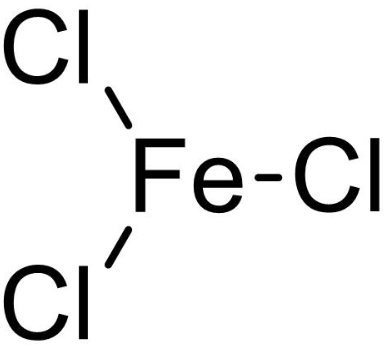
Iron (III) Chloride, Anhydrous
Other Names: Ferric chloride, Iron trichloride
CAS Number: 7705-08-0
Sum Formula: FeCl₃
Molar Mass: 162.20 g/mol
Appearance: Dark brown to black crystalline solid
Iron (III) chloride anhydrous is a highly hygroscopic, corrosive inorganic compound commonly used as a Lewis acid catalyst, etching agent, and oxidizing agent in various industrial and laboratory processes.
Chemical and Physical Properties
Density: 2.90 g/cm³ (20°C)
Melting Point: 306°C
Boiling Point: ~316°C (decomposes)
Solubility in Water: Reacts exothermically with water, forming hydrochloric acid and ferric hydroxides
Solubility in Organic Solvents: Slightly soluble in ethanol and acetone
Odor: Strong hydrogen chloride (acidic) odor when hydrolyzed
Stability: Hygroscopic; reacts with moisture and releases HCl fumes
Applications
Used as a catalyst in Friedel-Crafts and other organic synthesis reactions
Applied as an etching agent for copper and other metals (e.g., in PCB manufacturing)
Used in wastewater treatment as a coagulant (technical grade)
Serves as an oxidizing agent in chemical processes
Applied in pigment and dye manufacturing and surface treatments
Safety

Signal Word: Danger
H302 (96.6%): Harmful if swallowed [Warning Acute toxicity, oral]
H314 (75.4%): Causes severe skin burns and eye damage [Danger Skin corrosion/irritation]
H315 (24.4%): Causes skin irritation [Warning Skin corrosion/irritation]
H318 (24.5%): Causes serious eye damage [Danger Serious eye damage/eye irritation]
H412 (72.4%): Harmful to aquatic life with long lasting effects [Hazardous to the aquatic environment, long-term hazard]
First Aid Measures
Eye Contact: Rinse immediately with water for at least 15 minutes. Seek urgent medical attention
Skin Contact: Remove contaminated clothing and wash thoroughly with water and soap
Inhalation: Move to fresh air. Seek medical help if symptoms develop
Ingestion: Do not induce vomiting. Rinse mouth and seek medical attention immediately
Handling and Storage
Store in a cool, dry, and tightly sealed container
Protect from moisture and humidity to prevent hydrolysis and HCl release
Avoid contact with bases, strong oxidizers, and metals
Use under fume hood with appropriate PPE