
 CATEGORIES
- ORGANIC COMPOUNDS(1240)
- INORGANIC COMPOUNDS(1103)
- LAB EQUIPMENT(5176)
- *(1)
- Organic Synthesis(438)
- Alkylating agents(11)
- Bases(47)
- Building blocks(43)
- Catalysts(5)
- Classic Acids(85)
- Drying Agents(54)
- Enantioselective synthesis(2)
- Halogenating reagents(8)
- Oxidizing agents(27)
- Peptide synthesis(4)
- Reducing Agents(19)
- Solvents(160)
- Industry(783)
Language
US version allows shipping to all available destinations


 MANUFACTURER
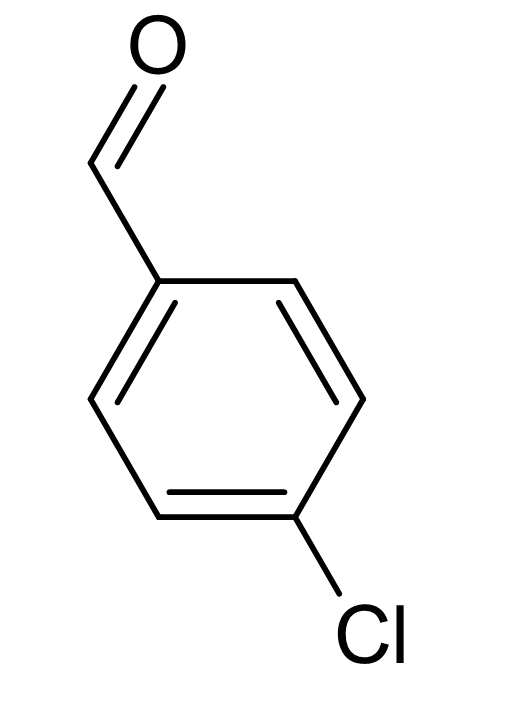
4-Chlorobenzaldehyde
Regular price:
Regular price:
product unavailable
add to wish list
5

Description
4-Chlorobenzaldehyde
Other Names: p-Chlorobenzaldehyde, 1-Chloro-4-formylbenzene, 4-Chlorobenzenecarbaldehyde
CAS Number: 104-88-1
Sum Formula: C₇H₅ClO
Molar Mass: 140.57 g/mol
Appearance: White to off-white crystalline solid or powder
4-Chlorobenzaldehyde is an aromatic aldehyde bearing a chlorine atom at the para-position. It is a reactive intermediate commonly used in the synthesis of fine chemicals, specialty polymers, and advanced aromatic compounds.
Chemical and Physical Properties
-
Density: ~1.24 g/cm³ (at 20°C)
-
Melting Point: 47–50°C
-
Boiling Point: 213–215°C
-
Solubility in Water: Slightly soluble
-
Solubility in Other Solvents: Soluble in ethanol, ether, benzene, and chloroform
-
Odor: Mild, aromatic aldehyde-like
Applications
-
Organic Synthesis: Intermediate in the production of agrochemicals, dyes, and heterocyclic compounds
-
Material Science: Used in polymer modification and the synthesis of aromatic monomers
-
Chemical Research: Reagent for condensation reactions and preparation of Schiff bases and oximes
Safety


Signal Word: Warning
H302 (100%): Harmful if swallowed [Warning Acute toxicity, oral]
H315 (99.6%): Causes skin irritation [Warning Skin corrosion/irritation]
H317 (76.7%): May cause an allergic skin reaction [Warning Sensitization, Skin]
H319 (99.6%): Causes serious eye irritation [Warning Serious eye damage/eye irritation]
H335 (17.2%): May cause respiratory irritation [Warning Specific target organ toxicity, single exposure; Respiratory tract irritation]
H411 (81.5%): Toxic to aquatic life with long lasting effects [Hazardous to the aquatic environment, long-term hazard]
P261, P264, P264+P265, P270, P271, P272, P273, P280, P301+P317, P302+P352, P304+P340, P305+P351+P338, P319, P321, P330, P332+P317, P333+P317, P337+P317, P362+P364, P391, P403+P233, P405, and P501
First Aid Measures
-
Eye Contact: Rinse thoroughly with water for several minutes. Seek medical attention if irritation persists
-
Skin Contact: Wash exposed skin with soap and water. Remove contaminated clothing
-
Inhalation: Move to fresh air. Get medical help if symptoms persist
-
Ingestion: Rinse mouth. Do not induce vomiting. Seek immediate medical advice
Handling and Storage
-
Storage Conditions: Store in a cool, dry, and well-ventilated area. Keep container tightly closed and away from heat or incompatible substances
-
Handling Precautions: Avoid formation of dust. Work in a fume hood or well-ventilated space. Use suitable personal protective equipment (PPE)