
 CATEGORIES
- ORGANIC COMPOUNDS(1134)
- Thiols(1)
- Metal-organic compounds(1)
- Sulfonic acids(6)
- Alcohols(74)
- Aldehydes(47)
- Alkyl nitrites(6)
- Amines(56)
- Aminoacids(59)
- Amides(33)
- Anhydrides(11)
- Acyl Halides(5)
- Carboxylic Acids(170)
- Dyes and Indicators(99)
- Esters(52)
- Ethers(17)
- Organic Halogens (Organohalides)(30)
- Flavonoids(5)
- Heterocycles(25)
- Hydrocarbons(38)
- Imides(2)
- Ketones(29)
- Mixed solvents(16)
- Nitro Compounds(5)
- Nitriles(9)
- Organic salts(74)
- Phenols(30)
- Polymers ( HMW compounds )(68)
- Sugars (Saccharides)(24)
- Silicoorgano and Phosphoorganocompounds(1)
- Peptides(2)
- Terpenes(16)
- Others(125)
- INORGANIC COMPOUNDS(1055)
- LAB EQUIPMENT(5176)
- *(1)
- Organic Synthesis(421)
- Industry(775)
Language
US version allows shipping to all available destinations


 MANUFACTURER
Organic halogens (organohalides) are compounds where a halogen (F, Cl, Br, I) is covalently bonded to carbon, typically written R–X or Ar–X. The polarized C–X bond makes them foundational functional groups in synthesis, serving both as electrophiles and as versatile precursors to many other functional groups.
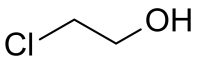 2-Chloroethanol
Lei69.77
Net price: Lei56.72
 2-phenylethyl bromide (2-Bromoethyl)benzene
Lei926.98
Net price: Lei766.09
 Benzyl Chloride | Pure
Lei348.84
Net price: Lei283.60
 Cetrimonium Bromide CTAB Hexadecyltrimethylammonium Bromide : Cetyltrimethylammonium Bromide - 1000g
Lei2,085.70
Net price: Lei1,695.69
 Chlorobenzene Phenyl Chloride Pure - 500ml
Lei115.87
Net price: Lei94.21
 Chlorobenzene Phenyl Chloride Pure 100mL - 100ml
Lei46.35
Net price: Lei37.69
 Chlorobenzene Phenyl Chloride Pure 1L - 1000ml
Lei208.57
Net price: Lei169.57
 Chloroform
Lei1,162.79
Net price: Lei945.36
 Dichloromethane DCM Methylene Chloride AG
Lei10.70
Net price: Lei8.70
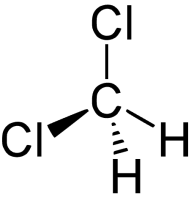 Dichloromethane DCM Methylene Chloride TECHNICAL GRADE
Lei7.44
Net price: Lei6.05
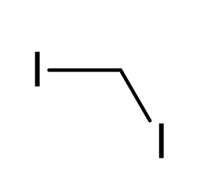 Diiodomethane (Methylene Iodide) Simmons Smith Reaction
Lei139.05
Net price: Lei113.05
 Ethylene Chloride ( Ethylene Dichloride ) 1,2 - Dichloroethane Pure - 10ml
Lei23.17
Net price: Lei18.84
 Ethylene Chloride ( Ethylene Dichloride ) 1,2 - Dichloroethane Pure - 100ml
Lei69.52
Net price: Lei56.52
 Ethylene Chloride ( Ethylene Dichloride ) 1,2 - Dichloroethane Pure - 500ml
Lei185.40
Net price: Lei150.73
 Ethylene Chloride ( Ethylene Dichloride ) 1,2 - Dichloroethane Pure 1000ml - 1000ml
Lei324.44
Net price: Lei263.78
 Ethylene Chloride ( Ethylene Dichloride ) 1,2 - Dichloroethane Pure 5L - 5000ml
Lei1,158.72
Net price: Lei942.05
 Methyl Iodide ( Iodomethane )
Lei174.42
Net price: Lei141.80
 N-Bromosuccinimide ( NBS ) 1-Bromopyrrolidine-2,5-dione | For Synthesis
Lei9.30
Net price: Lei7.56
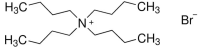 Tetrabutylammonium Bromide ; N,N,N-tributyl-1-butanaminium bromide, TBAB, TBABr, tetra-n-butylammonium bromide
Lei17.44
Net price: Lei14.19
 Tetrachloroethene ( PCE ) Perchloroethene - 10 000ml
Lei697.67
Net price: Lei567.21
 Tetrachloroethene ( PCE ) Perchloroethene - 1000ml
Lei104.65
Net price: Lei85.08
 Tetrachloroethene ( PCE ) Perchloroethene - 100ml
Lei20.86
Net price: Lei16.97
 Tetrachloroethene ( PCE ) Perchloroethene - 10ml
Lei8.56
Net price: Lei6.95
 Tetrachloroethene ( PCE ) Perchloroethene - 20 000ml (20L )
Lei1,065.12
Net price: Lei865.95
 Tetrachloroethene ( PCE ) Perchloroethene - 5000ml
Lei441.86
Net price: Lei359.23
Organohalides are classified by the hybridization and environment of the carbon bearing the halogen: alkyl halides (sp³ C–X), vinylic halides (sp² on alkenes), aryl halides (sp² on aromatic rings), and allylic/benzylic halides, which are especially reactive due to resonance stabilization of intermediates. The C–X bond is polarized toward halogen (Cδ+–Xδ−), and bond strength follows C–F > C–Cl > C–Br > C–I, while leaving-group ability trends oppositely (I⁻ > Br⁻ > Cl⁻ ≫ F⁻). These trends largely control substitution, elimination, and metal-coupling behavior.
Reactivity and mechanisms.
-
Nucleophilic substitution: Primary and many secondary alkyl halides undergo S_N2 reactions with strong nucleophiles, giving inversion of configuration. Tertiary halides favor S_N1 pathways via carbocations, enabling racemization and rearrangements. Benzylic and allylic halides are accelerated in both S_N1 and S_N2 due to resonance.
-
Elimination: Under basic conditions, β-elimination (E2 or E1) yields alkenes, with Zaitsev vs. Hofmann regioselectivity governed by base size and substrate structure.
-
Organometallic formation: C–X bonds can be transformed into C–Mg (Grignard) or C–Li reagents, enabling carbon–carbon bond construction, though vinylic/aryl halides require different conditions.
-
Cross-coupling: Aryl and vinyl halides are key electrophiles in Pd/Ni-catalyzed couplings (Suzuki, Heck, Negishi, Kumada, etc.), where oxidative addition into C–X is often rate-determining and facilitated by I/Br over Cl, while aryl fluorides are generally inert unless activated.
Synthesis.
Alkyl halides are commonly prepared by substituting alcohols (HX, SOCl₂, PBr₃, Appel conditions), by radical halogenation of alkanes (Cl₂/Br₂, hν), or by electrophilic addition of HX/X₂ to alkenes. Aryl halides are made via electrophilic aromatic substitution (halogenation) or via diazonium chemistry for chlorination/bromination/iodination, while fluorination often uses specialized reagents due to fluorine’s unique reactivity.
Properties and applications.
Introducing halogens increases molecular lipophilicity and can strongly tune electronics, acidity, and metabolic stability—one reason organohalides are ubiquitous in pharmaceuticals, agrochemicals, and polymers (e.g., PVC, PTFE). Environmentally, some organohalogens persist and bioaccumulate (notably certain chlorinated/brominated compounds), so their design and disposal are important in green chemistry.