
 CATEGORIES
- ORGANIC COMPOUNDS(1240)
- INORGANIC COMPOUNDS(1103)
- LAB EQUIPMENT(5176)
- *(1)
- Organic Synthesis(438)
- Alkylating agents(11)
- Bases(47)
- Building blocks(43)
- Catalysts(5)
- Classic Acids(85)
- Drying Agents(54)
- Enantioselective synthesis(2)
- Halogenating reagents(8)
- Oxidizing agents(27)
- Peptide synthesis(4)
- Reducing Agents(19)
- Solvents(160)
- Polar aprotic(36)
- Polar protic(47)
- non-polar(28)
- Industry(783)
Language
US version allows shipping to all available destinations


 MANUFACTURER
Solvents in organic synthesis are reaction media that enable reagents to dissolve or disperse, support temperature control, mass transfer and the formation of a suitable chemical environment. Their role is not limited to a passive background, because a solvent can affect reaction rate, selectivity, reagent stability, salt solubility, reaction mechanism and product isolation. The main categories include polar aprotic, polar protic and non-polar solvents.
 Toluene, methylbenzene p.a. grade
€1.87
Net price: €1.52
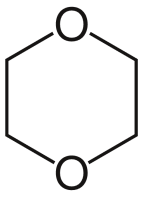 1,4-Dioxane (1,4-Dioxacyclohexane)
€4.19
Net price: €3.41
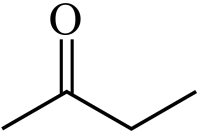 2 - Butanone (MEK, MethylEthylKetone)
€3.54
Net price: €2.92
 Acetic Acid (Ethanoic) Vinegar Essence 50% - 1000ml
€8.39
Net price: €6.82
 Acetic Acid (Ethanoic) Vinegar Essence 50% - 100ml
€3.26
Net price: €2.65
 Acetic Acid (Ethanoic) Vinegar Essence 50% - 5000ml
€21.04
Net price: €17.11
 Acetic Acid (Ethanoic) Vinegar Essence 50% - 500ml
€4.66
Net price: €3.79
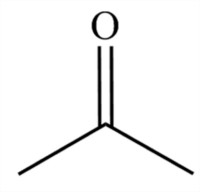 Acetone P.A. purity (ACS)
€2.10
Net price: €1.71
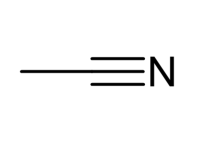 Acetonitrile (Methyl Cyanide) Pure >99%
€1.87
Net price: €1.52
 Balsamic turpentine ( Turpentine Oil )
€55.91
Net price: €46.21
 Benzene
€28.06
Net price: €22.81
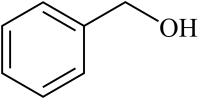 Benzyl Alcohol (Phenylmethanol)
€3.91
Net price: €3.18
 Benzyl Benzoate Pure Colorless >99,9% - 5000ml
€204.08
Net price: €165.92
 Benzyl Benzoate Pure Colorless >99,9% - 500ml
€22.36
Net price: €18.18
 Butyl Acetate ButOAc Solvent - 1000ml
€11.18
Net price: €9.09
 Butyl Acetate ButOAc Solvent - 100ml
€2.58
Net price: €2.10
 Butyl Acetate ButOAc Solvent - 10ml
€1.17
Net price: €0.95
 Butyl Acetate ButOAc Solvent - 20 000ml = 4x5L
€149.10
Net price: €121.22
 Butyl Acetate ButOAc Solvent - 5000ml
€41.94
Net price: €34.09
 Butyl Acetate ButOAc Solvent - 500ml
€7.46
Net price: €6.06
 Chlorobenzene Phenyl Chloride Pure - 500ml
€23.30
Net price: €18.94
 Chlorobenzene Phenyl Chloride Pure 1L - 1000ml
€41.94
Net price: €34.09
 Chloroform
€233.79
Net price: €190.08
 Cyclohexane ( hexahydrobenzene ) Pure - 1000ml
€23.30
Net price: €18.94
 Cyclohexane ( hexahydrobenzene ) Pure - 100ml
€4.66
Net price: €3.79
Why does the solvent affect a synthetic reaction?
A solvent can change reagent behavior by solvating ions, neutral molecules, transition states and reaction intermediates. In ionic reactions, the ability of the medium to stabilize charges is especially important, while in reactions of neutral compounds, substrate solubility, viscosity, boiling point and catalyst compatibility may be more relevant. For this reason, the same reaction may behave differently in a protic, aprotic or non-polar solvent.
Solvent as a tool for reaction control
In synthetic practice, the solvent helps control temperature, mixture homogeneity and reagent transport. It may improve mixing, reduce local overheating, increase contact between phases and influence the rate of heat transfer. This is particularly important in exothermic reactions, catalytic reactions, multiphase systems and transformations involving salts or moisture-sensitive reagents.
How can a solvent influence reaction mechanism?
Solvent effects are especially visible in nucleophilic substitution, elimination, solvolysis, enolate formation, acid-base reactions and catalytic transformations. A solvent may stabilize an ionic intermediate, weaken or enhance the nucleophilicity of an anion, change base availability or shift the balance between competing pathways. Therefore, solvent choice is often one of the key parameters in reaction optimization.
Selecting a solvent for reaction and purification
A suitable solvent should be compatible with the reagents, catalyst and product while allowing practical handling of the process. Important parameters include boiling point, volatility, water miscibility, drying options, ease of removal after the reaction, compatibility with chromatography or crystallization and workplace safety. In organic synthesis, the goal is often not to find a universally best solvent, but the medium best matched to the specific transformation and downstream purification.
Safety and more sustainable solvent selection
Solvents make up a large part of the material used in chemical processes, so their selection strongly affects safety, emissions, waste and recovery options. Solvent evaluation considers not only reaction performance, but also toxicity, flammability, volatility, environmental persistence, recyclability and regulatory compatibility. A classical solvent may be synthetically effective but problematic from the perspective of safety or environmental impact.