
 CATEGORIES
- ORGANIC COMPOUNDS(1240)
- INORGANIC COMPOUNDS(1103)
- LAB EQUIPMENT(5176)
- *(1)
- Organic Synthesis(438)
- Alkylating agents(11)
- Bases(47)
- Building blocks(43)
- Catalysts(5)
- Classic Acids(85)
- Drying Agents(54)
- Enantioselective synthesis(2)
- Halogenating reagents(8)
- Oxidizing agents(27)
- Peptide synthesis(4)
- Reducing Agents(19)
- Solvents(160)
- Polar aprotic(36)
- Polar protic(47)
- non-polar(28)
- Industry(783)
Language
US version allows shipping to all available destinations


 MANUFACTURER
Polar aprotic solvents are solvents with significant polarity that do not contain an easily donated proton bound to oxygen or nitrogen. They can solvate cations and many polar compounds, but they do not act as classical hydrogen-bond donors toward anions. This group includes dimethyl sulfoxide, N,N-dimethylformamide, N,N-dimethylacetamide, N-methyl-2-pyrrolidone, acetonitrile, acetone, tetrahydrofuran, propylene carbonate sulfolane and others.
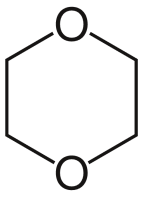 1,4-Dioxane (1,4-Dioxacyclohexane)
105,78 Kč
Net price: 86,03 Kč
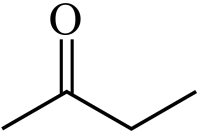 2 - Butanone (MEK, MethylEthylKetone)
89,27 Kč
Net price: 73,76 Kč
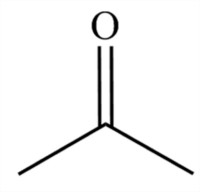 Acetone P.A. purity (ACS)
53,07 Kč
Net price: 43,16 Kč
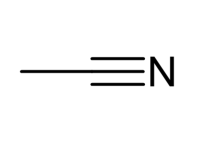 Acetonitrile (Methyl Cyanide) Pure >99%
47,17 Kč
Net price: 38,33 Kč
 Cyclohexanone pimelic ketone ketocyclohexane
58,96 Kč
Net price: 47,94 Kč
 Dichloromethane DCM Methylene Chloride AG
54,25 Kč
Net price: 44,10 Kč
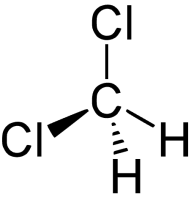 Dichloromethane DCM Methylene Chloride TECHNICAL GRADE
37,74 Kč
Net price: 30,66 Kč
 Dimethyl Sulfoxide ( DMSO : (Methanesulfinyl)methane : (CH3)2SO ) - 1000ml
1 120,28 Kč
Net price: 910,79 Kč
 Dimethyl Sulfoxide ( DMSO : (Methanesulfinyl)methane : (CH3)2SO ) - 100ml
352,54 Kč
Net price: 286,62 Kč
 Dimethyl Sulfoxide ( DMSO : (Methanesulfinyl)methane : (CH3)2SO ) - 10ml
176,24 Kč
Net price: 143,28 Kč
 Dimethyl Sulfoxide ( DMSO : (Methanesulfinyl)methane : (CH3)2SO ) - 5000ml
5 875,59 Kč
Net price: 4 776,89 Kč
 Dimethyl Sulfoxide ( DMSO : (Methanesulfinyl)methane : (CH3)2SO ) - 500ml
589,62 Kč
Net price: 479,36 Kč
 Dimethylacetamide ( DMAc : DMA ) N,N-Dimethylacetamide - Polar high bp solvent - 1000ml
878,54 Kč
Net price: 714,27 Kč
 Dimethylacetamide ( DMAc : DMA ) N,N-Dimethylacetamide - Polar high bp solvent - 100ml
353,77 Kč
Net price: 287,62 Kč
 Dimethylacetamide ( DMAc : DMA ) N,N-Dimethylacetamide - Polar high bp solvent - 10ml
235,02 Kč
Net price: 191,10 Kč
 Dimethylacetamide ( DMAc : DMA ) N,N-Dimethylacetamide - Polar high bp solvent - 5000ml
3 537,74 Kč
Net price: 2 876,18 Kč
 Dimethylacetamide ( DMAc : DMA ) N,N-Dimethylacetamide - Polar high bp solvent - 500ml
524,76 Kč
Net price: 426,65 Kč
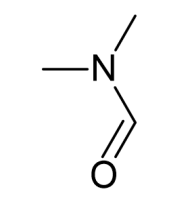 Dimethylformamide ( DMF ) N,N-Dimethylformamide
352,54 Kč
Net price: 286,62 Kč
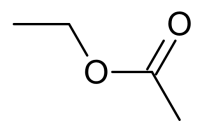 Ethyl Acetate (EtOAc) Solvent
52,48 Kč
Net price: 42,69 Kč
 N-Methylpyrrolidone N-Methyl-2-pyrrolidone NMP Solvent - 1000ml
940,09 Kč
Net price: 764,33 Kč
 N-Methylpyrrolidone N-Methyl-2-pyrrolidone NMP Solvent - 100ml
211,50 Kč
Net price: 171,93 Kč
 N-Methylpyrrolidone N-Methyl-2-pyrrolidone NMP Solvent - 5000ml
4 465,39 Kč
Net price: 3 630,42 Kč
 N-Methylpyrrolidone N-Methyl-2-pyrrolidone NMP Solvent - 500ml
681,60 Kč
Net price: 554,13 Kč
 Propylene Carbonate ( 4-Methyl-1,3-dioxolan-2-one)
235,02 Kč
Net price: 191,10 Kč
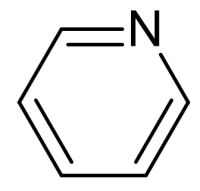 Pyridine, Pure >99%
265,33 Kč
Net price: 215,74 Kč
Why are polar aprotic solvents important in synthesis?
Polar aprotic solvents are useful when a reaction requires dissolution of polar or ionic reagents without strongly reducing anion reactivity through hydrogen bonding. Such an environment may increase the availability of anionic nucleophiles, support bimolecular reactions and facilitate transformations where high reactivity of ionic species is important.
Which reactions often use polar aprotic solvents?
Polar aprotic solvents are frequently used in nucleophilic substitution, nucleophilic aromatic substitution, alkylation, enolate formation, reactions involving organic and inorganic salts and selected coupling reactions. Their value comes from the combination of polarity, ability to dissolve many substrates and absence of proton-donor properties that could deactivate strong nucleophiles or bases.
Examples of polar aprotic solvents
This group includes amide solvents such as N,N-dimethylformamide, N,N-dimethylacetamide and N-methyl-2-pyrrolidone, sulfoxide solvents such as dimethyl sulfoxide, nitrile solvents such as acetonitrile, ketone solvents such as acetone and ether solvents such as tetrahydrofuran. Some organic carbonates and high-boiling sulfoxide or sulfone solvents also belong to aprotic polar media.
How do they differ from protic solvents?
The key difference is the absence of an easily available proton capable of forming strong hydrogen bonds with anions. A protic solvent may strongly surround an anion and reduce its nucleophilicity, whereas an aprotic medium often leaves the anion more reactive. This difference is particularly important in reactions where the anion directly participates in the rate-determining step.
Limitations of classical polar aprotic solvents
Many classical dipolar aprotic solvents have high boiling points, may be difficult to remove completely after a reaction and require careful control of water content. Some also raise important toxicological or environmental concerns. For this reason, modern synthesis increasingly considers alternatives such as less problematic aprotic solvents, bio-derived solvents, aqueous systems with additives or catalyst design that enables a change of reaction medium.
When is a polar aprotic solvent not the best choice?
A polar aprotic solvent is not always suitable for reactions requiring proton participation, solvolysis, stabilization of specific ions by hydrogen bonding or easy removal of the medium after completion. It may also be unfavorable if the substrate or product decomposes in a highly polar environment, if the solvent reacts with the reagent or if a high boiling point complicates purification.