
 CATEGORIES
- ORGANIC COMPOUNDS(1129)
- INORGANIC COMPOUNDS(1055)
- LAB EQUIPMENT(5176)
- *(1)
- Organic Synthesis(417)
- Alkylating agents(11)
- Bases(47)
- Building blocks(43)
- Catalysts(5)
- Classic Acids(79)
- Drying Agents(54)
- Enantioselective synthesis(2)
- Halogenating reagents(8)
- Oxidizing agents(23)
- Peptide synthesis(4)
- Reducing Agents(19)
- Solvents(146)
- Polar aprotic(32)
- Polar protic(45)
- non-polar(20)
- Industry(775)
Language
US version allows shipping to all available destinations


 MANUFACTURER
Polar protic solvents are polar solvents containing a proton capable of participating in hydrogen bonding, most often bound to oxygen or nitrogen. This group includes water, methanol, ethanol, isopropanol, tert-butanol, acetic acid, formic acid, glycols and formamide. In organic synthesis, they are used when ion solvation, hydrogen bonding, proton transfer, solvolysis or compatibility with protic media is beneficial.
 Acetic Acid (Ethanoic) Vinegar Essence 50% - 1000ml
Lei41.71
Net price: Lei33.91
 Acetic Acid (Ethanoic) Vinegar Essence 50% - 100ml
Lei16.22
Net price: Lei13.19
 Acetic Acid (Ethanoic) Vinegar Essence 50% - 5000ml
Lei104.65
Net price: Lei85.08
 Acetic Acid (Ethanoic) Vinegar Essence 50% - 500ml
Lei23.17
Net price: Lei18.84
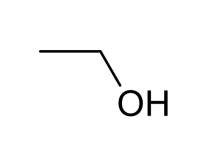 Anhydrous Ethyl Alcohol (Denatured Ethanol) >99%
Lei12.79
Net price: Lei10.40
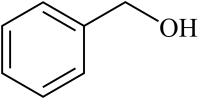 Benzyl Alcohol (Phenylmethanol)
Lei19.47
Net price: Lei15.83
 Ethanoic Acid (Technical Vinegar solution, Vinegar Essence) 50%
Lei9.63
Net price: Lei7.83
 Ethylene Glycol - 1000ml
Lei45.35
Net price: Lei36.87
 Ethylene Glycol - 100ml
Lei18.53
Net price: Lei15.07
 Ethylene Glycol - 20 000ml
Lei465.12
Net price: Lei378.14
 Ethylene Glycol - 5000ml
Lei208.57
Net price: Lei169.57
 Ethylene Glycol - 500ml
Lei29.07
Net price: Lei23.64
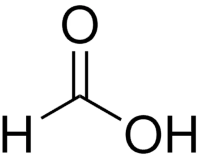 Formic Acid Methanoic Acid 85%
Lei11.63
Net price: Lei9.45
 Glycerin Vegetable Glycerol Pure >99,5% - 20 000ml = 25kg
Lei764.76
Net price: Lei621.76
 Glycerin Vegetable Glycerol Pure >99,5% - 5000ml = 6,3kg
Lei208.57
Net price: Lei169.57
 Isoamyl alcohol ( ISOAMYL ALCHOL ) Isopentyl - 100ml
Lei41.71
Net price: Lei33.91
 Isoamyl alcohol ( ISOAMYL ALCHOL ) Isopentyl - 5000ml
Lei1,274.59
Net price: Lei1,036.26
 Isoamyl alcohol ( ISOAMYL ALCHOL ) Isopentyl - 500ml
Lei162.22
Net price: Lei131.88
 Isoamyl alcohol ( ISOAMYL ALCHOL ) Isopentyl 1L - 1000ml
Lei301.27
Net price: Lei244.93
 Isobutyl Alcohol (Isobutanol, Methylpropanol)
Lei15.12
Net price: Lei12.29
 Isopropanol ( 2 - propanol ) IPA Cleaner 99,9% - 1000ml
Lei41.71
Net price: Lei33.91
 Isopropanol ( 2 - propanol ) IPA Cleaner 99,9% - 100ml
Lei13.91
Net price: Lei11.30
 Isopropanol ( 2 - propanol ) IPA Cleaner 99,9% - 20 000ml = 20L
Lei460.47
Net price: Lei374.36
 Isopropanol ( 2 - propanol ) IPA Cleaner 99,9% - 5000ml
Lei116.28
Net price: Lei94.53
 Isopropanol ( 2 - propanol ) IPA Cleaner 99,9% - 500ml
Lei23.17
Net price: Lei18.84
How do protic solvents affect ions and nucleophiles?
Protic solvents can strongly interact with ions through hydrogen bonding and electrostatic interactions. They stabilize many ionic species, but they can also reduce the nucleophilicity of anions by solvation. In reactions where an anion must directly attack an electrophile, this environment can change both the rate and selectivity of the transformation.
When are polar protic solvents used?
Polar protic solvents are used in reactions where a hydrogen-bonding environment is beneficial. This includes solvolysis, acid-base reactions, hydrolysis, esterification, transesterification, some transfer hydrogenations and transformations involving proton donors or acceptors. They are also useful when a substrate or product benefits from stabilization through hydrogen-bonding interactions.
Alcohols as practical reaction solvents
Methanol, ethanol, isopropanol and tert-butanol are frequently used as solvents in organic synthesis because of their availability, miscibility with many reagents, ability to dissolve polar compounds and participation in hydrogen-bond networks. However, they differ in nucleophilicity, acidity, steric bulk, boiling point and reagent compatibility, so they should not be treated as simple interchangeable solvents.
Water as a solvent in organic synthesis
Water is a strongly polar protic solvent and can be an attractive medium for selected transformations, especially when substrates, catalysts or additives provide sufficient contact between reactants. Its advantages include availability and a favorable environmental profile, but limitations include poor solubility of many organic compounds and incompatibility with water-sensitive reagents. Therefore, water is an effective medium only for selected reactions, not a universal replacement for organic solvents.
When should protic solvents be avoided?
Protic solvents are generally unsuitable for strongly basic, organometallic, hydride-based, strongly electrophilic or water- and proton-sensitive reagents. They may protonate nucleophiles, react as side substrates, participate in solvolysis or change reaction equilibria. In such cases, a dry aprotic or less polar medium is often selected.
Protic solvents and reaction selectivity
Hydrogen bonding can change the balance between reactivity, intermediate stabilization and nucleophile availability. In some reactions, this is beneficial because it stabilizes developing charges or facilitates proton transfer. In other cases, it slows anionic reactions, increases side-product formation or allows the solvent to compete with the intended reagent.