
 CATEGORIES
- ORGANIC COMPOUNDS(1240)
- INORGANIC COMPOUNDS(1103)
- LAB EQUIPMENT(5176)
- *(1)
- Organic Synthesis(438)
- Alkylating agents(11)
- Bases(47)
- Building blocks(43)
- Catalysts(5)
- Classic Acids(85)
- Drying Agents(54)
- Enantioselective synthesis(2)
- Halogenating reagents(8)
- Oxidizing agents(27)
- Peptide synthesis(4)
- Reducing Agents(19)
- Solvents(160)
- Industry(783)
Language
US version allows shipping to all available destinations


 MANUFACTURER
Oxidizing agents are reagents used to carry out oxidation reactions of organic compounds, including transformations that increase the oxidation state of carbon, introduce oxygen, remove hydrogen or convert one functional group into another. In organic synthesis, they are used for the oxidation of alcohols, aldehydes, alkenes, sulfides, aromatic compounds and heterocyclic systems. This group includes chromium-based, manganese-based, peroxide, peracid and hypervalent iodine reagents, TEMPO systems combined with a terminal oxidant and molecular oxygen used in catalytic oxidation reactions.
 Hydrogen Peroxide Solution ( Perhydrol ) 30%
129,72 Kč
Net price: 105,48 Kč
 Hydrogen Peroxide Solution 3% - 1000ml
105,78 Kč
Net price: 86,03 Kč
 Hydrogen Peroxide Solution 3% - 100ml
54,25 Kč
Net price: 44,10 Kč
 Hydrogen Peroxide Solution 3% - 5000ml
470,05 Kč
Net price: 382,13 Kč
 Hydrogen Peroxide Solution 3% - 500ml
108,49 Kč
Net price: 88,21 Kč
 NITRIC ACID
2 358,49 Kč
Net price: 1 917,45 Kč
 Potassium Nitrate (Saltpeter)
93,99 Kč
Net price: 76,42 Kč
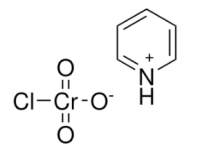 Pyridinium Chlorochromate (PCC)
159,20 Kč
Net price: 129,42 Kč
 Sodium Hypochlorite Bleach Aq. 15% - 1000ml
147,41 Kč
Net price: 119,87 Kč
 Sodium Hypochlorite Bleach Aq. 15% - 100ml
70,75 Kč
Net price: 57,55 Kč
 Sodium Hypochlorite Bleach Aq. 15% - 20 000ml = 20L
1 804,25 Kč
Net price: 1 466,86 Kč
 Sodium Hypochlorite Bleach Aq. 15% - 5000ml
530,66 Kč
Net price: 431,43 Kč
 Sodium Hypochlorite Bleach Aq. 15% - 500ml
117,51 Kč
Net price: 95,52 Kč
 Sodium nitrate ( Chile Saltpetre ) NaNO3 - 1000g
352,54 Kč
Net price: 286,62 Kč
 Sodium nitrate ( Chile Saltpetre ) NaNO3 - 100g
93,99 Kč
Net price: 76,42 Kč
 Sodium nitrate ( Chile Saltpetre ) NaNO3 - 25 000g = 25kg
2 889,15 Kč
Net price: 2 348,88 Kč
 Sodium nitrate ( Chile Saltpetre ) NaNO3 - 5000g
1 410,14 Kč
Net price: 1 146,46 Kč
 Sodium nitrate ( Chile Saltpetre ) NaNO3 - 500g
211,50 Kč
Net price: 171,93 Kč
 Sodium Percarbonate Active H2O2 Adduct - 1000g
176,24 Kč
Net price: 143,28 Kč
 Sodium Percarbonate Active H2O2 Adduct - 100g
48,82 Kč
Net price: 39,68 Kč
 Sodium Percarbonate Active H2O2 Adduct - 25 000g = 25kg bag
2 004,72 Kč
Net price: 1 629,83 Kč
 Sodium Percarbonate Active H2O2 Adduct - 5000g
577,83 Kč
Net price: 469,75 Kč
 Sodium Percarbonate Active H2O2 Adduct - 500g
98,70 Kč
Net price: 80,25 Kč
 Sodium Percarbonate Active H2O2 Adduct For Chemical Laundries - 1 000kg
58 962,26 Kč
Net price: 47 936,79 Kč
 Ammonium dichromate
191,63 Kč
Net price: 155,78 Kč
Oxidizing agents as tools for functional group transformation
Oxidizing agents are important reagents in organic synthesis because they allow compounds with a lower oxidation level to be converted into more oxidized derivatives. In practice, this enables the preparation of aldehydes, ketones, carboxylic acids, epoxides, lactones, esters, sulfoxides, sulfones and other products containing more oxidized reactive centers. Their importance comes from the fact that many synthetic sequences require a controlled change of one functional group without disturbing other parts of the molecule.
Alcohol oxidation as one of the most common applications
One of the most important applications of oxidizing agents is the conversion of alcohols into carbonyl compounds. Primary alcohols may give aldehydes or undergo further oxidation to carboxylic acids, while secondary alcohols are most often converted into ketones. The choice of oxidant is crucial, because overly strong or highly aqueous conditions may promote further oxidation of aldehydes, whereas milder reagents can stop the transformation at the carbonyl stage.
Hypervalent iodine reagents in mild oxidations
Hypervalent iodine compounds, such as IBX and Dess-Martin periodinane, are frequently used as oxidants in organic chemistry. Their importance is related to the possibility of performing selective transformations under milder conditions than many classical metal-based oxidants. Reagents from this group are used not only for alcohol oxidation, but also in selected dehydrogenation, cyclization, carbonyl functionalization and heterocyclic transformations.
TEMPO and catalytic systems with a terminal oxidant
TEMPO and related nitroxyls are used as catalytic components of oxidation systems, especially in alcohol oxidation. In such systems, the active oxidizing form is usually an oxoammonium species, while TEMPO itself requires regeneration by a terminal oxidant such as hypochlorite, Oxone, an iodine reagent, an electrochemical system or oxygen in the presence of a suitable catalyst. This approach makes it possible to reduce the amount of the redox mediator and adapt the conditions to the requirements of a particular substrate.
Peroxides, peracids and oxygen-transfer oxidation
Peroxides and peracids are an important group of oxidizing agents because they can participate in reactions involving oxygen-atom transfer. They are used in alkene epoxidation, oxidation of sulfides to sulfoxides or sulfones and Baeyer-Villiger reactions, in which ketones can be converted into esters or lactones. The choice of a specific peroxide or peracid affects chemoselectivity, compatibility with other functional groups and the type of product formed.
Molecular oxygen and hydrogen peroxide in modern synthesis
Molecular oxygen and hydrogen peroxide are often discussed as oxidants of major importance in modern synthetic chemistry. Oxygen can serve as a terminal oxidant in catalytic reactions, while hydrogen peroxide is used in numerous oxidative transformations, especially when a catalytic system enables controlled oxygen transfer to the substrate. Their usefulness depends on activation, catalyst choice and reaction selectivity, because oxidizing potential alone is not enough to ensure a predictable synthetic outcome.
Strong oxidants and selective oxidants are not the same
A strong oxidant is not always the best choice in organic synthesis. In many cases, selectivity is more important than oxidizing strength itself, meaning the ability to transform one functional group without overoxidation, substrate decomposition or side reactions. For this reason, synthetic planning distinguishes not only between “strong” and “mild” oxidants, but also between reagents operating through different modes, such as oxygen transfer, electron transfer, radical formation or redox mediation.
Importance of oxidizing agents in synthesis design
Oxidizing agents are selected with regard to substrate structure, sensitive functional groups, the desired product and the tolerance of the system toward water, acid, base, metals or peroxide-type oxidants. The same substrate may lead to different products depending on the oxidant class and the way the reaction is conducted. For this reason, oxidation is one of the synthetic steps where chemoselectivity, control of oxidation level and compatibility with other parts of the molecule are especially important.
Safety and limitations of use
Oxidizing agents should be treated as reactive chemical substances whose properties depend on the specific compound. Some may intensify combustion, react vigorously with reducing or organic materials, cause corrosion, decompose with gas evolution or form hazardous mixtures with incompatible substances. In a chemical product description, they should be presented only as materials for controlled laboratory, analytical or synthetic use.