
 CATEGORIES
- ORGANIC COMPOUNDS(1129)
- Thiols(1)
- Metal-organic compounds(1)
- Sulfonic acids(6)
- Alcohols(74)
- Aldehydes(47)
- Alkyl nitrites(6)
- Amines(55)
- Aminoacids(59)
- Amides(33)
- Anhydrides(11)
- Acyl Halides(5)
- Carboxylic Acids(170)
- Dyes and Indicators(99)
- Esters(52)
- Ethers(17)
- Organic Halogens (Organohalides)(30)
- Flavonoids(5)
- Heterocycles(24)
- Hydrocarbons(34)
- Imides(2)
- Ketones(29)
- Mixed solvents(16)
- Nitro Compounds(5)
- Nitriles(9)
- Organic salts(74)
- Phenols(30)
- Polymers ( HMW compounds )(68)
- Sugars (Saccharides)(24)
- Silicoorgano and Phosphoorganocompounds(1)
- Peptides(2)
- Terpenes(16)
- Others(126)
- INORGANIC COMPOUNDS(1055)
- LAB EQUIPMENT(5176)
- *(1)
- Organic Synthesis(417)
- Industry(775)
Language
US version allows shipping to all available destinations


 MANUFACTURER
Monohydric alcohols are organic compounds containing one hydroxyl group –OH attached to a carbon atom of an aliphatic, cyclic or arylaliphatic fragment. This group includes methanol, ethanol, propanols, butanols, benzyl alcohols and numerous higher alcohols. In organic synthesis, they are important substrates, solvents, intermediates and model compounds for oxidation, esterification, etherification, dehydration, substitution and formation of alkoxide derivatives.
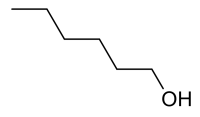 1-Hexanol
176,89 Kč
Net price: 143,81 Kč
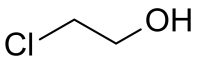 2-Chloroethanol
353,77 Kč
Net price: 287,62 Kč
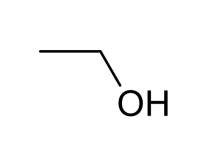 Anhydrous Ethyl Alcohol (Denatured Ethanol) >99%
64,86 Kč
Net price: 52,71 Kč
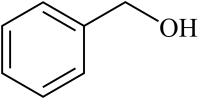 Benzyl Alcohol (Phenylmethanol)
98,70 Kč
Net price: 80,25 Kč
 Cetyl alcohol ( Hexadecan-1-ol )
705,07 Kč
Net price: 573,23 Kč
 Geraniol Rose Fragrance Pure compound >98% - 1000ml
1 974,17 Kč
Net price: 1 605,01 Kč
 Geraniol Rose Fragrance Pure compound >98% - 100ml
258,55 Kč
Net price: 210,20 Kč
 Geraniol Rose Fragrance Pure compound >98% - 10ml
47,17 Kč
Net price: 38,33 Kč
 Geraniol Rose Fragrance Pure compound >98% - 500ml
1 128,07 Kč
Net price: 917,10 Kč
 Isoamyl alcohol ( ISOAMYL ALCHOL ) Isopentyl - 100ml
211,50 Kč
Net price: 171,93 Kč
 Isoamyl alcohol ( ISOAMYL ALCHOL ) Isopentyl - 5000ml
6 463,15 Kč
Net price: 5 254,60 Kč
 Isoamyl alcohol ( ISOAMYL ALCHOL ) Isopentyl - 500ml
822,58 Kč
Net price: 668,75 Kč
 Isoamyl alcohol ( ISOAMYL ALCHOL ) Isopentyl 1L - 1000ml
1 527,65 Kč
Net price: 1 241,98 Kč
 Isobutyl Alcohol (Isobutanol, Methylpropanol)
76,65 Kč
Net price: 62,32 Kč
 Isooctanol
412,74 Kč
Net price: 335,55 Kč
 Isopropanol ( 2 - propanol ) IPA Cleaner 99% - 200L
27 417,45 Kč
Net price: 22 290,63 Kč
 Isopropanol ( 2 - propanol ) IPA Cleaner 99,9% - 1000ml
211,50 Kč
Net price: 171,93 Kč
 Isopropanol ( 2 - propanol ) IPA Cleaner 99,9% - 100ml
70,52 Kč
Net price: 57,31 Kč
 Isopropanol ( 2 - propanol ) IPA Cleaner 99,9% - 20 000ml = 20L
2 334,91 Kč
Net price: 1 898,29 Kč
 Isopropanol ( 2 - propanol ) IPA Cleaner 99,9% - 5000ml
589,62 Kč
Net price: 479,36 Kč
 Isopropanol ( 2 - propanol ) IPA Cleaner 99,9% - 500ml
117,51 Kč
Net price: 95,52 Kč
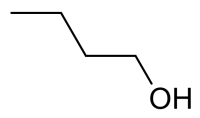 N-Butyl Alcohol ( 1-Butanol ) Butanol
88,44 Kč
Net price: 71,93 Kč
 Pentyl alcohol 1-Pentanol Pentyl Alcohol 1L
1 856,72 Kč
Net price: 1 509,55 Kč
 Piperonyl Alcohol ; Piperonol ; 3,4-(Methylenedioxy)phenylmethanol | Pure
15 625,00 Kč
Net price: 12 703,24 Kč
 Propyl alcohol N-Propanol N-Propyl Alcohol
940,09 Kč
Net price: 764,33 Kč
How are monohydric alcohols classified?
Monohydric alcohols can be classified according to the carbon atom bearing the –OH group. Primary alcohols have the hydroxyl group attached to a carbon bonded to one carbon fragment, secondary alcohols to a carbon bonded to two carbon fragments, and tertiary alcohols to a carbon bonded to three carbon fragments. This classification is directly relevant in synthesis because it influences susceptibility to oxidation, dehydration, substitution and formation of reaction intermediates.
Why is the hydroxyl group synthetically important?
The hydroxyl group enables hydrogen bonding, increases polarity and provides a site for further functionalization. The –OH group itself is a poor leaving group, so in many reactions it must first be activated, for example by protonation, conversion into a sulfonate ester, alkyl halide or another reactive derivative. This allows monohydric alcohols to serve as convenient starting materials for the formation of C-O, C-N, C-S and C-C bonds.
Oxidation of primary and secondary alcohols
Primary alcohols can be converted into aldehydes or further into carboxylic acids, depending on the oxidizing system and reaction conditions. Secondary alcohols usually give ketones. Tertiary alcohols do not undergo typical mild oxidation to carbonyl compounds without cleavage of C-C bonds, because the carbon bearing the –OH group lacks the hydrogen atom required for the classical transformation into a carbonyl group.
Esterification, etherification and alkoxide formation
Monohydric alcohols are frequently used to prepare esters and ethers. They can form esters with carboxylic acids or their derivatives, while under suitable conditions they can be converted into ethers. Reaction with a sufficiently strong base gives alkoxides, which are important nucleophiles and bases in organic synthesis. These transformations make an alcohol not only a final product, but also an intermediate for further molecular elaboration.
Dehydration and substitution reactions of alcohols
Alcohols may undergo dehydration to alkenes or substitution reactions if the –OH group is converted into a better leaving group. In Brønsted acid-catalyzed reactions, an alcohol can be activated by protonation, which facilitates water departure. In newer synthetic approaches, alcohols are studied as direct components of dehydrative substitution reactions because such transformations may produce water as a less problematic by-product.
Alcohols as substrates in metal catalysis
Monohydric alcohols are also used in transition-metal-catalyzed reactions, including arylation, alkylation and related transformations. Their attractiveness comes from availability, structural diversity and the possibility of treating the hydroxyl group as a fragment that, after activation or within a suitable catalytic cycle, can participate in new bond formation. In such reactions, alcohol type, catalyst, ligand, solvent and compatibility with other functional groups are important.
Physicochemical properties of monohydric alcohols
The presence of one –OH group allows intermolecular hydrogen bonding, which affects boiling point, viscosity, water miscibility and solubility in organic solvents. As carbon chain length increases, the hydrophobic part of the molecule becomes more dominant, so higher alcohols are usually less miscible with water than short-chain alcohols. Chain branching and the position of the –OH group can further change physical properties and behavior in reaction mixtures.
Safety and limitations of use
Monohydric alcohols differ in hazard profile depending on structure. Many are flammable, volatile and irritating, and some may show significant toxicity after inhalation, skin exposure or ingestion. Short-chain alcohols may rapidly form vapor-air mixtures, while higher alcohols may be less volatile but still require control of flammability and chemical compatibility. Each product should be assessed individually using its safety data sheet.