
 CATEGORIES
- ORGANIC COMPOUNDS(1129)
- Thiols(1)
- Metal-organic compounds(1)
- Sulfonic acids(6)
- Alcohols(74)
- Aldehydes(47)
- Alkyl nitrites(6)
- Amines(55)
- Aminoacids(59)
- Amides(33)
- Anhydrides(11)
- Acyl Halides(5)
- Carboxylic Acids(170)
- Dyes and Indicators(99)
- Esters(52)
- Ethers(17)
- Organic Halogens (Organohalides)(30)
- Flavonoids(5)
- Heterocycles(24)
- Hydrocarbons(34)
- Imides(2)
- Ketones(29)
- Mixed solvents(16)
- Nitro Compounds(5)
- Nitriles(9)
- Organic salts(74)
- Phenols(30)
- Polymers ( HMW compounds )(68)
- Sugars (Saccharides)(24)
- Silicoorgano and Phosphoorganocompounds(1)
- Peptides(2)
- Terpenes(16)
- Others(126)
- INORGANIC COMPOUNDS(1055)
- LAB EQUIPMENT(5176)
- *(1)
- Organic Synthesis(417)
- Industry(775)
Language
US version allows shipping to all available destinations


 MANUFACTURER
Polyhydric alcohols, also known as polyols, are organic compounds containing at least two hydroxyl groups –OH in one molecule. This group includes diols, triols and compounds with larger numbers of hydroxyl groups, such as glycols, glycerol, erythritol, xylitol, sorbitol, mannitol and pentaerythritol. In organic synthesis, they are used as multifunctional substrates, solvents or co-solvents, building blocks, polymer precursors and materials for esterification, etherification, oxidation, dehydration and selective functionalization of –OH groups.
 D-Panthenol ( Provitamine B5 ) - 1000ml = 1200g
Lei523.26
Net price: Lei425.41
 D-Panthenol ( Provitamine B5 ) - 100ml = 120g
Lei127.47
Net price: Lei103.63
 D-Panthenol ( Provitamine B5 ) - 10ml = 12g
Lei30.13
Net price: Lei24.50
 Ethylene Glycol - 1000ml
Lei45.35
Net price: Lei36.87
 Ethylene Glycol - 100ml
Lei18.53
Net price: Lei15.07
 Ethylene Glycol - 20 000ml
Lei465.12
Net price: Lei378.14
 Ethylene Glycol - 5000ml
Lei208.57
Net price: Lei169.57
 Ethylene Glycol - 500ml
Lei29.07
Net price: Lei23.64
 Glycerin + Propylene Glycol Pure Odorless Glass Bottles >99,5% VG + PG - 100mL + 100mL
Lei44.03
Net price: Lei36.40
 Glycerin + Propylene Glycol Pure Odorless Glass Bottles >99,5% VG + PG - 10L + 10L
Lei787.93
Net price: Lei651.19
 Glycerin + Propylene Glycol Pure Odorless Glass Bottles >99,5% VG + PG - 1L + 1L
Lei110.78
Net price: Lei91.56
 Glycerin + Propylene Glycol Pure Odorless Glass Bottles >99,5% VG + PG - 500mL + 500mL
Lei69.52
Net price: Lei57.45
 Glycerin + Propylene Glycol Pure Odorless Glass Bottles >99,5% VG + PG - 5L + 5L
Lei463.49
Net price: Lei383.05
 Glycerin Vegetable Glycerol Pure >99,5% - 1000ml
Lei50.99
Net price: Lei41.45
 Glycerin Vegetable Glycerol Pure >99,5% - 100ml
Lei18.08
Net price: Lei14.70
 Glycerin Vegetable Glycerol Pure >99,5% - 20 000ml = 25kg
Lei764.76
Net price: Lei621.76
 Glycerin Vegetable Glycerol Pure >99,5% - 5000ml = 6,3kg
Lei208.57
Net price: Lei169.57
 Glycerin Vegetable Glycerol Pure >99,5% - 500ml
Lei30.13
Net price: Lei24.50
 Isomalt Powder Sugar Alcohol Pure
Lei10.70
Net price: Lei8.70
 PolyEthenol PVA ( PVOH PVAI ) Polyvinyl Alcohol - 1000g
Lei208.57
Net price: Lei169.57
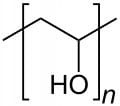 PolyEthenol PVA ( PVOH PVAI ) Polyvinyl Alcohol - 100g
Lei46.35
Net price: Lei37.69
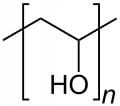 PolyEthenol PVA ( PVOH PVAI ) Polyvinyl Alcohol - 25 000g = 25kg
Lei2,502.83
Net price: Lei2,034.81
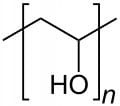 PolyEthenol PVA ( PVOH PVAI ) Polyvinyl Alcohol - 5000g
Lei695.23
Net price: Lei565.23
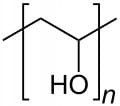 PolyEthenol PVA ( PVOH PVAI ) Polyvinyl Alcohol - 500g
Lei115.87
Net price: Lei94.21
 Propylene Glycol CLEAN >99.5% Farm. - 10 000ml = 10L
Lei370.79
Net price: Lei301.45
Diols, triols and alcohols with more –OH groups
Polyhydric alcohols are classified according to the number of hydroxyl groups. Diols contain two –OH groups, triols contain three, while tetrols, pentols and hexitols contain correspondingly larger numbers of such groups. The number and arrangement of hydroxyl groups affect reactivity, solubility, viscosity, hydrogen-bonding ability and the possibility of carrying out reactions selectively at one of several similar functions.
Why do polyols interact strongly through hydrogen bonding?
The presence of multiple –OH groups enables extensive hydrogen-bond networks between molecules and with water, alcohols and other polar solvents. These interactions increase viscosity, boiling point and hydrophilicity for many polyols. In aqueous solution, individual hydroxyl groups may differ in proton exchange dynamics and participation in the local hydrogen-bond network, influencing the physicochemical properties of the whole system.
Polyols as multifunctional substrates
Polyhydric alcohols are valuable in synthesis because a single molecule contains several reaction sites. They may undergo esterification, etherification, oxidation, dehydration, acetalization, carbonylation, hydrogenolysis and other transformations depending on structure. This multifunctionality enables mono-, di- or multiply substituted derivatives, but it also requires selectivity control to avoid product mixtures.
Glycerol as an example of a polyhydric alcohol
Glycerol is a triol polyhydric alcohol containing three hydroxyl groups and is an important example of a multifunctional compound in chemical synthesis. It can be converted into derivatives through oxidation, esterification, etherification, chlorination, dehydration, hydrogenolysis and polymerization. Its significance comes from availability, high polarity, hydrogen-bonding ability and the possibility of selective or partial modification of –OH groups.
Selective functionalization of multiple hydroxyl groups
The main challenge in working with polyhydric alcohols is differentiating several –OH groups within the same molecule. Depending on structure, they may differ in steric accessibility, position, acidity and participation in hydrogen bonding. In practice, protecting-group strategies, selective reagent choice or stoichiometric control are often used to obtain a defined derivative instead of a mixture of products.
Polyols in polymer and materials chemistry
Polyhydric alcohols are important precursors in the synthesis of polyesters, polyurethanes, polyethers and other materials containing multihydroxyl fragments. The number of –OH groups affects monomer functionality, crosslinking potential, rigidity, hydrophilicity and final material properties. A diol may act as a linear linker, whereas a triol or compound of higher functionality may lead to more branched or crosslinked structures.
How do polyols differ from monohydric alcohols?
Compared with monohydric alcohols, polyols usually show higher polarity, stronger hydrogen-bonding interactions and greater ability to retain water. Their reactivity does not arise only from the presence of the –OH group, but also from the number of such groups and their relative arrangement. This makes them more complex substrates because reaction of one hydroxyl group can affect the behavior of the remaining ones.
Use in laboratory research
Polyhydric alcohols are used in organic synthesis, materials chemistry, polymer chemistry, preparation of ester and ether derivatives, hydrogen-bonding studies, solution-property analysis and development of methods for selective functionalization. They may serve as substrates, co-solvents, stabilizers, material precursors or models for studying the effect of multiple hydroxyl groups on molecular properties.
Safety and limitations of use
Polyhydric alcohols do not represent one hazard class because their properties depend on specific structure and molecular weight. Some are viscous, hygroscopic, highly miscible with water or difficult to remove completely from reaction mixtures. Some compounds may be toxic, irritating or incompatible with strong oxidizing agents or moisture-sensitive reagents. Each product should be evaluated individually using its safety data sheet.