
 CATEGORIES
- ORGANIC COMPOUNDS(1135)
- INORGANIC COMPOUNDS(1055)
- Mineral Acids(51)
- Chelates(3)
- Elements(130)
- Salts(556)
- Oxides(121)
- Hydroxides(30)
- Hydrides(15)
- Other(19)
- Nanoparticles(3)
- Standard solutions(126)
- LAB EQUIPMENT(5176)
- *(1)
- Organic Synthesis(421)
- Industry(775)
Language
US version allows shipping to all available destinations


 MANUFACTURER
Hydroxides are compounds containing the hydroxide ion, OH⁻, typically bonded to a metal or cation (M–OH). They are commonly basic, and many serve as key inorganic bases and precursors to oxides.
 Aluminium Hydroxide Al(OH)3 - 1000g
37,87 zł
Net price: 30,79 zł
 Aluminium Hydroxide Al(OH)3 - 100g
11,96 zł
Net price: 9,72 zł
 Aluminium Hydroxide Al(OH)3 - 25 000g
737,41 zł
Net price: 599,52 zł
 Aluminium Hydroxide Al(OH)3 - 5000g
159,44 zł
Net price: 129,63 zł
 Aluminium Hydroxide Al(OH)3 - 500g
21,92 zł
Net price: 17,82 zł
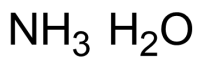 Ammonia Solution Aq. 25%
9,20 zł
Net price: 7,48 zł
 Barium hydroxide ( Ba(OH)2 )
25,00 zł
Net price: 20,33 zł
 Lithium hydroxide ( LiOH ) - 100g
159,44 zł
Net price: 129,63 zł
 Lithium hydroxide ( LiOH ) - 10g
39,86 zł
Net price: 32,41 zł
 Lithium hydroxide ( LiOH ) - 1g
15,55 zł
Net price: 12,64 zł
 Lithium hydroxide ( LiOH ) - 50g
99,65 zł
Net price: 81,02 zł
 Potassium Hydroxide ( KOH ) caustic potash - 1000g
55,81 zł
Net price: 45,37 zł
 Potassium Hydroxide ( KOH ) caustic potash - 100g
11,96 zł
Net price: 9,72 zł
 Potassium Hydroxide ( KOH ) caustic potash - 25 000g = 25kg Bag
570,00 zł
Net price: 463,41 zł
 Potassium Hydroxide ( KOH ) caustic potash - 5000g
150,00 zł
Net price: 121,95 zł
 Potassium Hydroxide ( KOH ) caustic potash - 500g
35,87 zł
Net price: 29,16 zł
 Sodium Hydroxide ( Lye ) Caustic Soda - 100g
9,20 zł
Net price: 7,48 zł
 Sodium Hydroxide ( Lye ) Caustic Soda - 25 000g = 25kg Bag
370,00 zł
Net price: 300,81 zł
 Sodium Hydroxide ( Lye ) Caustic Soda - 500g
17,94 zł
Net price: 14,59 zł
 Sodium Hydroxide (Lye) Caustic Soda
9,00 zł
Net price: 7,32 zł
 Strontium hydroxide 500g
199,30 zł
Net price: 162,03 zł
 Aluminium hydroxide 47-60% Loba gel extra pure op.500 g
54,63 zł
Net price: 44,41 zł
 Aluminium hydroxide PureLand chda Op.1000 g HDPE bottle
47,50 zł
Net price: 38,62 zł
 Aluminium hydroxide PureLand chda Op.250 g HDPE bottle
19,00 zł
Net price: 15,45 zł
Aluminium hydroxide PureLand chda Op.500 g bottle HDPE
28,50 zł
Net price: 23,17 zł
Hydroxides consist of OH⁻ ions paired with cations, ranging from highly ionic alkali-metal hydroxides (e.g., NaOH, KOH) to more covalent or polymeric metal hydroxides (e.g., Al(OH)₃, Fe(OH)₃). In water, soluble hydroxides dissociate to release OH⁻, raising pH and acting as Brønsted–Lowry bases. Their basicity and solubility follow periodic trends: Group 1 hydroxides are strongly basic and highly soluble; Group 2 hydroxides are also basic but show decreasing solubility down the group (with Mg(OH)₂ sparingly soluble). Many transition-metal hydroxides are poorly soluble and often exist as hydrated, polymeric solids.
Acid–base and amphoterism.
Hydroxides can be classified as:
-
Basic hydroxides, which neutralize acids to form salts and water (e.g., NaOH + HCl → NaCl + H₂O).
-
Amphoteric hydroxides, which react with both acids and strong bases, reflecting borderline Lewis acidity/basicity of the metal center (e.g., Al(OH)₃ dissolves in acid to give Al³⁺ and in base to give aluminate [Al(OH)₄]⁻). Representative amphoteric hydroxides include those of Al, Zn, Sn, Pb, and Cr.
Thermal behavior and formation of oxides.
On heating, many metal hydroxides decompose to metal oxides and water:
M(OH)ₙ → MO_(n/2) + (n/2) H₂O.
This dehydration is central to materials synthesis (e.g., producing MgO, Al₂O₃) and to geochemical processes. Alkali hydroxides are comparatively thermally stable, while many transition-metal hydroxides dehydrate readily.
Structural aspects.
Solid hydroxides often form extended lattices with hydrogen bonding networks. Layered hydroxides (e.g., brucite-type Mg(OH)₂) can intercalate ions and water; related layered double hydroxides (LDHs) are important anion-exchange materials and catalysts. In coordination chemistry, terminal or bridging hydroxo ligands (–OH) are common in metal complexes, influencing reactivity via proton transfer and metal–metal bridging.
Reactivity and applications.
Strong hydroxide bases drive nucleophilic substitution and elimination in organic synthesis, promote saponification of esters, and deprotonate weak acids to form reactive anions. Industrially, hydroxides are essential in pulp and paper processing, soap manufacture, alumina extraction (Bayer process), CO₂ scrubbing (forming carbonates/bicarbonates), and water treatment via precipitation of metal hydroxides. Biologically and environmentally, hydroxide equilibria control mineral solubility and buffer natural waters.