
 CATEGORIES
- ORGANIC COMPOUNDS(1135)
- INORGANIC COMPOUNDS(1055)
- Mineral Acids(51)
- Chelates(3)
- Elements(130)
- Salts(556)
- Oxides(121)
- Hydroxides(30)
- Hydrides(15)
- Other(19)
- Nanoparticles(3)
- Standard solutions(126)
- LAB EQUIPMENT(5176)
- *(1)
- Organic Synthesis(421)
- Industry(775)
Language
US version allows shipping to all available destinations


 MANUFACTURER
Oxides are binary compounds of oxygen with another element (E–O), where oxygen is typically in the −2 oxidation state. They range from ionic solids to covalent molecules and are fundamental in minerals, materials, and redox chemistry.
 Aluminium Oxide - Aluminium (III) Oxide - Al2O3 - Aloxide - Aloxite - Alumina Powder - 1000g
€37.28
Net price: €30.31
 Aluminium Oxide - Aluminium (III) Oxide - Al2O3 - Aloxide - Aloxite - Alumina Powder - 100g
€9.32
Net price: €7.58
 Aluminium Oxide - Aluminium (III) Oxide - Al2O3 - Aloxide - Aloxite - Alumina Powder - 25 000g
€128.59
Net price: €104.54
 Aluminium Oxide - Aluminium (III) Oxide - Al2O3 - Aloxide - Aloxite - Alumina Powder - 5000g
€70.14
Net price: €57.02
 Aluminium Oxide - Aluminium (III) Oxide - Al2O3 - Aloxide - Aloxite - Alumina Powder - 500g
€23.30
Net price: €18.94
 Antymonu (III) Tlenek Antimony Trioxide Pure 25g
€46.50
Net price: €37.81
 Bismuth Oxide Bi2O3 >99,9% - 1000g
€167.27
Net price: €135.99
 Bismuth Oxide Bi2O3 >99,9% - 100g
€23.30
Net price: €18.94
 Bismuth Oxide Bi2O3 >99,9% - 10g
€4.66
Net price: €3.79
 Bismuth Oxide Bi2O3 >99,9% - 500g
€85.27
Net price: €69.32
 Bismuth Oxide Bi2O3 >99,9% - 50g
€13.98
Net price: €11.36
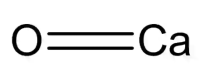 Calcium Oxide
€3.51
Net price: €2.85
 Calcium Oxide CaO Lime
€5.84
Net price: €4.75
 Cerium (IV) Dioxide CeO2 - 100g
€3.64
Net price: €2.96
 Cerium (IV) Dioxide CeO2 - 5000g = 5kg
€83.87
Net price: €68.19
 Cerium (IV) Dioxide CeO2 - 500g
€12.11
Net price: €9.85
 Cerium (IV) Dioxide CeO2 1kg - 1000
€20.04
Net price: €16.29
 Chromium (III) Oxide Cr2O3 Chromium Green Pigment - 1000g
€23.30
Net price: €18.94
 Chromium (III) Oxide Cr2O3 Chromium Green Pigment - 100g
€6.43
Net price: €5.23
 Chromium (III) Oxide Cr2O3 Chromium Green Pigment - 25 000g
€391.39
Net price: €318.21
 Chromium (III) Oxide Cr2O3 Chromium Green Pigment - 5000g
€93.19
Net price: €75.77
 Chromium (III) Oxide Cr2O3 Chromium Green Pigment - 500g
€13.98
Net price: €11.36
 Cobalt (II,III) Oxide Co3O4
€15.66
Net price: €12.73
 Colloidal Silica Aerosil 200 Original for Catalysts, Resins - 1000g = 20L
€37.28
Net price: €30.31
 Colloidal Silica Aerosil 200 Original for Catalysts, Resins - 100g = 2L
€7.92
Net price: €6.44
Oxides are broadly categorized by bonding, composition, and acid–base behavior:
Bonding/structure types.
-
Ionic oxides form with electropositive metals (e.g., Na₂O, CaO). They consist of O²⁻ and metal cations in extended lattices, often high-melting and basic.
-
Covalent oxides form with nonmetals or high-oxidation-state metals (e.g., CO₂, SO₃, SiO₂). These feature directional E–O bonds and may exist as discrete molecules (CO₂) or giant networks (SiO₂).
-
Mixed/metallic oxides of transition metals often have partial covalency and variable stoichiometry (e.g., Fe₃O₄, TiO₂), enabling rich electronic and catalytic properties.
Acid–base classification.
-
Basic oxides (mostly metal oxides) react with acids to form salts and water; in water they generate hydroxides (CaO → Ca(OH)₂).
-
Acidic oxides (mostly nonmetal oxides) are anhydrides of oxoacids and react with bases (SO₃ → H₂SO₄; CO₂ → H₂CO₃).
-
Amphoteric oxides (e.g., Al₂O₃, ZnO, SnO₂) react with both acids and strong bases, reflecting intermediate metal–oxygen bonding and Lewis acidity/basicity.
-
Neutral oxides (e.g., CO, N₂O) show little acid–base character.
Oxidation states and nonstoichiometry.
While oxygen is usually −2, exceptions occur in peroxides (O₂²⁻, −1 each O), superoxides (O₂⁻, −½ each O), and ozonides (O₃⁻). Many transition-metal oxides are nonstoichiometric due to oxygen vacancies or mixed valence (e.g., Fe²⁺/Fe³⁺ in Fe₃O₄), which strongly affects conductivity and magnetism.
Formation and reactivity.
Oxides form via direct oxidation of elements, thermal decomposition of hydroxides/carbonates, or controlled redox routes. Their reactivity includes:
-
Redox behavior in metallurgy and energy materials (e.g., Fe₂O₃ reduced to Fe in blast furnaces).
-
Surface chemistry and catalysis, especially for transition-metal oxides that adsorb/reactivate small molecules (CO oxidation on MnOₓ, TiO₂ photocatalysis).
-
Hydration and carbonation (CaO + H₂O → Ca(OH)₂; CaO + CO₂ → CaCO₃), crucial in cement chemistry and carbon sequestration.
Properties and applications.
Oxides underpin ceramics, glasses, semiconductors (SiO₂, TiO₂, ZnO), battery electrodes (LiCoO₂, MnO₂), pigments, and protective passivation layers (Al₂O₃, Cr₂O₃). Their mechanical hardness, thermal stability, electronic band structures, and ionic transport make them central to both geology and modern technology.