
 CATEGORIES
- ORGANIC COMPOUNDS(1134)
- Thiols(1)
- Metal-organic compounds(1)
- Sulfonic acids(6)
- Alcohols(74)
- Aldehydes(47)
- Alkyl nitrites(6)
- Amines(56)
- Aminoacids(59)
- Amides(33)
- Anhydrides(11)
- Acyl Halides(5)
- Carboxylic Acids(170)
- Dyes and Indicators(99)
- Esters(52)
- Ethers(17)
- Organic Halogens (Organohalides)(30)
- Flavonoids(5)
- Heterocycles(25)
- Hydrocarbons(38)
- Imides(2)
- Ketones(29)
- Mixed solvents(16)
- Nitro Compounds(5)
- Nitriles(9)
- Organic salts(74)
- Phenols(30)
- Polymers ( HMW compounds )(68)
- Sugars (Saccharides)(24)
- Silicoorgano and Phosphoorganocompounds(1)
- Peptides(2)
- Terpenes(16)
- Others(125)
- INORGANIC COMPOUNDS(1055)
- LAB EQUIPMENT(5176)
- *(1)
- Organic Synthesis(421)
- Industry(775)
Language
US version allows shipping to all available destinations


 MANUFACTURER
Heterocycles are ring compounds in which at least one ring atom is a heteroatom, meaning an atom other than carbon, most commonly nitrogen, oxygen or sulfur. They may be saturated, partially unsaturated or aromatic, and their properties depend on heteroatom type, ring size, degree of unsaturation and substituent pattern. In organic synthesis, heterocycles are important building blocks, substrates, intermediates and structural cores used to prepare more complex molecules.
 1-Ethyltheobromine Spectroscopically Pure
Lei37.79
Net price: Lei30.72
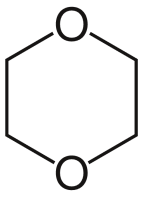 1,4-Dioxane (1,4-Dioxacyclohexane)
Lei20.86
Net price: Lei16.97
 1-Hydroxybenzotriazole
Lei40.70
Net price: Lei33.09
 2,2-Bipyridine : Bipyridyl : Dipyridyl : Bipy : Bpy : Dipy : 2,2-Bipyridyl - Chelating - 250g
Lei1,483.16
Net price: Lei1,205.83
![Antipyrine ( Phenazone - Antipyrin - Phenazon ) [CAS: 60-80-0] - 100g](/environment/cache/images/productGfx_824_200_200/1f59078390457ba11926d197e8b8927e.jpg?overlay=1) Antipyrine ( Phenazone - Antipyrin - Phenazon ) [CAS: 60-80-0] - 100g
Antipyrine ( Phenazone - Antipyrin - Phenazon ) [CAS: 60-80-0] - 100g
Lei370.79
Net price: Lei301.45
![Antipyrine ( Phenazone - Antipyrin - Phenazon ) [CAS: 60-80-0] - 10g](/environment/cache/images/productGfx_827_200_200/0682b4f0ea01b4cb60f1f4d895f9807b.jpg?overlay=1) Antipyrine ( Phenazone - Antipyrin - Phenazon ) [CAS: 60-80-0] - 10g
Antipyrine ( Phenazone - Antipyrin - Phenazon ) [CAS: 60-80-0] - 10g
Lei69.52
Net price: Lei56.52
![Antipyrine ( Phenazone - Antipyrin - Phenazon ) [CAS: 60-80-0] - 250g](/environment/cache/images/productGfx_823_200_200/8110ff21f5a7123cb8103de32d0afe8a.jpg?overlay=1) Antipyrine ( Phenazone - Antipyrin - Phenazon ) [CAS: 60-80-0] - 250g
Antipyrine ( Phenazone - Antipyrin - Phenazon ) [CAS: 60-80-0] - 250g
Lei857.45
Net price: Lei697.12
![Antipyrine ( Phenazone - Antipyrin - Phenazon ) [CAS: 60-80-0] - 25g](/environment/cache/images/productGfx_826_200_200/4efe3c983d29dc956a3dab72209ee949.jpg?overlay=1) Antipyrine ( Phenazone - Antipyrin - Phenazon ) [CAS: 60-80-0] - 25g
Antipyrine ( Phenazone - Antipyrin - Phenazon ) [CAS: 60-80-0] - 25g
Lei115.87
Net price: Lei94.21
![Antipyrine ( Phenazone - Antipyrin - Phenazon ) [CAS: 60-80-0] - 50g](/environment/cache/images/productGfx_825_200_200/ec671515ae7f722e1e0cffbea47f04ad.jpg?overlay=1) Antipyrine ( Phenazone - Antipyrin - Phenazon ) [CAS: 60-80-0] - 50g
Antipyrine ( Phenazone - Antipyrin - Phenazon ) [CAS: 60-80-0] - 50g
Lei208.57
Net price: Lei169.57
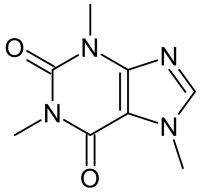 Caffeine Powder Anhydrous >99,9%
Lei22.09
Net price: Lei17.97
 Coumarin Pure ( 1-Benzopyran-2-one ) >99%
Lei12.84
Net price: Lei10.44
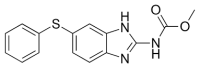 Fenbendazole (Methyl 5-(phenylthio)-2-benzimidazolecarbamate)
Lei29.07
Net price: Lei23.64
 Gamma-Valerolactone
Lei1,744.19
Net price: Lei1,418.03
 Gluconolactone PHA GDL Pure
Lei9.30
Net price: Lei7.56
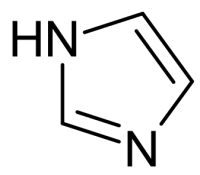 Imidazole
Lei52.33
Net price: Lei42.55
 N-Methylpyrrolidone N-Methyl-2-pyrrolidone NMP Solvent - 1000ml
Lei185.40
Net price: Lei150.73
 N-Methylpyrrolidone N-Methyl-2-pyrrolidone NMP Solvent - 100ml
Lei41.71
Net price: Lei33.91
 N-Methylpyrrolidone N-Methyl-2-pyrrolidone NMP Solvent - 5000ml
Lei880.62
Net price: Lei715.95
 N-Methylpyrrolidone N-Methyl-2-pyrrolidone NMP Solvent - 500ml
Lei134.42
Net price: Lei109.28
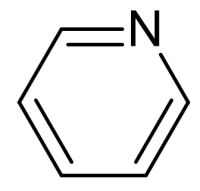 Pyridine, Pure >99%
Lei52.33
Net price: Lei42.55
 Quinine Powder Pure
Lei25.58
Net price: Lei20.80
 Saccharin
Lei34.88
Net price: Lei28.36
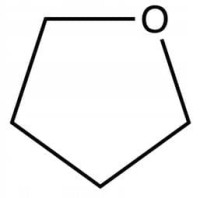 Tetrahydrofurane ( THF ) Oxolane Analytically Pure
Lei10.47
Net price: Lei8.51
 Benzothiazole 1,3-benzothiazole 100ml
Lei114.64
Net price: Lei93.20
 Benzotriazole 1,2,3-benzotriazole BOH
Lei177.91
Net price: Lei144.64
How are heterocycles classified?
Heterocycles can be classified by heteroatom type, number of heteroatoms, ring size, degree of saturation and the presence of an aromatic system. The most common systems contain nitrogen, oxygen or sulfur, but rings containing several different heteroatoms are also possible. In synthetic practice, five- and six-membered heterocycles are especially important because many combine ring stability with useful reactivity.
Saturated, unsaturated and aromatic heterocycles
Saturated heterocycles such as tetrahydrofuran, piperidine or morpholine mainly contain single bonds and often behave similarly to corresponding acyclic ethers, amines or related compounds. Unsaturated and aromatic heterocycles such as furan, thiophene, pyridine, pyrrole, imidazole and indole contain π-electron systems that strongly influence reactivity. Aromaticity can affect basicity, nucleophilicity, substitution position and ring susceptibility to addition or opening.
Why are heterocycles important in organic synthesis?
Heterocycles introduce not only a ring system but also defined electronic properties, polarity, hydrogen-bonding ability and sites for further functionalization. They may act as preformed structural cores, fragments for coupling reactions, cyclization substrates, ligands, polar soluble modules or precursors to more extended systems. This makes them useful in the synthesis of heteroaromatic compounds, organic materials, ligands and compound libraries.
How are heterocycles formed in synthesis?
Heterocycles can be prepared by cyclization of multifunctional compounds, condensation reactions, intramolecular additions, multicomponent reactions, cycloadditions, transformations of carbonyl compounds, reactions with azides, amines, alcohols, thiols and alkynes, and functionalization of preformed rings. Method selection depends on whether the goal is to build the ring from simple components or modify an existing heterocyclic system.
Heterocycles as building blocks
In modular synthesis, heterocycles are often treated as building blocks because introducing a preformed ring can be easier than constructing it at a late synthetic stage. Halogenated, borylated, aminated, hydroxylated or carbonylated heterocyclic derivatives may participate in coupling, substitution, acylation, alkylation and further functionalization reactions. This approach enables rapid tuning of molecular properties by replacing or modifying the heterocyclic fragment.
What controls heterocycle reactivity?
Heterocycle reactivity depends on whether the heteroatom is part of an aromatic system or retains a lone pair capable of basicity, coordination or nucleophilic attack. Ring size, strain, electron-donating or electron-withdrawing substituents, tautomerism and the relative positions of heteroatoms are also important. For this reason, two heterocycles with the same ring size may show very different synthetic behavior.
Use in laboratory research
Heterocycles are used in organic synthesis, materials chemistry, coordination chemistry, structural analysis, catalysis studies, compound library design and development of new cyclization methods. They may serve as substrates, ligands, intermediates, structural cores, analytical standards or models for studying the influence of heteroatoms on ring properties.
Safety and limitations of use
Heterocycles do not represent a single hazard class because their properties depend on the specific chemical structure. Some may be volatile, flammable, toxic, irritating, basic, light-sensitive, prone to oxidation or reactive toward acids, bases and oxidizing agents. Each heterocyclic compound should be assessed individually according to its safety data sheet, purity, stability and intended use.
Heterocycles are classified by ring size (typically 3–7 members; larger rings called macrocycles), degree of saturation (saturated, partially unsaturated, aromatic), and the identity/number/position of heteroatoms. Aromatic heterocycles obey Hückel’s 4n+2 π-electron rule and can be π-excessive (electron-rich; e.g., pyrrole, furan, thiophene) or π-deficient (electron-poor; e.g., pyridine, diazines) depending on whether heteroatom lone pairs contribute to the aromatic sextet. This distinction governs both regioselectivity and mechanism in substitution reactions.
Electronic structure and basicity.
Nitrogen-containing heterocycles show wide basicity variation. In pyridine-type rings, the N lone pair lies in an sp² orbital orthogonal to the π system, making it available for protonation and coordination (relatively basic). In pyrrole-type rings, the lone pair is part of the aromatic π system, so protonation would disrupt aromaticity (much less basic). Additional heteroatoms and ring fusion further tune pKₐ, dipole moments, and hydrogen-bonding profiles—key parameters in drug design.
Reactivity patterns.
-
Electron-rich aromatic heterocycles undergo electrophilic aromatic substitution (EAS) readily, often at positions that best stabilize the σ-complex (e.g., C-2 in pyrrole/furan/thiophene). They are also prone to oxidation.
-
Electron-poor aromatic heterocycles are deactivated toward EAS but activated toward nucleophilic aromatic substitution (S_NAr) and metal-catalyzed cross-couplings.
-
Saturated heterocycles behave like functionalized alicycles; their heteroatoms enable substitutions, oxidations, and ring-opening reactions.
Synthesis.
Heterocycles are commonly built via cyclization strategies that form C–X and/or C–C bonds in one step. Representative methods include:
-
Paal–Knorr syntheses (five-membered N/O/S heteroaromatics from 1,4-dicarbonyls).
-
Fischer indole synthesis (indoles from arylhydrazones).
-
Hantzsch and Biginelli reactions (dihydropyridines, pyrimidinones).
-
Cycloadditions (e.g., azide–alkyne to triazoles).
-
Ring-closing amidation/esterification for lactams and lactones.
Modern routes often use Pd/Ni catalysis or photoredox methods to assemble densely substituted heterocycles.
Importance and examples.
Heterocycles are central scaffolds in biology (nucleobases, sugars, cofactors) and medicine (e.g., β-lactams, azoles, quinolines). Their ability to present lone pairs, dipoles, and defined 3D shapes makes them ideal for binding to enzymes and receptors, and for tuning solubility, permeability, and metabolic stability in functional molecules.